

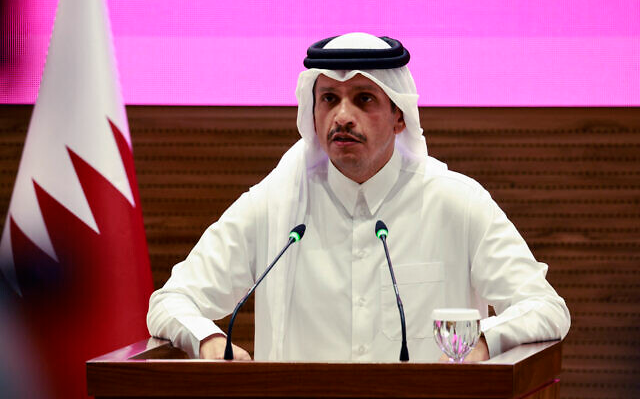
In June 2026, Sheikh Mohammed bin Abdulrahman Al Thani emerged as a central diplomatic figure during one of the most volatile periods in West Asia, following the escalation between Iran, Israel, and the United States. As Prime Minister and Minister of Foreign Affairs of Qatar, he led intensive regional and international diplomacy aimed at preventing a wider conflict, maintaining open channels with all parties despite deep divisions. Doha became the focal point for negotiations and crisis diplomacy, while Sheikh Mohammed repeatedly stressed that “there is no military solution to this crisis” and that “dialogue remains the only path to lasting security.” He consistently called for restraint, respect for international law, and the protection of civilians, warning that continued escalation would only fuel greater instability across the region.
His leadership extended beyond mediation to practical crisis management throughout the month. He coordinated closely with Gulf and international counterparts to preserve regional stability, safeguard vital energy and trade routes, and sustain humanitarian and diplomatic efforts. Following the announcement of a ceasefire, Sheikh Mohammed welcomed the breakthrough but cautioned that “the priority now is to consolidate the ceasefire and return to diplomacy.” He also warned against actions that could undermine regional security, stating that “escalation benefits no one,” and reaffirmed that “Qatar will continue working with all partners to achieve a sustainable and peaceful resolution.” Following the Emir’s strategic direction, Sheikh Mohammed maintained Qatar’s role as a trusted intermediary capable of engaging all sides while reinforcing its reputation as a credible bridge between competing powers.
Sheikh Mohammed bin Abdulrahman Al Thani stands out as the Apex Leader of June 2026 because he demonstrated exceptional diplomatic leadership, strategic restraint, and unwavering commitment to peace during a period of acute regional crisis. Rather than aligning with military escalation or inflammatory rhetoric, he positioned Qatar as a reliable mediator, preserving communication between rivals when dialogue was most at risk. Through sustained diplomacy, principled advocacy for negotiated solutions, and effective coordination with regional and global partners, he helped reduce the risk of broader confrontation while reinforcing the value of multilateral engagement. His repeated message that “dialogue is the only way forward” embodied Qatar’s approach throughout the crisis, making him one of the most influential and consequential statesmen of the month.