

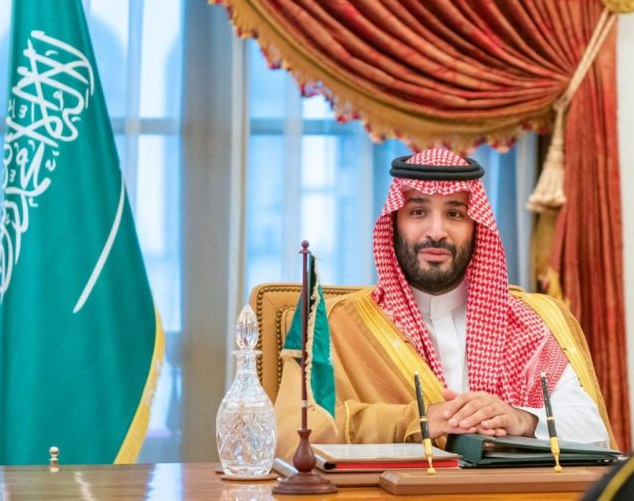
In August 2026, Saudi Crown Prince and Prime Minister Mohammed bin Salman emerged as one of the defining geopolitical leaders of a West Asia undergoing profound strategic transformation, as Saudi Arabia sought to contain the regional consequences of the continuing US-Iran war while simultaneously shaping the political future of Gaza and the wider Arab-Israeli conflict. His most significant geopolitical role came in the effort to prevent another escalation between Washington and Tehran. On August 2, MBS spoke directly with US President Donald Trump and urged him to prioritise dialogue and renewed negotiations rather than pursue another major military escalation against Iran. His intervention reflected Riyadh’s growing conviction that a prolonged war would threaten Gulf security, energy markets, maritime trade and Saudi Arabia’s own economic transformation. Rather than simply aligning with Washington, MBS used Saudi Arabia’s relationship with the United States to push for de-escalation while maintaining communication with regional actors, reinforcing Riyadh’s emerging role as a mediator capable of engaging competing powers. His leadership was equally significant on Gaza and Palestinian statehood, where Saudi Arabia continued to insist that any durable regional settlement must include an independent Palestinian state and a credible two-state solution. Riyadh maintained pressure for an end to the destruction in Gaza and continued linking any potential normalization with Israel to meaningful progress on the Palestinian question.
MBS’s regional strategy also extended to the Red Sea, where attacks on commercial shipping and the continuing Houthi threat had transformed maritime security into a central geopolitical concern. Riyadh sought to protect trade routes and Saudi economic interests while preventing the Red Sea from becoming another permanent theatre of confrontation. With both the Strait of Hormuz and the Red Sea facing serious security pressures, MBS increasingly positioned Saudi Arabia as a stabilising power capable of combining diplomacy with deterrence. The Makkah Joint Defence Agreement with Türkiye and Pakistan on August 7 added another layer to this strategy by strengthening Saudi Arabia’s defensive partnerships without turning Riyadh’s foreign policy into an openly anti-Iran or anti-American bloc. The agreement demonstrated that Saudi Arabia was diversifying its security relationships at a time when confidence in traditional regional security arrangements was being tested. MBS’s August 24 visit to Paris further strengthened Saudi Arabia’s diplomatic position, as he and French President Emmanuel Macron held the first meeting of the France-Saudi Strategic Partnership Council, focusing on regional peace, security and the deepening of the strategic partnership between the two countries. The engagement reinforced Riyadh’s effort to work with major international powers on regional stability while maintaining an independent diplomatic posture.
Mohammed bin Salman stands out as the Apex Leader of August 2026 because he demonstrated geopolitical leadership through mediation, strategic balancing and regional statecraft rather than direct military intervention. His intervention with Trump during the Iran crisis, continued insistence that the Palestinian question could not be separated from regional normalization, support for a two-state solution, efforts to manage the Red Sea crisis, and expansion of Saudi defensive partnerships placed Riyadh at the centre of several interconnected regional challenges. More importantly, MBS demonstrated an increasingly independent Saudi approach to geopolitics, maintaining close ties with Washington while simultaneously strengthening relations with European and regional powers. His strategy was not to choose one camp but to create enough diplomatic, economic and security options for Saudi Arabia to influence competing powers while protecting its own interests. By combining mediation with deterrence, Palestinian diplomacy with maritime security, defence partnerships with strategic flexibility, and economic interests with geopolitical autonomy, Mohammed bin Salman emerged as one of the defining leaders of August 2026 and one of the central figures shaping West Asia’s evolving post-war order.