

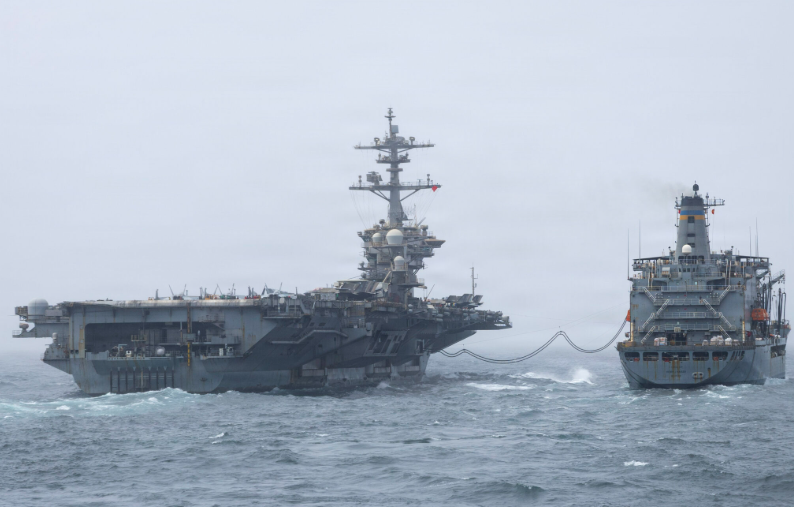
For more than three decades, the political map of West Asia rested on an assumption that appeared almost unquestionable: the United States possessed the military power to shape the regional balance, Israel served as its most capable military partner, and much of the region’s security architecture ultimately depended on Washington. That architecture has not disappeared, but its underlying logic is changing. What is disappearing is the assumption that military superiority automatically translates into political control. West Asia is entering a more complicated era in which regional powers increasingly determine their own alignments, cultivate relationships with competing global powers, and construct additional security mechanisms to reduce dependence on any single external patron.
From Unipolarity to Multipolarity
The transformation becomes clearer when the post–Cold War period is considered in historical perspective. After the Soviet Union collapsed, Washington inherited an extraordinary concentration of power. The United States could project force rapidly into the Gulf, protect critical maritime routes, support partners with advanced weapons, gather intelligence across the region, and impose economic sanctions with comparatively few effective alternatives available to targeted states. This created an environment in which American power became the reference point for almost every major strategic calculation.
Yet the world in which that system emerged has changed dramatically. China has become an economic superpower, Russia has reasserted itself as a military and energy actor, regional states have accumulated greater financial resources and technological capabilities, and alternative diplomatic and economic institutions have expanded. The result is not the end of American influence. It is the end of American exclusivity.
Washington’s own strategic priorities have also contributed to this transition. The United States remains deeply invested in West Asia, but its attention is increasingly divided by the Indo‑Pacific, the rise of China, the war in Europe, technological competition, and domestic political pressures. The American objective in West Asia has gradually shifted from comprehensive political management toward deterrence, containment, burden sharing, and selective intervention. That distinction matters. A security guarantee becomes less reassuring when its timing and conditions appear uncertain. Regional governments therefore have a growing incentive to build strategic insurance. They continue cooperating with Washington while simultaneously developing relationships with Beijing, Moscow, New Delhi, Ankara and other powers.
The Rise of Strategic Diversification
Saudi Arabia, the United Arab Emirates, Qatar, Egypt and Turkey have become particularly adept at this strategy. They maintain important security relationships with the United States while expanding economic and diplomatic engagement with China. Some have strengthened relations with Russia, while others have deepened partnerships with India, Europe, Japan and South Korea. Turkey remains a NATO member but has increasingly pursued an independent regional strategy shaped by its own ambitions. Saudi Arabia has simultaneously expanded its relationship with Washington, Beijing and Moscow.
The Gulf monarchies have also learned that economic diversification requires diplomatic diversification. Their national transformation programs depend on stable investment, energy markets, technology and international connectivity, making prolonged dependence on one geopolitical relationship increasingly unattractive. The emerging pattern is therefore not a new alliance system replacing the American one. It is a web of overlapping partnerships in which regional states attempt to extract strategic value from multiple centers of power without becoming completely dependent upon any of them.
China’s Economic Diplomacy
China has benefited substantially from this transformation because Beijing does not need to reproduce the American military architecture to increase its influence. Its strongest instruments are economic connectivity, energy, infrastructure, technology and diplomacy. China’s expanding relationships across the Gulf have given it access to virtually every major regional actor. Its diplomatic role in the Saudi‑Iranian rapprochement was particularly significant because it demonstrated that Beijing could facilitate communication between two major regional rivals while maintaining relationships with both.
This is also why describing China’s rise in West Asia as a straightforward replacement of American power would be misleading. Beijing does not possess America’s network of military bases, defense treaties, intelligence infrastructure and expeditionary capabilities. Nor does it appear eager to reproduce that system. Its strategic advantage lies elsewhere. China can purchase energy from the region, finance infrastructure, participate in industrial development, expand technological cooperation and maintain diplomatic relations across rival political camps.
The Limits of Military Power
The war involving Iran has accelerated this calculation. The conflict has demonstrated the enormous destructive potential of modern military power while simultaneously exposing its political limitations. Military superiority can destroy infrastructure, eliminate senior commanders and impose enormous costs on an adversary, but it cannot necessarily produce political obedience. Iran has absorbed extraordinary pressure without simply disappearing as a political actor. At the same time, the conflict has imposed risks on neighboring economies that depend on reliable energy exports and maritime commerce.
The Strait of Hormuz has consequently become far more than a geographical feature. It represents a strategic pressure point whose disruption can affect economies far beyond the immediate battlefield. This is where the interests of China, India, Europe and the Gulf states converge. China depends heavily on stable energy flows and maritime commerce. India has extensive economic and energy interests across the Gulf. European economies remain vulnerable to energy price shocks and shipping disruptions.
Israel’s Strategic Dilemma
Israel occupies the center of this contradiction. Its military capabilities remain extraordinary. Its intelligence services, air power, missile defenses, technological sector and precision strike capabilities give it a substantial advantage over most regional adversaries. But military sophistication cannot indefinitely substitute for political strategy. Prolonged conflict creates economic costs, social exhaustion and diplomatic pressure.
National power depends not only on the ability to win battles but also on the ability to retain skilled citizens, maintain investor confidence, preserve domestic cohesion and create a political environment in which military gains can be converted into sustainable security. Israel therefore faces a challenge that extends beyond battlefield performance. It must determine whether military superiority can ultimately produce a political environment that reduces the number of simultaneous threats rather than perpetuating them.
The Mecca Joint Defense Agreement
The emergence of the Mecca Joint Defense Agreement involving Saudi Arabia, Turkey and Pakistan illustrates this changing environment. Signed on August 7, 2026, the pact declares that an armed attack against any one of the three states shall be regarded as an attack against them all, echoing NATO’s Article 5. Its significance should not be exaggerated by comparing it directly with NATO, because it lacks NATO’s institutional depth, command structure and historical architecture.
Its importance lies elsewhere. It demonstrates that major regional powers are increasingly prepared to develop their own security arrangements rather than assuming that every strategic problem must ultimately be managed by Washington. Cooperation involving joint exercises, land, maritime, air and cyber capabilities, unmanned systems, electronic warfare, artificial intelligence and defense production reflects a broader movement toward regional capacity building. Egypt has also been discussed as a possible future participant, which would further expand the strategic weight of such an arrangement.
The agreement is also important because it challenges simplistic sectarian interpretations of regional politics. Saudi Arabia, Turkey and Pakistan have different historical experiences, political systems and strategic priorities. Their cooperation cannot be explained simply through Sunni solidarity or opposition to Iran. The stronger explanation is strategic autonomy. Saudi Arabia brings financial resources and regional influence. Turkey possesses a significant military and defense industrial base. Pakistan contributes extensive military experience and nuclear deterrence.
Iran’s Dilemma and Regional Balancing
Iran faces its own dilemma. Tehran has historically compensated for conventional disadvantages through missiles, drones, asymmetric capabilities, allied networks and control over strategically important geography. Its strategy has been designed not necessarily to defeat the United States or Israel conventionally but to raise the costs of military confrontation until negotiation becomes preferable.
Yet the more pressure Iran places on Gulf security, the greater the incentive for Gulf governments to develop independent defense relationships. Iran therefore risks producing the very regional balancing architecture that could constrain its freedom of action. The emergence of new security partnerships is consequently both a response to the conflict and a potential long term consequence of it.
The Economic Dimension
The economic dimension may ultimately prove more consequential than military alliances. Western sanctions remain powerful because the dollar dominated financial system gives Washington extraordinary leverage. Yet sanctions become less decisive when targeted states possess alternative markets, financial channels, logistics networks and technology suppliers. This does not mean the dollar is about to disappear. Such predictions remain premature. American financial power remains enormous. But the political impact of that power can gradually diminish when countries have more alternatives than they once did.
BRICS, the Shanghai Cooperation Organization and other emerging institutions are important not because they can immediately replace Western systems, but because they provide additional diplomatic and economic channels. West Asian governments can therefore participate in American institutions while simultaneously engaging with Chinese and Eurasian structures
Europe’s Difficult Position
Europe faces a particularly difficult position. European countries remain major economic and diplomatic actors, but their ability to translate those capabilities into independent strategic influence in West Asia remains limited. European economies can suffer from disruption in Hormuz or the Bab el Mandeb through higher energy costs, shipping disruptions and inflation, yet Europe does not possess a unified military architecture capable of independently shaping the security environment.
Its continued reliance on American military capabilities limits its strategic autonomy at precisely the moment when regional governments are becoming more autonomous themselves. The result is a remarkable redistribution of influence. China can possess enormous economic interests without maintaining an American style military footprint. The United States can possess overwhelming military capabilities while finding political outcomes increasingly difficult to secure.
A Multi‑Hub Order
That order will not necessarily be more peaceful. Multipolarity can reduce the ability of one power to impose stability, but it can also increase the number of actors capable of escalating a crisis. Missiles, drones, cyber capabilities, intelligence systems and advanced military technologies are spreading across the region. Competing security networks may strengthen deterrence, but they can also create arms races and miscalculation.
The greatest mistake would therefore be to describe the current transformation as either the defeat of the West or the triumph of the East. Neither interpretation captures the reality. America remains indispensable to West Asian security. Israel remains a formidable military power. China has not become a regional hegemon. Iran has not defeated the West. Saudi Arabia, Turkey and Pakistan have not created a NATO equivalent.
What has changed is the ability of any one of these actors to determine the region’s future alone. The strategic monopoly is weakening even though individual centers of power remain exceptionally strong. The deeper transformation is psychological as much as material. Regional governments have learned that even the strongest external guarantee can become uncertain when wars expand, political priorities change and domestic pressures intervene.
Strategic Options for Great Powers and Regional States
For the United States, this creates a fundamental strategic choice. Washington can attempt to restore the old architecture through greater military pressure and tighter alliance discipline, or it can accept that West Asia has changed and compete for influence within a more pluralistic system. The second approach would require greater emphasis on diplomacy, economic engagement and political credibility. Military power would remain essential, but it would become one instrument among several rather than the organizing principle of regional policy.
China faces a different challenge. Its growing influence will eventually create expectations that Beijing should help solve the problems it has historically preferred to avoid. Economic influence does not automatically produce coercive diplomatic power. Gulf governments may ask China to restrain Iran, but Beijing will always balance such demands against its broader relationship with Tehran.
For regional powers, the emerging environment offers unprecedented opportunities but also demands greater domestic strength. Strategic autonomy cannot be sustained through diplomacy alone. It requires diversified economies, technological capabilities, defense industries and resilient institutions. A country cannot genuinely diversify its alliances if it remains economically dependent on one market or militarily dependent on one supplier.
This is ultimately why West Asia matters beyond West Asia. The region is becoming one of the clearest laboratories for the transformation of the international system itself. It contains extraordinary concentrations of energy, capital, military power, strategic geography and technological ambition. What happens there offers a preview of a wider world in which power is increasingly distributed among several centers rather than concentrated in one capital.
The central fact is therefore not that American power has disappeared. It is that American power no longer possesses the same monopoly over strategic choice. Israel has not ceased to matter. Its military superiority, however, cannot alone determine the political future of the region. China has not replaced Washington, but Beijing now possesses sufficient economic and diplomatic weight to ensure that the United States is no longer the only external power capable of shaping outcomes.
West Asia is not simply moving from the West to the East. It is moving toward itself. The emerging order will be messier, more competitive and potentially more dangerous, but it will also be defined by a growing insistence among regional powers that their strategic future should not be determined exclusively in Washington, Beijing or Moscow. The age of unquestioned Western primacy is therefore not ending with a single dramatic event. It is being replaced gradually, crisis by crisis, partnership by partnership, as regional states acquire something they once possessed in far smaller measure: the ability to choose.