

The six month confrontation between the United States, Israel, and Iran has fundamentally altered the strategic landscape of Eurasia. Much of the international debate has focused on military operations, energy markets, and the security of maritime chokepoints, yet for Beijing the conflict represents something far more consequential. It has become a comprehensive stress test of China’s grand strategy. The question confronting Chinese policymakers is no longer whether the war can be contained, but whether an increasingly unstable international environment requires a fundamental recalibration of China’s economic and strategic priorities. The answer emerging in Beijing is becoming increasingly clear. China believes it has weathered the external shock better than most major economies, but the conflict has also reinforced the view that national resilience will ultimately depend less on external markets and more on strengthening the domestic foundations of economic growth.
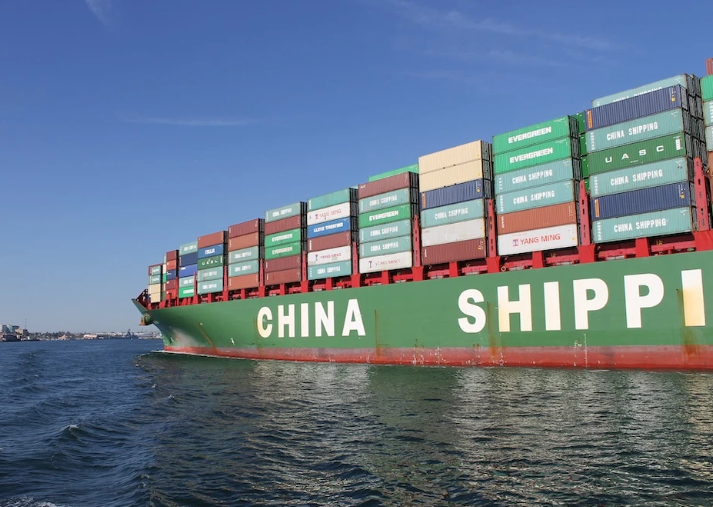
This marks an important shift in Chinese strategic thinking. For more than three decades, China’s rise was built upon an outward looking economic model driven by exports, global manufacturing, integrated supply chains, and access to international markets. Stability across West Asia, uninterrupted maritime commerce, and predictable globalization were not simply desirable conditions but essential pillars supporting China’s extraordinary economic expansion. Every barrel of imported crude oil, every container passing through the Strait of Hormuz, and every commercial vessel transiting the Indian Ocean formed part of a broader ecosystem that sustained Chinese industrial growth. The prolonged confrontation with Iran has exposed how vulnerable that model becomes when geopolitical instability transforms from an occasional disruption into a permanent feature of international affairs.
Yet Beijing’s assessment differs markedly from the anxiety visible across many Western capitals. Chinese policymakers increasingly believe that the country’s exposure to the conflict remains manageable because the foundations of its economic security have quietly evolved over the past decade. Strategic petroleum reserves have expanded considerably. Oil imports have become more diversified through Russia, Central Asia, and other suppliers. Domestic renewable energy production has accelerated at an unprecedented pace. Nuclear power generation continues to expand while electric vehicle adoption steadily reduces long term dependence on imported fuels. Collectively, these developments have reduced China’s immediate vulnerability to fluctuations in Gulf energy supplies, allowing policymakers to approach the conflict with greater confidence than many anticipated when hostilities first erupted.
This relative confidence should not be mistaken for complacency. Beijing understands that modern geopolitical competition rarely unfolds through energy markets alone. The greater danger lies in the cumulative interaction between military instability, declining investor confidence, disrupted logistics, volatile commodity prices, and weakening external demand. The Iranian conflict has arrived at a time when China’s economy is already confronting slower growth, weak household consumption, persistent pressures in the property sector, and declining business confidence. These structural challenges predated the war, but prolonged instability abroad risks magnifying domestic weaknesses that policymakers have struggled to address for several years.
For this reason, the conflict is increasingly influencing Beijing’s macroeconomic calculations rather than merely its foreign policy. Chinese officials appear to recognize that external uncertainty has become a permanent strategic variable rather than a temporary obstacle. Instead of assuming that global stability will return quickly, economic planning is gradually shifting toward strengthening internal resilience capable of absorbing repeated geopolitical shocks. This represents one of the most significant adjustments in China’s development strategy since the pandemic. Rather than relying primarily on exports to sustain growth, Beijing is under increasing pressure to expand domestic demand, strengthen household purchasing power, improve consumer confidence, and reduce dependence upon external economic conditions that remain largely beyond its control.
This transition has proven considerably more difficult than official policy ambitions suggest. China has repeatedly emphasized the importance of boosting domestic consumption through the strategy of dual circulation, yet implementation has produced uneven results. Household income growth remains relatively subdued compared with previous decades. Consumer confidence has struggled to recover fully following the property downturn. Deflationary pressures continue to influence spending behaviour, encouraging households to save rather than consume. Local governments remain constrained by heavy debt burdens, limiting their capacity to stimulate regional economies through traditional investment driven approaches. These structural weaknesses explain why many economists increasingly expect Beijing to introduce more targeted fiscal measures designed to place additional purchasing power directly into the hands of ordinary consumers rather than relying exclusively on infrastructure investment.
Such adjustments are becoming strategically necessary rather than merely economically desirable. The Iranian conflict has demonstrated that China’s long term security cannot rest solely upon its ability to manufacture goods more efficiently than its competitors. It must also cultivate an economy capable of generating sustainable domestic demand even when international markets experience prolonged turbulence. The traditional export model remains indispensable, but its vulnerabilities have become increasingly apparent as geopolitical rivalry intensifies simultaneously across Europe, the Indo Pacific, and West Asia.
Equally significant is what the conflict reveals about China’s broader conception of national resilience. While international attention frequently focuses on aircraft carriers, missile inventories, and naval deployments, Beijing increasingly defines strategic endurance through economic adaptability. A nation capable of maintaining industrial production, preserving energy supplies, stabilizing financial markets, and sustaining consumer demand during prolonged geopolitical crises possesses advantages that extend well beyond conventional military strength. The ability to absorb external shocks without triggering domestic instability has become one of the defining measures of great power competition.
This perspective also explains China’s relatively measured diplomatic posture throughout the conflict. Beijing has consistently called for de escalation while avoiding direct military involvement or commitments that could compromise its broader strategic flexibility. Unlike Washington, whose regional alliances impose significant security responsibilities, China continues positioning itself primarily as an economic power seeking stability rather than confrontation. At the same time, it has quietly accelerated efforts to diversify supply chains, strengthen overland connectivity through Eurasia, deepen economic cooperation with Russia and Central Asia, and expand financial mechanisms less exposed to geopolitical disruption. These initiatives were already underway before the conflict, but the war has undoubtedly increased their strategic urgency.
The broader implication is that the Iranian conflict may ultimately be remembered less for its immediate military consequences than for the strategic lessons it has imposed upon Beijing. Every prolonged geopolitical crisis reinforces the same conclusion. The era in which economic globalization could be separated from geopolitical rivalry is steadily drawing to a close. For China, preserving long term national power will depend not only on technological innovation or manufacturing dominance but also on building an economy sufficiently resilient to withstand an increasingly fragmented international system. The greatest challenge facing Beijing is therefore no longer simply managing external competition. It is ensuring that domestic economic strength evolves rapidly enough to support China’s global ambitions in a world where geopolitical instability is becoming the new normal.
If the war has strengthened one conviction within Beijing, it is that strategic competition in an increasingly fragmented international order will be determined as much by economic endurance as by military capability. The conflict has reinforced the conclusion that resilience is no longer measured solely through defence spending or force projection, but through the ability of a nation to absorb external shocks without destabilising its domestic economy. In this respect, China’s response has been notably different from that of many other major powers. Rather than treating the conflict primarily as an energy crisis, Beijing increasingly views it as a catalyst accelerating long term structural reforms that were already considered necessary for sustaining national power.
This explains why Chinese policymakers have displayed comparatively little alarm over disruptions in Gulf oil supplies despite remaining the world’s largest crude importer. Over the past decade, Beijing has deliberately diversified its energy strategy by expanding imports from Russia and Central Asia, increasing strategic petroleum reserves, accelerating renewable energy deployment, and rapidly expanding nuclear generating capacity. The remarkable growth of electric vehicles has further reduced future dependence on imported petroleum. These developments have not eliminated China’s exposure to West Asian instability, but they have significantly reduced the likelihood that temporary disruptions in the Strait of Hormuz could fundamentally threaten domestic economic stability. Energy security has gradually evolved from dependence on a single maritime corridor into a diversified system capable of absorbing regional shocks.
The same strategic logic now extends to China’s broader economic planning. Beijing increasingly understands that the greatest vulnerability facing the country is no longer access to raw materials but insufficient domestic demand. Export led growth transformed China into the world’s manufacturing centre, yet the external environment supporting that model has become progressively more uncertain. Trade disputes with the United States, technological restrictions, supply chain diversification by multinational corporations, and recurring geopolitical crises have collectively demonstrated that relying excessively on overseas markets exposes China to risks beyond its control. The Iranian conflict has merely reinforced a lesson already emerging from these broader trends. Sustainable national strength ultimately depends upon a robust domestic economy capable of generating growth regardless of external turbulence.
This recognition may reshape Chinese economic policy more profoundly than the war itself. Beijing has repeatedly emphasised consumption driven growth, yet implementation has often lagged behind official objectives. Household confidence remains cautious, private investment has slowed, and consumer spending has yet to recover with the momentum policymakers expected. As external uncertainty intensifies, pressure is mounting for stronger fiscal support directed toward households rather than exclusively toward industrial investment or infrastructure. Measures designed to increase disposable income, stimulate consumption, and restore business confidence are increasingly viewed not simply as economic policy but as strategic investments in national resilience. A stronger consumer economy would reduce China’s dependence on volatile external markets while providing greater flexibility during prolonged geopolitical confrontation.
The conflict also strengthens Beijing’s determination to accelerate technological self sufficiency. Recent years have demonstrated that technological leadership has become inseparable from national security. Semiconductors, artificial intelligence, advanced manufacturing, quantum computing, aerospace engineering, and biotechnology increasingly determine economic competitiveness as well as military capability. The continuing confrontation in West Asia reinforces the perception that strategic dependence upon foreign technology represents a vulnerability that rivals can exploit during periods of international tension. Consequently, China is likely to intensify investment in indigenous innovation while simultaneously strengthening cooperation with countries willing to participate in alternative technological ecosystems outside traditional Western frameworks.
Equally important is the future of continental connectivity. One of the less discussed consequences of the Iranian conflict is its impact on China’s long term vision for Eurasian integration. For years Beijing has invested heavily in overland transport corridors linking East Asia with Central Asia, West Asia, and Europe. These corridors were never intended simply to shorten transportation times. They were designed to reduce excessive dependence upon maritime routes vulnerable to geopolitical competition and naval disruption. The instability surrounding Iran therefore highlights both the importance and the fragility of this strategy. While overland infrastructure offers alternatives to maritime chokepoints, its effectiveness ultimately depends upon political stability across the regions through which it passes. The conflict serves as a reminder that economic corridors require diplomatic stability as much as physical infrastructure.
China’s diplomatic posture reflects this broader strategic calculation. Beijing has consistently positioned itself as an advocate of negotiated settlements while avoiding direct military entanglement. This approach is often interpreted as strategic caution, yet it also reflects China’s understanding that prolonged instability undermines the very international environment upon which its economic development depends. Unlike powers whose influence rests upon military alliances, China’s global standing has been built primarily through trade, investment, industrial capacity, and infrastructure development. Preserving a stable international trading system therefore remains central to its national interest. Every conflict disrupting energy markets, commercial shipping, or investor confidence imposes economic costs that Beijing has little desire to absorb.
Nevertheless, the conflict has also exposed the limitations of China’s current grand strategy. Despite its expanding economic influence, Beijing still possesses limited ability to shape security outcomes in regions where its commercial interests have become deeply entrenched. It remains heavily dependent upon diplomatic engagement and economic partnerships while lacking the network of alliances and expeditionary military capabilities maintained by the United States. This imbalance creates an uncomfortable paradox. China’s global economic footprint continues expanding, yet its capacity to protect that footprint during major geopolitical crises remains comparatively constrained. Closing this gap without abandoning its long standing principle of non intervention may become one of the defining strategic challenges confronting Chinese foreign policy over the coming decade.
There is another lesson emerging from the conflict that extends well beyond China. The international system is gradually entering an era in which economic policy, industrial strategy, energy security, and national defence can no longer be treated as separate disciplines. Every major geopolitical crisis now produces simultaneous consequences across financial markets, technological competition, supply chains, food security, and domestic political stability. Nations capable of integrating these dimensions into a coherent national strategy will possess far greater resilience than those relying exclusively on military superiority or economic scale alone.
For Beijing, the war with Iran is therefore less a regional security crisis than a strategic warning about the changing nature of great power competition. The conflict has not fundamentally weakened China, nor has it forced an immediate reversal of its long term ambitions. Instead, it has accelerated a transition that was already underway. The priority is shifting from maximising economic expansion to ensuring strategic sustainability. Growth remains essential, but resilience has become equally important. Technological innovation remains indispensable, but domestic demand now occupies a more central position within national planning. Global connectivity continues to matter, but diversified supply chains and energy security have assumed greater strategic significance.
The true legacy of this conflict may therefore lie not in its military outcome but in the policy choices it compels. Beijing increasingly recognises that the coming decades will be characterised by recurring geopolitical shocks rather than prolonged international stability. Success in such an environment will belong not necessarily to the country with the largest economy or the strongest military, but to the one capable of adapting most effectively to persistent uncertainty. China’s evolving response suggests that its leaders have reached a similar conclusion. The era of uninterrupted globalisation that fuelled its historic rise is gradually giving way to an age of strategic resilience, and Beijing intends to ensure that its next phase of development is built not merely upon growth, but upon the capacity to endure.