

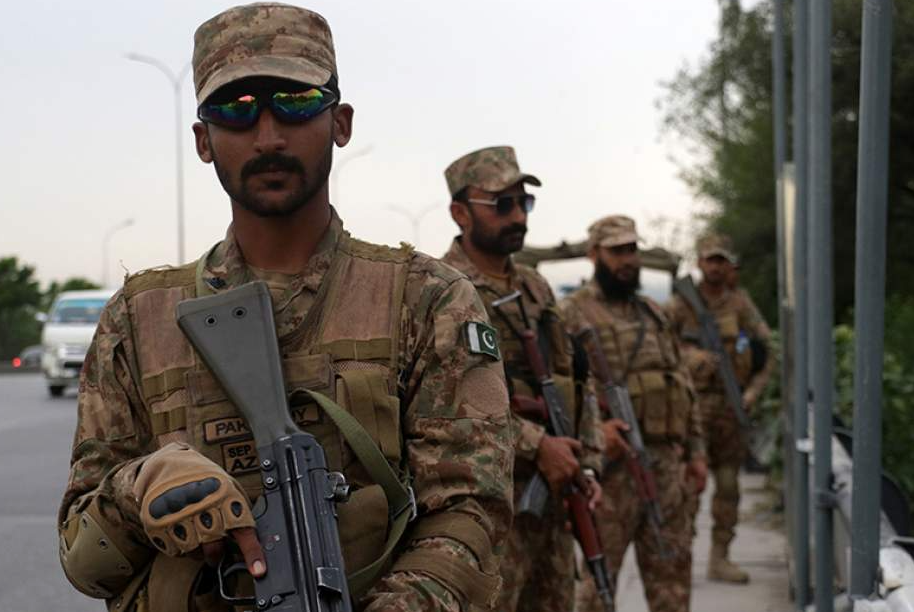
The escalation of hostilities across West Asia has placed the Islamic Republic of Pakistan at the epicenter of a dangerous geopolitical paradox. As regional friction intensifies following repeated strikes by Yemen’s Houthi rebels against critical Saudi infrastructure, the fragility of the broader security architecture in South Asia and the Gulf has been laid bare. Under direct directives from Tehran, the Axis of Resistance has effectively expanded the theater of operations beyond the Levant, directly threatening the economic arterial roads of the Arabian Peninsula. In response, policymakers in Washington and Riyadh have increasingly looked toward Islamabad as a potential military counterweight. With thousands of Pakistani troops already stationed across Saudi Arabia and a bilateral defense agreement anchoring relations between the two nations, there is growing expectation in Western and Gulf capitals that Pakistan could open a strategic eastern vector against Iran, forcing Tehran to reconsider its regional offensive.
Yet, this strategic calculus rests on a profound misreading of Pakistan’s internal vulnerabilities and external alignments. For military planners in Rawalpindi and foreign policy strategists in Islamabad, turning the eastern flank of Iran into an active battleground is not merely a risky geopolitical maneuver; it represents an existential gamble. Caught between the financial inducements of the Gulf states, the strategic demands of Washington, the deep economic dependence on Beijing, and the fragile peace along its 900 kilometer border with Iran, Pakistan finds itself trapped in a classic security dilemma. The decisions made in Islamabad will not only determine the trajectory of West Asian conflict but could also reshape the geopolitical contours of South Asia and the broader Eurasian landscape.
The structural ties binding Pakistan to Saudi Arabia and the United States form a complex Web of obligations. The security relationship between Riyadh and Islamabad is neither recent nor purely transactional, having been built upon decades of military collaboration, intelligence sharing, and joint defense training. Under the formal Strategic Mutual Defence Agreement, signed in Riyadh, both nations codified a collective security framework declaring that aggression against one state would be treated as aggression against both. Under these bilateral security arrangements, Pakistan has historically provided troop deployments to safeguard Saudi territory, train the Royal Saudi Land Forces, and secure key military installations across the Kingdom. These deployments, while officially categorized as defensive and technical, create an immediate operational exposure. When Houthi ballistic missiles and uncrewed aerial vehicles strike oil processing facilities or military logistics hubs in Saudi Arabia, they directly imperil the sovereign stability of a state that serves as Pakistan’s ultimate financial guarantor.
Financial dependence exacerbates this strategic obligation. The Pakistani economy has spent the better part of the past decade teetering on the edge of solvency, reliant on periodic bailouts from international financial institutions and crucial central bank deposits from Saudi Arabia and the United Arab Emirates. Riyadh has repeatedly rolled over billions of dollars in loans, supplied deferred-payment oil, and provided economic buffers that have prevented a total sovereign default in Islamabad. Consequently, when Saudi leadership views Houthi aggression as an intolerable threat backed by Tehran, the pressure on Pakistan to honor its implicit and explicit defense commitments becomes immensely heavy.
This pressure is further amplified by Washington’s evolving posture in the region. The United States, seeking to contain Iranian influence without engaging in an endless commitment of American ground forces, recognizes the unique capabilities of the Pakistani Armed Forces. As a nuclear-armed state with a battle-tested military apparatus, Pakistan possesses the conventional capacity to project power across its western border. A coordinated military posture on Iran’s eastern front would instantly divide Tehran’s strategic focus, compelling the Islamic Revolutionary Guard Corps to divert critical air defense systems, intelligence assets, and ground forces away from the Persian Gulf and the Levant. From the perspective of Western strategists, utilizing Pakistan’s geography and military strength represents an ideal mechanism to exert maximum pressure on Tehran, potentially forcing the Iranian leadership to accept American terms for a regional ceasefire and nuclear concessions. Furthermore, diplomatic developments signaling Washington’s willingness to allow Riyadh greater latitude in civil nuclear enrichment programs signify a broader realignment aimed at constructing an integrated anti-Iran coalition, with Pakistan eyed as its eastern anchor.
Despite the formidable incentives offered by the Saudi-American axis, the operational reality on the ground presents insurmountable barriers to an offensive Pakistani posture against Iran. Chief among these internal constraints is Pakistan’s delicate social and religious fabric. Pakistan is home to the world’s second-largest Shia Muslim population, comprising approximately fifteen to twenty percent of its total citizens. While the country has historically maintained a degree of pluralistic cohesion, it has also suffered from waves of violent sectarian conflict, often fueled by proxy rivalries between Riyadh and Tehran during the late twentieth century.
If Pakistan were to join an offensive campaign or open a hostile military front against Iran, the domestic fallout would be immediate and severe. Radical sectarian groups within Pakistan would almost certainly exploit the situation, triggering widespread communal violence, attacks on minority processions, and internal destabilization. The military leadership in Rawalpindi is acutely aware that a war against Iran would not remain confined to foreign battlefields; it would inevitably bleed into the streets of major urban centers like Karachi, Lahore, and Quetta. The internal security apparatus, already stretched thin combating domestic militant factions, would face a catastrophic crisis of internal cohesion.
Equally daunting are the geographical and military vulnerabilities along the border. The frontier separating the Pakistani province of Balochistan from the Iranian province of Sistan-Baluchestan is a rugged, sparsely populated, and historically lawless terrain. For decades, both nations have struggled to control cross-border smuggling, drug trafficking, and ethnic insurgencies. Ethnic Baloch separatist groups operate on both sides of the border, exploiting the difficult geography to launch hit-and-run attacks against infrastructure and security personnel.
Should Pakistan adopt a hostile stance toward Tehran, Iran could easily weaponize this border. By providing covert support, arms, and safe havens to Baloch insurgent groups, Iran could escalate an asymmetric campaign that would severely disrupt Pakistani infrastructure, particularly the key transportation corridors connecting the hinterland to the deep-water port of Gwadar. Furthermore, the Pakistani Armed Forces are already locked in a multi-front security posture, maintaining a heavy concentration of forces along the eastern border with India while conducting high-intensity counterterrorism operations along the northern border with Afghanistan. Opening a third active front along the nine-hundred-kilometer western border with Iran would severely overstretch the military, depleting operational reserves and creating strategic vulnerabilities that historical rivals could exploit.
Beyond domestic and regional operational constraints, Pakistan’s strategic choices are bound by the interests of its most crucial international partner, the People’s Republic of China. The relationship between Beijing and Islamabad, frequently characterized by both capitals as an all-weather strategic cooperative partnership, forms the cornerstone of Pakistan’s foreign policy and national defense architecture. Central to this relationship is the China-Pakistan Economic Corridor, a flagship enterprise of Beijing’s broader Belt and Road Initiative representing tens of billions of dollars in direct investments in energy grids, transport networks, and maritime infrastructure.
China’s strategic vision for Eurasia is explicitly predicated on regional stability, connectivity, and the seamless flow of energy resources across land and sea routes. Beijing has invested immense diplomatic capital in building a stable equilibrium in West Asia, an effort demonstrated by its mediation of the historic diplomatic rapprochement between Saudi Arabia and Iran. Furthermore, China maintains a comprehensive strategic partnership with Tehran, relying heavily on Iranian energy exports and viewing Iran as a vital transit node connecting Central Asia to the Persian Gulf.
From Beijing’s perspective, a conflict that draws Pakistan into an active military campaign against Iran would be disastrous. It would collapse the delicate balance China has cultivated in West Asia, jeopardize Chinese investments in Balochistan, and directly threaten the operational viability of Gwadar Port. Chinese policymakers have made it abundantly clear to leadership in Islamabad that Pakistan must not allow itself to be dragged into Western-led military adventures that target Eurasian neighbors. Russia, alongside other key members of the expanded BRICS bloc, shares this view, seeing an attack on Iran as an attempt to undermine the emerging multipolar economic architecture of the Global South.
For Pakistan, defying Beijing’s strategic guidance is functionally impossible. China is not only Pakistan’s primary supplier of advanced military hardware, including fighter aircraft, naval frigates, and air defense systems, but it also serves as the ultimate financial backstop against Western economic sanctions. Attempting to satisfy Washington and Riyadh at the expense of Chinese strategic interests would leave Pakistan isolated, economically vulnerable, and militarily compromised.
Confronted with these contradictory pressures, Pakistan’s grand strategy has evolved into a sophisticated balancing act, defined by defensive ambiguity and active diplomatic mediation. Islamabad has carefully delineated the boundaries of its security commitments to Saudi Arabia. While reaffirming its commitment to the territorial integrity of the Kingdom and the protection of Holy Sites, Pakistan has maintained that its deployed forces serve a strictly defensive mandate. By restricting its military presence to air defense operations, training, and static infrastructure protection within Saudi borders, Pakistan fulfills the core requirements of its mutual defense obligations without participating in offensive operations against Iranian forces or Houthi assets in Yemen.
Simultaneously, Pakistani leadership has activated backchannel diplomatic vectors to keep communications open with Tehran. Military and intelligence officials maintain continuous dialogue with their Iranian counterparts to manage border security, exchange intelligence on insurgent groups, and ensure that localized friction does not escalate into a strategic rift. Islamabad understands that its greatest leverage lies in its ability to serve as an indispensable bridge between conflicting power blocs.
Rather than acting as a military combatant, Pakistan has repeatedly offered itself as a mediator, attempting to broker regional de-escalation mechanisms that protect Saudi infrastructure while addressing Iranian security concerns. This strategic posture, often termed active neutrality, allows Islamabad to retain Saudi financial assistance and maintain its vital security dialogue with Washington without triggering domestic sectarian unrest, opening a catastrophic western front, or alienating its strategic patron in Beijing.
Ultimately, Pakistan’s dilemma highlights the broader transformation of global geopolitics, where middle powers are increasingly caught between overlapping security architectures and competing global alliances. For Islamabad, the path forward requires immense discipline and strategic restraint. Any miscalculation, whether driven by short-term economic desperation or external political coercion, risks pulling the country into a regional war that it can neither afford nor contain. By resisting the temptation to become an offensive actor on Iran’s eastern flank and instead leveraging its unique position to advocate for diplomatic equilibrium, Pakistan not only preserves its own national security but also remains a stabilizing factor in a region hovering on the brink of wider conflict.