

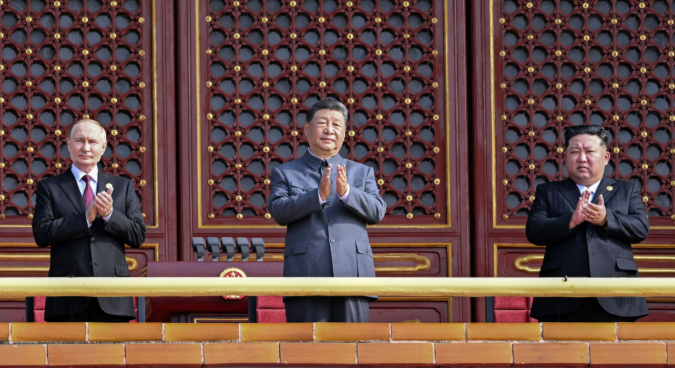
The return of Chinese President Xi Jinping to Pyongyang in June 2026 marked a profound recalibration of the geopolitical architecture in Northeast Asia. Amidst an increasingly fragmented global order, this high stakes summit between the Chinese leader and North Korean General Secretary Kim Jong un was far more than a ceremonial display of socialist camaraderie. It was a calculated, multidimensional chess move designed to project power, establish boundaries, and send unambiguous strategic signals to both Washington and Moscow. By placing defense cooperation at the forefront of the agenda and systematically omitting any mention of denuclearization, Beijing has signaled a historic pivot in its approach to the Korean peninsula, fundamentally altering the security calculus for the West and redefining its complex partnership with Russia.
The most striking departure from standard diplomatic protocol was the composition of the delegations that gathered in Pyongyang. For the first time since 1992, a Chinese defense minister accompanied the president on a state visit to North Korea. The inclusion of Chinese Defense Minister Dong Jun alongside his North Korean counterpart, No Kwang chol, elevated the summit from a traditional discussion on trade and diplomatic alignment into a explicit dialogue on security architecture. This development broke over three decades of precedent, signaling that the traditional boundaries of China and North Korea relations, previously defined by economic assistance and soft diplomacy, have expanded to encompass deep, structural military cooperation.
This military framing serves a dual purpose for Beijing. On one level, it is a direct response to the aggressive consolidation of the United States, South Korea, and Japan trilateral security partnership. As Washington deepens its extended deterrence commitments and conducts increasingly sophisticated joint maneuvers in the Western Pacific, Beijing views North Korea as an indispensable strategic buffer. By visibly reinforcing its security ties with Pyongyang, China is demonstrating that it can assemble its own counter-balancing coalitions. The presence of top military brass sends a clear message to Washington that any attempt to isolate or pressure China will be met with a solidified Eastern bloc, with North Korea firmly anchored under the Chinese security umbrella.
However, the strategic signaling was not directed solely at the West. In many ways, the subtext of the summit was aimed squarely at Moscow. Following the June 2024 mutual defense treaty signed between Vladimir Putin and Kim Jong un, North Korea has rapidly drawn closer to Russia, trading conventional munitions and personnel for critical Russian missile and satellite technology. This burgeoning axis has deeply disquieted Beijing, which views Russia as a transactional, disruptive actor capable of destabilizing China’s immediate periphery. Through his prominent calls for enhanced military and law enforcement exchanges, Xi Jinping effectively reminded both Kim and Putin that China remains the ultimate arbiter of stability in the region. Beijing is asserting its historical primacy, letting Moscow know that while temporary transactional arrangements are permissible, North Korea remains fundamentally tethered to the Chinese sphere of influence.
This delicate balancing act highlights the intense undercurrents of competition within the nominal anti Western alignment. China watches with growing concern as North Korea gains a dangerous degree of leverage through its support of the Russian war effort in Ukraine. A fully mobilized, technologically advanced North Korea that is heavily dependent on Moscow reduces Beijing’s ability to control the escalation cycle on the peninsula. By stepping into Pyongyang with a high level military delegation, Xi is attempting to reassert a degree of structural oversight, subtly warning Kim against becoming overly reliant on Russia’s short term incentives while offering a more stable, long term strategic alternative.
Equally significant was the deliberate, systemic silence regarding the denuclearization of the Korean peninsula. For decades, China’s official policy framework rested on a three pronged formula: peace, stability, and the complete, verifiable denuclearization of the Koreas through multilateral dialogue. Yet, the official statements emerging from this summit completely excised any mention of a nuclear free peninsula, a stark contrast to Xi’s previous state visit in 2019. This omission matches a broader, quiet shift in Beijing’s policy, which was foreshadowed when support for denuclearization was dropped from China’s landmark arms control white paper.
This silence amounts to a de facto acquiescence to North Korea’s status as a nuclear weapons state. By withholding criticism and refusing to endorse the denuclearization rhetoric favored by international bodies, Beijing is practicing intentional silence. This serves as a powerful diplomatic currency. In exchange for this tacit acceptance of its nuclear force, China expects North Korea to remain aligned with its broader regional objectives. This trade-off was explicitly highlighted by Kim Yo jong’s fiery rhetoric on the eve of the summit, where she declared North Korea’s nuclear status to be an unalterable reality and mocked American expectations of disarmament. Beijing’s refusal to challenge this narrative proves that it now values North Korea’s utility as an anti Western bastion far more than the abstract ideal of nonproliferation.
This shifts the diplomatic landscape significantly for the United States. For years, Washington operated under the assumption that China could eventually be persuaded to use its immense economic leverage to force North Korea back to the negotiating table. The 2026 summit effectively shatters that illusion. By treating North Korea as a legitimate socialist partner and offering public endorsements of its independent path, Xi has signaled that the era of Chinese cooperation on North Korean sanctions is functionally over. Instead, Beijing is using its leverage over Pyongyang as a bargaining chip, reminding Washington that any future diplomatic efforts to stabilize the region must give greater deference to Chinese core interests.
Despite this apparent alignment, the relationship between Beijing and Pyongyang is not without its internal friction points. The discrepancy in media coverage between the two capitals reveals deep anxieties within the North Korean leadership. While Chinese state media eagerly broadcasted Xi’s remarks on deepening military and law enforcement ties, North Korean state media remained noticeably quiet on these specific proposals. This selective reporting underscores Pyongyang’s historical aversion to becoming a subordinate client state to any single global power.
Kim Jong un has long mastered the art of equidistant diplomacy, carefully walking a tightrope between his two giant neighbors to maximize his own autonomy. The sudden influx of Russian technology and diplomatic cover has given Pyongyang unprecedented breathing room, allowing it to resist total economic and political integration into the Chinese model. North Korea is deeply wary of any military cooperation with Beijing that might cross a red line, turning the country into a mere forward operating base for the People’s Liberation Army. Kim seeks economic aid, border reopenings, and diplomatic protection from China, but he is highly resistant to structural military integration that could compromise his absolute control over his armed forces.
Furthermore, there is a clear economic anxiety underlying Pyongyang’s caution. As the two sides commit to aligning their development strategies and fully reopening border crossings, North Korea faces the daunting reality of economic asymmetry. The regime is hyper vigilant about its state directed system becoming entirely consumed by Chinese supply chain networks or dominated by Chinese economic dictates. Kim wants Chinese capital, consumer goods, and agricultural assistance, but he wants them on his own terms, using Russian engagement as a vital counterweight to prevent Beijing from exercising absolute leverage.
This complex dynamic means that while we are seeing an undeniable warming of relations, a formal, integrated trilateral military alliance between China, Russia, and North Korea remains highly unlikely in the near future. As seasoned intelligence analysts observe, Russia remains a lower cost, less burdensome partner for North Korea’s immediate tactical needs, while China represents the long term, indispensable anchor for the regime’s survival. Kim will continue to look for low risk, high reward opportunities to cooperate with Beijing, but he will do so with a degree of reserve, ensuring that his military apparatus remains fiercely independent.
For the international community, the implications of this summit are profoundly destabilizing. The region is settling into a rigid block system reminiscent of the darkest days of the Cold War. On one side stands the United States, Japan, and South Korea, bound by institutionalized intelligence sharing and integrated missile defense. On the other side is a loose but highly potent alignment of China, Russia, and North Korea, who despite their internal suspicions, are fundamentally united by a shared desire to erode American global hegemony.
The 2026 Pyongyang summit demonstrates that China has chosen its side in this confrontation with total clarity. By elevating military ties and quietly burying the goal of denuclearization, Xi Jinping has reinforced a vital buffer zone along China’s northeastern border. This strategic repositioning ensures that if tension flares over Taiwan or the South China Sea, Washington will be forced to look over its shoulder at a nuclear armed, conventionally revitalized North Korea that is politically backed by Beijing.
Ultimately, the meeting in Pyongyang was an exercise in sophisticated strategic signaling. To the United States, it was a display of regional leverage, a warning that the road to stability in Asia runs directly through Beijing. To Russia, it was a firm reminder of who holds the true keys to the kingdom in Northeast Asia, asserting that Moscow’s transactional relationships cannot override China’s enduring, structural ties. And to North Korea, it was an offer of long term security and ideological validation, provided Pyongyang recognizes its place within the broader Chinese vision for a post American Asia. As the dust settles on this historic visit, the world must confront a reality where North Korea is no longer an isolated rogue state, but a fully integrated, nuclear armed node in the shifting global balance of power.