

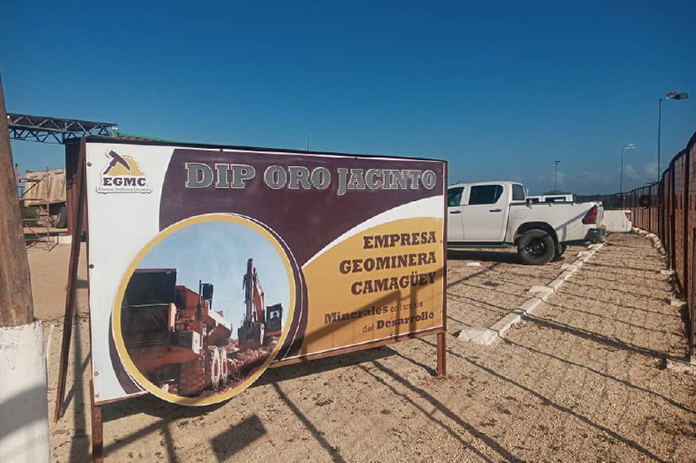
The latest escalation in the United States economic warfare against Cuba represents a sophisticated fusion of traditional regime pressure and contemporary resource nationalism. By blacklisting the state-owned mining company GeoMinera alongside the financial and logistical pillars of the military-run conglomerate Grupo de Administración Empresarial SA, known as GAESA, the Trump administration has signaled a profound shift in its Caribbean strategy. Announced directly by US Secretary of State Marco Rubio, these aggressive sanctions go far beyond a routine human rights reprimand. Instead, they position Cuba as a critical frontline in the wider global struggle to decouple vital resource supply chains from Beijing and its aligned networks. By weaponizing the international financial architecture against Havana’s metallic mineral assets, Washington is executing a cold-eyed exercise in economic containment, attempting to freeze out foreign capital and pre-emptively sever backdoor supply routes that Chinese industrial entities might exploit for critical minerals.
The timing of this diplomatic and economic offensive is engineered to inflict maximum structural disruption on the Cuban state. Only days prior to the American announcement, Havana had unveiled an ambitious package of one hundred and seventy-six economic reforms, representing the island’s most significant push toward economic liberalization in generations. This reform package was designed to expand private enterprise, loosen state trade monopolies, and desperately attract liquid foreign investment to salvage an economy crippled by rolling blackouts and chronic shortages of basic goods. By imposing comprehensive sanctions immediately afterward, Washington has effectively suffocated these reforms in their infancy. The message from the State Department is unyielding and clear, as the administration has chosen to disregard Havana’s tactical openings, choosing instead to signal to global markets that any capital entering the island will be treated as hostile to American economic security.
To understand the strategic depth of these designations, one must look past the familiar rhetorical battles over domestic political repression and focus on the rapidly organizing global resource competition. The targeting of GeoMinera, which manages Cuba’s non-nickel metallic mineral assets and foreign ventures, occurred directly alongside the high-profile Pax Silica summit hosted at the US Department of State under the leadership of Under Secretary Jacob Helberg. This international gathering has expanded dramatically, bringing together key global partners, including the European Union, Germany, and India, to forge an insulated economic order designed to secure the entire technological stack. The initiative deliberately links everything from critical mineral extraction and semiconductor fabrication to advanced intelligence infrastructure. By cutting GeoMinera off from the Western financial system at this precise juncture, the United States is actively policing its geopolitical backyard, ensuring that unaligned mineral deposits do not fall under the orbit of rival powers while Washington codifies its alternative supply networks.
The specific involvement of Chinese engineering and capital in Cuba’s mining operations highlights the true systemic target of Washington’s maneuver. GeoMinera’s flagship joint ventures, such as the Nueva Sabana gold and copper project developed alongside Australian-listed Antilles Gold, have relied heavily on Chinese contractors like Xinhai Mining Technology and Equipment for critical engineering services and project financing. From a strategic perspective, these mining sites are not merely commercial enterprises but are potential nodes in a China-centric global supply chain. For years, Beijing has methodically secured extraction rights across the Global South to maintain its monopoly over advanced manufacturing inputs. By placing GeoMinera and its subsidiary ventures under strict sanctions, Washington is implementing a doctrine of forward containment, raising the legal and financial risks for Western firms while simultaneously disrupting the logistical and technical partnerships that Chinese firms use to establish a foothold in the Western Hemisphere.
However, the true structural devastation of this sanctions package lies not just in the mining sector itself, but in the calculated destruction of the financial and logistical infrastructure that makes foreign trade possible. The blacklisting of Almacenes Universales is a massive blow to Cuba’s international commerce. As a premier warehousing and logistics enterprise controlled by the military conglomerate, Almacenes Universales commands the container traffic flowing through the Mariel Special Development Zone, the crown jewel of Cuba’s modern transport infrastructure and investment strategy. By sanctioning the very gateway through which imports and exports must flow, the United States has introduced a profound level of risk into the maritime shipping sector. International shipping lines and logistics conglomerates must now calculate whether servicing Cuba’s primary development zone is worth the existential risk of losing access to American ports and trading networks.
This logistical strangulation is reinforced by the blacklisting of Banco Financiero Internacional and the financial management firm RAFIN. Banco Financiero Internacional acts as the primary commercial conduit for foreign corporations operating within the island, processing the vast majority of international currency transactions and corporate conversions. In the architecture of economic sanctions, targeting a nation’s primary commercial bank is equivalent to cutting the central nervous system of its external trade. Foreign investors, regardless of their nationality or ideological alignment, require predictable, secure, and legally compliant banking channels to repatriate profits and pay local suppliers. By designating this institution, Washington has effectively trapped foreign capital already on the island and built a regulatory wall that deters future investors, who will find it nearly impossible to conduct business without inadvertently interacting with a sanctioned entity.
The broader systemic implications for global corporations are severe, as the State Department has issued explicit warnings regarding secondary sanctions exposure. Foreign companies operating within Cuba’s metals, mining, financial services, energy, or security sectors now face the very real prospect of being entirely severed from the United States financial system if they continue their associations with designated Cuban enterprises. This weaponization of secondary sanctions forces an asymmetric choice upon international businesses, as no rational global corporation will risk its access to the multi-trillion-dollar American market to preserve a speculative mining or logistics venture in Havana. This regulatory overreach effectively globalizes American foreign policy, transforming a bilateral dispute into an international mandate that paralyzes Cuba’s ability to diversify its trading partners.
Predictably, the Cuban government reacted with intense fury, with Foreign Minister Bruno Rodriguez fiercely condemning the measures as dishonest and malicious attempts to suffocate the domestic economy. From Havana’s perspective, these sanctions are an existential challenge designed to provoke social unrest by deliberately exacerbating the island’s current material miseries. The government’s strategy of using controlled economic liberalization to attract Western capital while maintaining political control has been completely upended. Without access to the global banking system or the ability to offer secure legal protections to foreign partners, the newly announced private enterprise reforms are stripped of their economic utility, leaving the regime with fewer options to alleviate its domestic crises.
From a grand strategy viewpoint, the Trump administration’s actions reflect a highly integrated approach to national security, where economic pressure and supply chain security are treated as indistinguishable. The era when Washington viewed Cuba through a purely regional or Cold War lens has passed. Cuba is now viewed as a strategic piece on a global chessboard where the primary objective is the containment of Chinese industrial influence and the preservation of Western technological dominance. By taking a hardline stance against GeoMinera and the networks of GAESA, the United States is signaling to both its allies and adversaries that it will aggressively use its economic power to prevent rival powers from establishing deep supply chain roots in the Americas.
Ultimately, this latest round of sanctions represents a highly calculated escalation that permanently alters the dynamic of foreign investment in the Caribbean. By targeting the precise financial hubs and logistical arteries that foreign businesses rely upon, the United States has effectively placed the entire Cuban economy under a state of financial siege. While the short-term impacts will be felt most acutely by the Cuban population navigating deepened economic hardships, the long-term strategic objective is to reshape the geography of global production. As Washington accelerates its efforts through the expanding Pax Silica coalition to build insulated, Western-aligned supply chains for the technologies of the future, it is systematically clearing its home hemisphere of foreign economic influence, ensuring that Cuba’s mineral wealth cannot be leveraged by geopolitical rivals.