

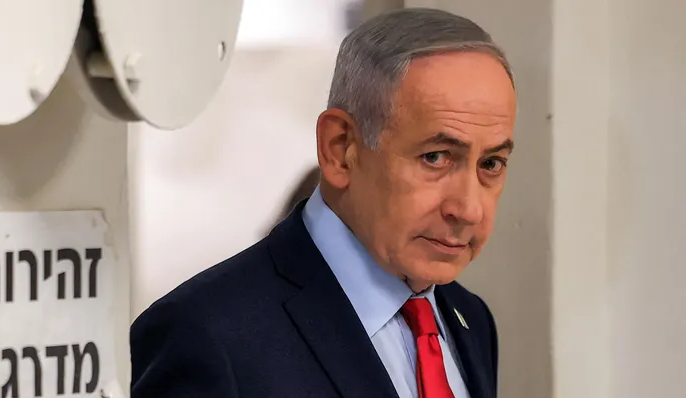
For decades, Benjamin Netanyahu has anchored his entire political identity on a singular, seductive promise to the Israeli electorate: that he possesses a unique, almost supernatural mastery over American politics. He positioned himself not merely as a prime minister, but as a global statesman who could manipulate the levers of power in Washington, bend American presidents to his will, and build an unshakeable wall of Western defense around the Jewish state. This narrative reached its absolute zenith during the first administration of Donald Trump, an era characterized by theatrical diplomatic triumphs, including the relocation of the United States embassy to Jerusalem, American recognition of Israeli sovereignty over the Golan Heights, and the historic Abraham Accords. Netanyahu used these victories to convince his public that a deep, personal fraternity with Trump gave Israel unprecedented veto power over American foreign policy in West Asia.
Today, that carefully constructed illusion lies in complete ruins. The sudden announcement of a bilateral interim peace agreement between the United States and Iran is more than just an unexpected diplomatic pivot; it represents a definitive, historic failure of Netanyahu’s entire strategic doctrine. The architect of the supposed grand alliance has been left standing entirely alone on the global stage. Netanyahu bet his political survival, his legacy, and the immediate security of his nation on a joint military campaign that he promised would finally topple the clerical regime in Tehran, dismantle its proxy networks, and erase its nuclear ambitions. Instead, he has been profoundly sidelined by an American president who, true to his foundational political instincts, ultimately prioritized domestic economic stability and an aversion to foreign entanglements over the ideological battles of his allies.
The reality of this moment is as stark as it is deeply embarrassing for Jerusalem. For months, Israel has been engaged in a punishing, multi-front conflict, enduring regional instability, severe economic strain, and a continuous barrage of rocket fire from Lebanon and beyond. Netanyahu assured his citizens that this immense sacrifice was the necessary price for a permanent restructuring of West Asian power dynamics. He implied that with American military asset deployments backing Israeli actions, total victory was inevitable. Yet, the moment the costs of the conflict began to threaten global commerce, choke trade routes, and spike energy prices, Washington quietly altered its trajectory. Trump chose a transaction over a transformation. In doing so, the American administration did not just negotiate with Israel’s chief adversary; it actively insulated Tehran from the very existential threat Netanyahu had spent his career trying to manufacture.
The specific details of the newly brokered memorandum of understanding reveal a shocking disregard for Israel’s core security red lines. Washington has agreed to lift its sweeping naval blockades and authorize the release of billions of dollars in frozen assets to the Islamic Republic. In return, the global economy receives the immediate reopening of the critical Strait of Hormuz oil chokepoint. Meanwhile, the very existential dangers that Netanyahu used to justify the devastation of this war have been completely marginalized. The permanent dismantling of Iran’s nuclear infrastructure, the termination of its ballistic missile development, and a total cessation of its funding for regional armed proxies are completely absent from the immediate terms of the pact. Instead, these massive, complex issues have been kicked down the road into a highly volatile sixty-day negotiating window, a timeframe that senior Israeli military and intelligence officials privately admit will almost certainly be extended to ninety days or longer, effectively tying Israel’s hands while giving Tehran precious breathing room to stabilize its battered domestic economy.
The strategic failure is compounded by the unsustainable situation unfolding along Israel’s northern border. While Netanyahu publicly maintains a defiant posture, insisting to reporters that Israel is not bound by the Swiss-brokered accord and will retain full freedom of action within its southern Lebanese security zone, the diplomatic reality is far less accommodating. Trump’s patience with Israeli military unilateralism has entirely evaporated. The American president’s recent, profanity-laced telephone tirades directed at the Israeli prime minister, demanding an immediate end to airstrikes in Beirut, demonstrate a fundamental divergence of interests. Washington now openly views continued Israeli military operations not as a brave stand against terrorism, but as a reckless, destabilizing nuisance that directly threatens American economic objectives. When Netanyahu launched subsequent strikes on the Lebanese capital, only to provoke an immediate Iranian missile response and a stern, public rebuke from Trump, the myth of the indispensable ally was permanently shattered.
Netanyahu’s subsequent late-night press conference in Jerusalem was a masterclass in political vulnerability masquerading as executive wisdom. His meek assertion that he and Trump simply see eye-to-eye less so at times, and his defensive reminder that he alone is in charge of Israel’s security, was the performance of a leader desperately trying to conceal his own geopolitical irrelevance. For a politician who once filled the skylines of Tel Aviv and Jerusalem with massive campaign billboards of himself smiling and shaking hands with the American president, the transition from an equal partner in global strategy to an inconvenient obstacle to American interests is total. He has discovered too late that in Trump’s world view, alliances are not emotional or historical obligations; they are temporary business arrangements subject to immediate cancellation when the overhead becomes too high.
The domestic political fallout inside Israel is already proving catastrophic for the long-serving prime minister, who is currently facing an autumn election that consensus polling indicates he is projected to lose. For years, Netanyahu managed to outmaneuver his domestic rivals by arguing that whatever his flaws at home, he was the only leader capable of managing the volatile relationship with Washington and protecting Israel’s interests from American pressure. This argument has now been thoroughly falsified. According to data released by the Israel Democracy Institute, public confidence in the alliance has plummeted, with only forty-one percent of Jewish Israelis now believing that their national security remains a central consideration for the American president, a staggering decline from sixty-four percent earlier this year. The Israeli public has grown profoundly skeptical of Washington’s commitments, and they blame Netanyahu for leaving them exposed.
Political analysts and academic experts across the country are reaching a rare, unified conclusion: Netanyahu cannot sell this agreement to the Israeli public, nor can he spin it as a victory. The best that his administration can hope for is that the upcoming diplomatic talks fail entirely and the war restarts under conditions more favorable to Israel, a desperate and cynical gamble that offers no real path to long-term stability. Netanyahu’s domestic opponents are already capitalizing on this vulnerability, accurately portraying the Swiss pact as one of the most comprehensive foreign policy disasters in the modern history of the state. By tying Israel’s strategic cart so completely to the unpredictable, transactional nature of an America-First agenda, Netanyahu has achieved the exact opposite of his lifelong goals. The clerical regime in Tehran has survived the storm, billions of dollars will soon flow back into its depleted state coffers, its regional proxy network remains functional, and Israel finds itself politically isolated from its primary superpower benefactor.
Ultimately, this crisis exposing the limits of Israeli influence is the natural conclusion of Netanyahu’s hubris. He genuinely believed that he could dictate the foreign policy parameters of the world’s wealthiest superpower, using domestic American political leverage to force Washington into a forever war of regional transformation. He failed to realize that the American electorate, and the president they chose, are deeply fatigued by West Asian conflicts. By aggressively pursuing an escalatory military path against the explicit warnings of the White House, Netanyahu did not project strength; he simply demonstrated his own inability to read the shifting tides of global politics. He bet his entire political survival, his freedom from legal jeopardy, and the strategic future of his country on a single roll of the dice in Washington. Now that the dice have settled, Israel is left to manage the dangerous fallout of an incomplete war, burdened by an alienated ally, an emboldened adversary, and a prime minister whose vaunted international genius has been exposed as nothing more than a dangerous, costly illusion.