

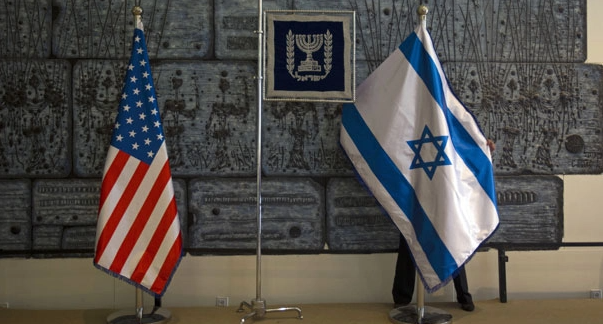
For decades, American military aid to Israel was treated as one of the few untouchable pillars of Washington’s foreign policy. Since the late 1970s, successive administrations and Congresses viewed military assistance not merely as financial support, but as a strategic guarantee designed to preserve Israel’s qualitative military edge in a hostile region. The logic was shaped during the Cold War, strengthened after the 1973 Yom Kippur War, and institutionalised following the 1979 Egypt–Israel peace treaty. What emerged was a long-term system in which the United States became Israel’s principal military patron while simultaneously reinforcing its own influence across West Asia.
That arrangement is now entering unfamiliar territory.
When Israeli Prime Minister Benjamin Netanyahu publicly suggested that Israel should eventually phase out direct American military aid, many observers initially interpreted the statement as symbolic political theatre. But beneath the rhetoric lies a far deeper strategic calculation. Netanyahu is not rejecting the alliance with Washington. He is attempting to redesign it before changing political realities inside America redesign it for him.
Under the current ten-year memorandum signed during the administration of Barack Obama, Israel receives approximately $3.8 billion annually in military assistance. Yet these funds come with important restrictions. Much of the aid must be spent on American defence systems and American military contractors under the Foreign Military Financing framework. Israel cannot freely redirect those funds toward domestic weapons manufacturers or purchase alternative systems from other suppliers.
For years, this arrangement benefited both sides. Washington strengthened its closest regional ally while simultaneously subsidising its own defence industry. Israel gained access to advanced American platforms and guaranteed strategic backing. But the regional and political environment surrounding this relationship is changing rapidly.
Israel today is no longer the economically fragile state it was during earlier decades of conflict. It has evolved into one of the world’s leading defence and technology powers. Israeli companies now produce globally competitive missile defence systems, drones, cyber capabilities, electronic warfare platforms and surveillance technologies. The country increasingly sees itself not as a dependent security client but as a technological military power capable of financing much of its own defence structure.
Netanyahu’s comments reflect this evolving self-image. He wants Israel to be perceived less as a state surviving through American subsidies and more as an equal strategic partner contributing innovation, intelligence and military technologies to a broader Western security ecosystem. Joint missile defence projects such as Arrow and David’s Sling already reflect this transition from unilateral aid to co-development partnerships.
But economics alone does not explain the timing of Netanyahu’s remarks. The deeper issue is political.
The American domestic consensus surrounding Israel is no longer as stable as it once appeared. For decades, support for Israel transcended partisan divides in Washington. That era is visibly weakening. Public anger following the destruction in Gaza, growing criticism of Israeli military operations, and shifting generational attitudes inside the United States have transformed support for Israel from a bipartisan strategic consensus into an increasingly polarising political issue.
Polling trends now reveal something unprecedented: younger Americans across both political camps are significantly more critical of Israel than previous generations. Opposition to unconditional military aid has grown steadily, especially after the Gaza war and the humanitarian devastation that followed. Even within Congress, criticism that was once politically marginal has moved closer to the centre of debate.
Figures such as Bernie Sanders openly argue for restricting or ending arms transfers to Israel. Prominent Democratic voices increasingly question why American taxpayers should continue underwriting Israeli military operations indefinitely. What would have been politically unthinkable ten years ago is now openly debated inside mainstream American politics.
Netanyahu understands the strategic implications of this shift perhaps better than many of his critics. He recognises that while Donald Trump remains deeply supportive of Israel, future administrations may not maintain the same approach, particularly if domestic political pressure intensifies. Long-term dependency on American military aid therefore becomes a strategic vulnerability rather than a guarantee of stability.
By advocating a gradual transition away from direct aid, Netanyahu is attempting to pre-empt a future political rupture in Washington. If aid eventually becomes politically unsustainable inside the United States, Israel risks appearing isolated and dependent at precisely the wrong moment. Transforming the relationship into one centred on joint defence production, technological cooperation and strategic coordination allows Israel to preserve the alliance while reducing the symbolism of dependency.
There is also an industrial dimension to this debate that is often overlooked. Many Israeli defence analysts argue that continued reliance on American aid indirectly constrains Israel’s own defence sector. Funds tied to American procurement requirements limit the ability of Israeli companies to scale domestic production independently. Ending or restructuring the aid model could accelerate the growth of Israel’s indigenous defence industry, particularly as global demand for advanced missile defence, drone systems and cyber warfare technologies continues to expand.
At the same time, Washington itself faces contradictions. American military aid to Israel is frequently presented domestically as generosity toward an ally, but in practice much of the funding cycles directly back into the American economy through defence contracts and manufacturing jobs. Thousands of jobs inside the United States depend on these procurement structures. This explains why some figures inside the American political establishment remain reluctant to embrace Netanyahu’s proposal despite broader debates over aid.
The geopolitical environment also matters. West Asia is entering a period of strategic realignment shaped by energy insecurity, Iranian escalation risks, maritime instability and emerging defence partnerships between Israel and several Arab states. Netanyahu likely calculates that a more self-sufficient Israel integrated into regional security frameworks appears strategically stronger than one heavily reliant on annual American assistance packages.
Yet this transition carries risks.
Military aid is not simply about money or weapons. It symbolises the depth of the U.S.–Israel strategic relationship itself. Reducing that visible commitment could embolden adversaries or create perceptions of weakening American backing even if operational cooperation remains strong behind the scenes. Symbolism matters in deterrence politics, particularly in a region as psychologically driven as West Asia.
More importantly, the transformation Netanyahu seeks may not fully solve Israel’s image problem inside America. Opposition among younger Americans increasingly stems not from aid structures alone, but from broader moral, humanitarian and geopolitical concerns surrounding the Israeli-Palestinian conflict. Rebranding the relationship as “partnership” instead of “assistance” cannot by itself reverse deeper political and generational shifts already underway inside the United States.
Still, Netanyahu’s remarks reveal a larger reality many policymakers are reluctant to admit openly: the foundations of the post-Cold War West Asian order are gradually being renegotiated. The debate over military aid is no longer simply about budgets. It is about the future structure of American influence, Israel’s evolving identity as a regional power, and the durability of political alliances in an era of rising domestic polarisation.
For nearly half a century, U.S. military aid symbolised Israel’s strategic dependence on Washington. Netanyahu now appears determined to replace that image with something else entirely: a model in which Israel is not viewed as a protected client state, but as an autonomous military-technological power whose alliance with America survives through mutual strategic utility rather than permanent financial dependence.
Whether that transition succeeds may shape not only the future of U.S.–Israel relations, but also the wider geopolitical balance across West Asia in the decades ahead.