

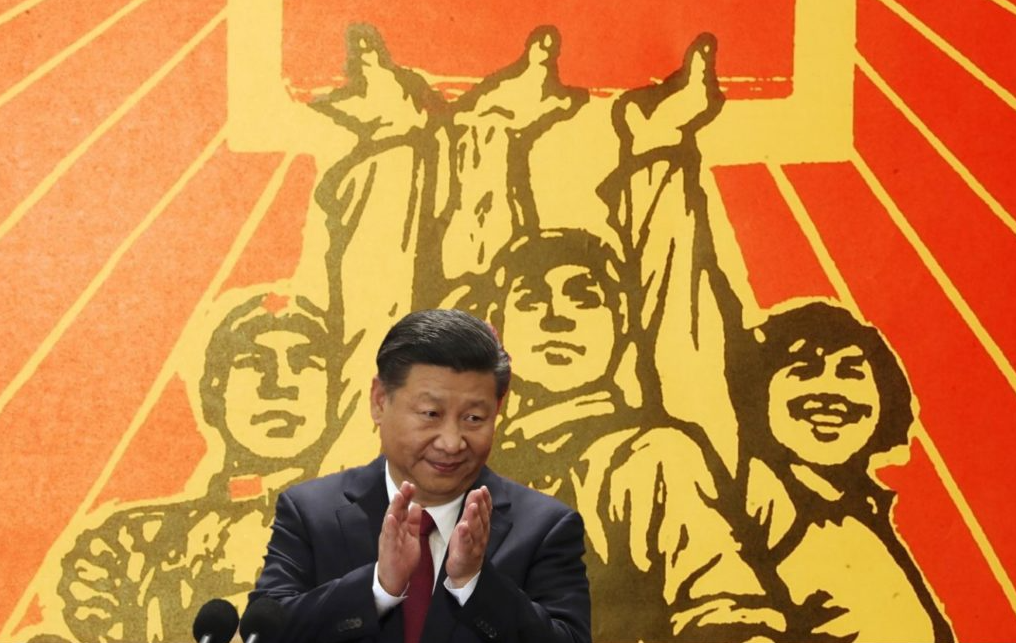
For years, China projected the image of an unstoppable civilisational superpower rising to reshape the international order. The narrative was carefully constructed through massive infrastructure corridors, endless industrial expansion, rapidly growing naval fleets, breakthroughs in artificial intelligence, ambitious space programmes, quantum research laboratories, hypersonic missile testing, and a state structure capable of mobilising national resources at extraordinary speed. Across Asia, Africa, Latin America and even parts of Europe, governments, corporations and political elites gradually began psychologically internalising the idea that the future may already belong to Beijing. Yet beneath that projection lies a far more complicated reality.
China is powerful, but not yet powerful enough to fully replace the United States as the undisputed centre of global power. Its greatest strength today is not absolute military superiority or complete technological dominance. Its greatest strength is strategic patience combined with psychological projection. Beijing has successfully convinced large parts of the world that resisting China may eventually become futile. That perception itself has become one of China’s most valuable geopolitical weapons.
The United States still maintains overwhelming structural advantages. American military spending remains significantly larger than China’s by almost every recognised estimate. Washington still controls the most powerful global naval architecture ever assembled, maintains hundreds of overseas military facilities, possesses unmatched long-range force projection capabilities, eleven carrier strike groups, advanced stealth aviation networks, nuclear submarine superiority and decades of real combat experience accumulated from conflicts across West Asia, the Balkans and Afghanistan. China, despite its extraordinary military modernisation, has not fought a major war since the 1979 conflict with Vietnam.
This matters more than many realise. Military hardware alone does not determine battlefield effectiveness. Combat experience, logistics under pressure, battlefield improvisation, operational endurance and coalition warfare all shape actual military power. The People’s Liberation Army is large, technologically improving and increasingly sophisticated, but simulations and military exercises cannot perfectly substitute for wartime stress. Even Chinese strategic documents quietly acknowledge this gap by focusing on “full modernisation” targets for 2035 rather than claiming immediate parity with the United States today.
Maritime superiority remains one of the defining pillars of modern power. China has built the world’s largest navy by ship numbers and now launches warships at a pace unmatched by any other country. Yet the United States Navy still controls the broader architecture of global sea power through carrier operations, allied ports, nuclear submarines, integrated logistics and decades of maritime coordination with NATO and Indo-Pacific allies. Washington’s alliance chain stretching from Japan and South Korea to Guam, Australia and the Indian Ocean still forms a powerful containment arc around China’s maritime ambitions.
Beijing understands this vulnerability deeply. Much of China’s economic survival depends on energy imports and maritime trade passing through narrow chokepoints such as the Strait of Malacca. Chinese strategists have long feared that in a prolonged conflict, hostile naval powers could disrupt those routes. This “Malacca dilemma” is precisely why the South China Sea, Taiwan Strait, Gwadar, Djibouti and Indian Ocean access routes remain central to Beijing’s long-term geopolitical calculations.
China’s technological rise is also more layered than many simplistic narratives suggest. Beijing has undeniably achieved major advances in telecommunications, electric vehicles, drone manufacturing, battery technology, AI integration, quantum communication research and industrial scaling. Chinese scientists increasingly compete at the frontier of quantum computing, semiconductor development and space systems. China’s launch of the Micius satellite demonstrated serious ambitions in quantum-encrypted communications, an area many analysts believe could shape the future balance of intelligence and cyber warfare.
Yet much of China’s technological ascent was accelerated through access to Western markets, Western universities, foreign investment, industrial transfer agreements, reverse engineering, talent acquisition programmes and persistent allegations of industrial espionage. Western corporations searching for cheaper production networks helped transfer manufacturing capacity into China for decades. Ironically, many of the same political and corporate systems now warning about Chinese dominance were instrumental in constructing the industrial foundations that empowered Beijing in the first place.
This does not mean China lacks genuine innovation. That argument is now outdated. Chinese firms increasingly dominate sectors such as EV batteries, solar infrastructure, drone manufacturing and high-speed rail systems. Companies such as BYD and DJI have become globally competitive on merit, not simply through imitation. However, China’s rise was not built in isolation. It emerged inside a globalised economic order heavily enabled by Western capital, Western consumption and Western manufacturing dependency.
China’s economic strength also appears more disciplined because Beijing avoided one of Washington’s greatest strategic weaknesses: unnecessary military overstretch. The United States spent decades trapped in Iraq, Afghanistan, Libya and multiple indirect conflicts across West Asia. These wars consumed trillions of dollars, fractured domestic political cohesion and gradually weakened confidence in American strategic discipline. China carefully studied those mistakes.
Beijing understood something ancient strategists understood centuries ago: the highest form of victory is achieved before the battlefield is reached. This principle closely resembles the doctrine articulated in The Art of War, particularly the concept of “winning without fighting.” China’s modern geopolitical behaviour increasingly reflects this philosophy. It expands economically before militarily. It creates dependency before confrontation. It shapes perception before escalation.
The Belt and Road Initiative, industrial supply chain dominance, rare earth processing control, digital infrastructure expansion and strategic port investments all serve this broader logic. China processes a dominant share of the world’s rare earth minerals, giving Beijing enormous leverage over industries critical for electronics, green energy and defence manufacturing. Nations deeply integrated into Chinese finance, manufacturing and infrastructure gradually begin adjusting their political calculations accordingly.
At the same time, many of China’s most important strategic partners remain deeply unstable or economically vulnerable. Russia remains locked in prolonged confrontation with the West. Iran faces sanctions, military escalation risks and internal economic pressure. Pakistan continues struggling with debt instability and political fragmentation. North Korea survives under extreme isolation and functions more as a strategic buffer state than a stable long-term economic ally. Several Belt and Road projects have also generated backlash, debt concerns or sovereignty fears in participating countries. China’s external network appears expansive, but much of it is built around fragile geopolitical environments rather than fully consolidated centres of stability.
This is where the psychological dimension becomes decisive. China’s rise depends partly on convincing the world that resistance is fragmented and temporary. Beijing benefits when rival powers remain divided, distracted and internally polarised. Under Donald Trump, American political divisions became more visible than at any point in recent decades. Polarisation inside the United States weakened confidence among allies while simultaneously allowing Beijing to project itself as the more stable long-term actor. Even when America retains superior capabilities, domestic fragmentation damages the perception of strategic continuity.
At the same time, the United States continues to suffer from another structural weakness: strategic impatience. China is often stubborn in pursuing long-term objectives. Beijing is willing to absorb economic pain, diplomatic criticism and temporary isolation if it believes such sacrifices strengthen long-term national positioning. That stubbornness has become part of its statecraft. Unlike many Western democracies shaped by short electoral cycles, China’s centralised political system allows leadership continuity over decades.
History repeatedly shows that great powers rarely collapse simply because another state becomes stronger. They decline because they exhaust themselves strategically while their rivals conserve energy and consolidate strength. Imperial Britain experienced this after two world wars. The Soviet Union experienced it through prolonged economic overstretch and internal stagnation. China has studied those historical lessons carefully.
This does not mean China has already won the competition. Far from it. China still faces demographic decline, youth unemployment pressures, property market instability, export vulnerabilities and growing suspicion from neighbouring powers including India, Japan, Vietnam and parts of Europe. Its military modernisation remains largely untested. Its global alliance system remains weaker than America’s. And its economy still depends heavily on global trade routes protected partly by the same maritime order historically dominated by the United States Navy.
Yet Beijing understands something deeper about power in the twenty-first century: psychological surrender often arrives before material surrender. If enough nations begin believing China’s dominance is inevitable, they will gradually adapt their diplomacy, trade systems, military planning and foreign policy calculations around that assumption. International power is not only about missiles, ships or GDP figures. It is also about the perception of future inevitability.
There is still time for balancing powers to contain China’s rise if they coordinate strategically rather than emotionally. The challenge for the United States and its allies is not simply military competition. It is whether they can restore long-term strategic coherence. If Washington continues exhausting itself through costly external conflicts while remaining internally divided, China’s relative position improves automatically without firing a shot.
The emerging multipolar order will not be shaped solely by who possesses the largest military or the biggest economy. It will be shaped by which civilisation can preserve industrial resilience, maintain technological momentum, secure maritime routes, avoid strategic exhaustion, dominate next-generation sectors like quantum computing and artificial intelligence, and sustain national confidence over decades.
History rarely belongs to the civilisation that appears strongest at a single moment. It belongs to the civilisation that convinces the world its rise cannot be resisted. China understands this deeply. The real question is whether the rest of the world understands it before the psychological balance permanently shifts in Beijing’s favour.