

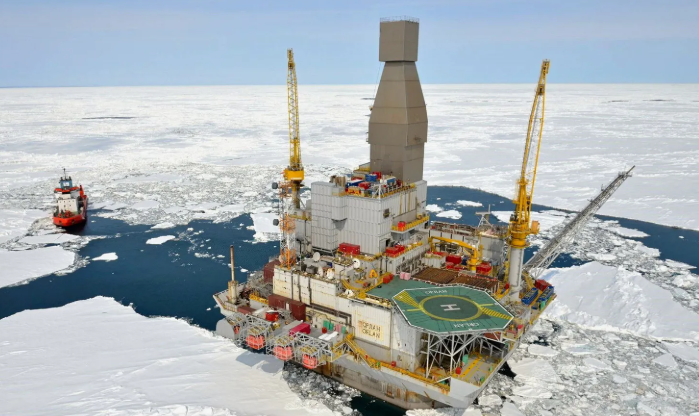
Oil did not just rebuild Russia after the fall of the Soviet system, it defined the terms on which Russia and the West would later fall apart.
After the Dissolution of the Soviet Union, Russia was left with vast resources but no functioning system to turn them into power. The 1990s under Boris Yeltsin were marked by economic collapse, weak governance and an urgent need for capital. Oil and gas existed in abundance, but the country lacked the infrastructure and investment required to make them viable at scale.
Western capital entered at that moment of weakness. Companies such as BP and ExxonMobil became part of the rebuilding process through joint ventures, technical partnerships and selective investments. Pipelines were modernised, production increased and export systems stabilised. This was not a one sided effort. Western firms were not just helping build the sector, they were also profiting from it through stakes, contracts and long term access to Russian energy flows.
At the same time, a powerful class of domestic oligarchs emerged. These actors did not operate in isolation. Many were closely tied to Western financial institutions and corporate networks, structuring their companies in ways that linked Russian oil wealth to global markets. The system that developed was neither fully sovereign nor fully foreign controlled. It was a shared space where Russian resources, Western capital and oligarch networks overlapped.
By the end of the decade, Russia had a functioning oil economy. But it came with divided control and shared benefits. For a state that had just lost its superpower status, this arrangement was tolerated as a temporary necessity, not accepted as a permanent balance.
That balance shifted with the rise of Vladimir Putin. His objective was not to dismantle the system but to bring it under state control. Strategic assets were consolidated, oligarch influence was reduced and state backed companies like Rosneft and Gazprom were strengthened. Western participation was not eliminated, but it was restricted, reshaped and placed under tighter state oversight.
What had once been a cooperative economic arrangement began to narrow. From the Western perspective, access and profits became less secure. From Moscow’s perspective, it was a correction, a move to reclaim control over national resources that had been opened up during a period of weakness.
This is where the first real fracture appeared. Oil was no longer just an industry. It became the foundation of Russia’s recovery and its primary tool of leverage. Control over energy meant control over revenue, stability and influence, especially in energy dependent regions. As Russia tightened its grip, Western governments began to see its energy sector not as a shared market but as a strategic instrument.
By the time the expansion of NATO moved further east, the relationship was already strained. NATO did not create the distrust from scratch. It amplified a divide that had already formed over control, access and influence in the most critical sector of the Russian economy.
The major confrontations that followed, including the Annexation of Crimea and the Russian invasion of Ukraine, were not isolated events. They emerged from a relationship that had already shifted from cooperation to rivalry.
Oil was not the only factor in that shift, but it was the first arena where interests stopped aligning and started colliding. It turned Russia’s recovery into a contested space and laid the groundwork for a deeper geopolitical conflict. NATO expansion later added the military dimension, but by then the underlying distrust had already taken root in a more fundamental question control over resources and who benefits from them.
Disclaimer :
This article presents a strategic interpretation of events and is intended for analytical discussion. While it is based on widely reported developments and historical context, it does not claim to be a complete or definitive account of Russia–West relations. Certain arguments are simplified to highlight specific patterns, and other contributing factors may not be fully explored. Readers are encouraged to consider multiple sources and perspectives before drawing conclusions.