

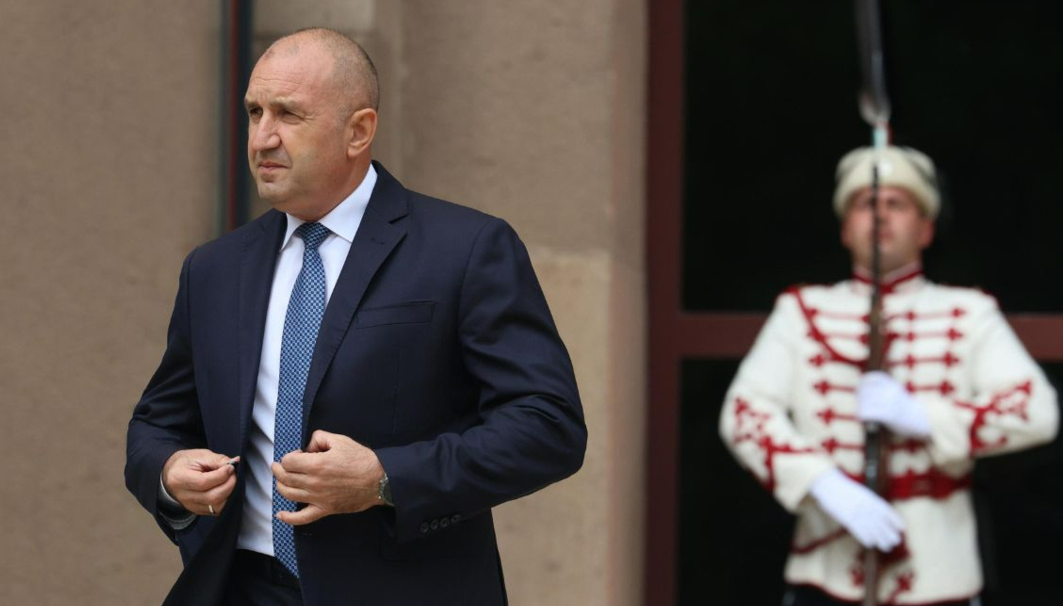
Bulgaria has once again delivered a political shock to Europe. After years of unstable coalitions, repeated elections, and rising public anger, voters have handed a decisive mandate to Rumen Radev and his newly formed political bloc often referred to as Progressive Bulgaria. The result is not just another change of government. It is a rare moment of clarity in a system that has struggled to produce one.
The roots of this shift go back to the mass protests of late 2025, when tens of thousands, led largely by younger Bulgarians, took to the streets demanding an end to corruption, political stagnation, and what many describe as an oligarchic model of governance. These protests were not isolated. They were the culmination of years of frustration in a country that has been trapped in a cycle of elections without stability. Since 2021, Bulgaria has held multiple parliamentary votes as governments failed to survive. Coalitions collapsed, trust eroded, and politics began to look disconnected from the everyday struggles of citizens.
Against this backdrop, Radev’s movement did not emerge in isolation. It absorbed the energy and language of the protests and converted them into electoral momentum. Winning around 45 percent of the vote and securing a commanding majority in parliament, his bloc achieved something Bulgaria has not seen in decades, a single political force capable of governing alone. That matters in a system long defined by fragmentation. For years, small parties with narrow mandates were forced into unstable coalitions that could not push through structural reforms. This result breaks that pattern, at least for now.
Radev himself is not a conventional politician. A former commander of the Bulgarian Air Force, trained during the Soviet era, he entered politics later in life. His rise began with his election as president in 2016, backed by the Bulgarian Socialist Party but officially running as an independent. During his presidency, he positioned himself as a critic of corruption and political elites, often clashing with successive governments. His decision to step down and enter direct party politics signalled that he was aiming for executive control rather than symbolic authority.
His campaign focused on dismantling oligarchic networks, reforming the judiciary, and restoring the rule of law. These are familiar promises in Bulgarian politics, but the scale of his victory suggests voters believe he may be able to act where others failed. Corruption in Bulgaria is not an abstract debate. It is visible in infrastructure, public services, and safety standards. The country consistently ranks among the worst performers in the European Union on corruption perception, according to Transparency International. The consequences are tangible, from poorly maintained roads to questionable public contracts. Activists and younger voices have increasingly linked corruption directly to everyday risks, including road accidents and weak enforcement systems.
This is why anti-corruption messaging carries weight. It is not ideological. It is practical and personal. For many voters, the issue is not about political alignment but about whether the state functions at all.
On the international front, Radev’s position reflects the complexity of Bulgaria’s geopolitical reality. The country is a member of both the European Union and NATO, yet it also maintains deep historical and economic ties with Russia. Radev has reaffirmed Bulgaria’s commitment to the European project, acknowledging the country’s dependence on EU funding, but he has also criticised what he sees as the bloc’s overreach and economic missteps, particularly in energy policy.
He opposes sending weapons to Ukraine and argues that smaller economies should not bear disproportionate costs in larger geopolitical conflicts. At the same time, he has signalled openness to restoring pragmatic relations with Russia, especially in the energy sector. This balancing act places him somewhere between Brussels alignment and the more confrontational stance associated with leaders like Viktor Orbán, though Radev has indicated he will not use veto power aggressively within EU structures. That suggests negotiation rather than outright defiance.
Energy is likely to become one of the defining issues of his tenure. Bulgaria remains vulnerable to external supply shocks, and the disruption of Russian gas has had economic consequences across the region. Radev’s argument is direct, Europe needs affordable energy to remain competitive. This position challenges current EU strategies but resonates domestically, where rising costs are a daily concern. His scepticism toward rapid eurozone adoption fits into the same pattern, prioritising economic stability over speed of integration.
One of the most significant aspects of this election is the role of younger voters. A large share of the 18 to 30 demographic backed Radev’s movement, making it the most popular choice among that group. This reflects a shift in political expectations. Younger voters are not simply looking for new faces. They are looking for outcomes. The demand is for governance that works, not just rhetoric that appeals.
Radev now faces the challenge that has undone many before him. Converting political momentum into structural reform is far more difficult than winning an election. Breaking entrenched networks requires more than promises. Judicial reform in Bulgaria has historically been slow and contested, and any serious attempt to restructure it will face resistance from within the system. At the same time, his foreign policy balancing act will be closely watched. The European Union will expect alignment, Russia will test the limits of engagement, and domestic audiences will judge him on results rather than positioning.
This election is not a final answer. It is a reset. For the first time in years, Bulgaria has a government with both authority and opportunity. Whether this moment leads to stability or simply becomes another phase in a longer cycle of political disruption will depend entirely on what follows.