

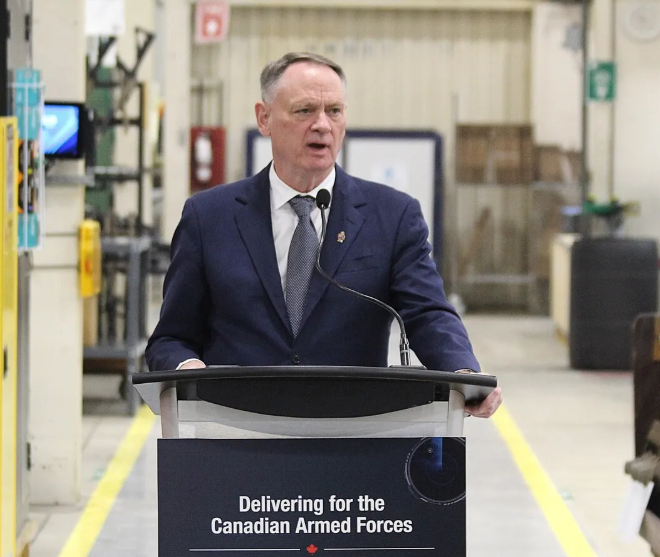
David Joseph McGuinty was born on 25 February 1960 in Ottawa, Ontario, Canada. Raised in Ottawa South, he grew up in a family with a strong connection to public life. His father, Dalton McGuinty Sr., was a politician and educator who served in the Ontario legislature, while his brother, Dalton McGuinty, later became Premier of Ontario. Growing up in a politically engaged household exposed him to public affairs and the responsibilities of elected office from an early age. However, David McGuinty initially pursued a professional path through law, international development and environmental policy before entering federal politics.
His academic journey brought together agriculture, literature, philosophy and law. He obtained a Diploma in Agriculture from the University of Guelph before completing a Bachelor of Arts in English Literature and Philosophy at the University of Ottawa. He subsequently pursued legal studies, earning a Bachelor of Laws from the University of Ottawa and specialised diplomas and certificates in civil and comparative law from the Université de Sherbrooke. He later completed a Master of Laws at the London School of Economics and Political Science. He also received specialised training in mediation and negotiation at Harvard Law School. This multidisciplinary education gave him a foundation in legal institutions, public policy and international affairs.
Before entering Parliament, McGuinty developed an international professional career. He worked with the United Nations in West Africa, contributing to efforts connected with international development and children’s rights. He also undertook work on behalf of UNICEF across Africa, promoting the protection and advancement of children. His experience in the international development sector exposed him to the challenges facing communities in developing countries and the role of international institutions in addressing social and legal issues.
His professional activities also included the practice of international law in London and work with the International Development Law Organization in Rome. These experiences brought him into contact with different legal systems, development institutions and international policy frameworks. Alongside his legal work, he lectured, conducted research and helped design courses at post-secondary institutions in different parts of the world. His career during this period was shaped by the intersection of law, governance, economic development and environmental responsibility.
One of his most significant professional appointments came when he became President and Chief Executive Officer of the Prime Minister’s National Round Table on the Environment and the Economy. He held the position for nine years, working at the intersection of environmental protection and economic policy. The organisation provided advice on sustainable development and the relationship between environmental priorities and Canada’s long-term economic interests. During his leadership, McGuinty developed expertise in green budgeting, brownfield redevelopment and the integration of environmental and social considerations into economic planning. This experience established his profile in Canadian public policy before he moved into elected office.
McGuinty entered federal politics as a member of the Liberal Party. He was first elected as the Member of Parliament for Ottawa South on 28 June 2004, defeating the outgoing Liberal MP John Manley in the party’s nomination and succeeding him in the constituency. His election marked the beginning of a parliamentary career that would extend across successive governments and more than two decades of Canadian political life. He was subsequently re-elected in 2006, 2008, 2011, 2015, 2019, 2021 and 2025.
During his early parliamentary years, McGuinty became involved in several policy areas, including science and technology, natural resources, transport, infrastructure, energy and the environment. He served as a vice-chair of parliamentary standing committees and developed experience in legislative scrutiny and policy debate. He also held responsibilities within the Liberal parliamentary organisation, including serving as Acting Whip and House Leader of the Official Opposition. These roles brought him into the practical workings of Parliament, where he gained experience in party coordination, legislative procedure and opposition strategy.
In November 2012, McGuinty faced a political controversy following remarks directed at Conservative MPs from Alberta during a debate on energy policy. He accused them of representing the interests of the oil industry and suggested that they should return to Alberta. The comments drew criticism from parliamentarians and political figures across the country. McGuinty subsequently issued an unequivocal apology and resigned as the Liberal Party’s natural resources critic. The episode became a prominent moment in his parliamentary career and demonstrated the political sensitivities surrounding Canada’s energy sector and regional interests.
A major shift in his public responsibilities came in November 2017, when he was appointed the founding Chair of the National Security and Intelligence Committee of Parliamentarians, commonly known as NSICOP. Established through legislation in June 2017, the committee was created to provide parliamentary oversight of Canada’s national security and intelligence activities. Its members receive high-level security clearances and review sensitive matters involving government departments and intelligence agencies. The committee operates under strict confidentiality requirements, with its findings and recommendations made available through reports tabled in Parliament.
As chair, McGuinty led a multi-party parliamentary body responsible for examining the national security and intelligence framework. Its work covered the activities of institutions such as the Canadian Security Intelligence Service, the Communications Security Establishment, the Royal Canadian Mounted Police and Global Affairs Canada. The committee examined questions involving intelligence coordination, accountability, cyber defence, foreign interference and the relationship between security institutions and elected government. His leadership required working across party lines while dealing with matters involving national security and classified information.
The committee’s reports addressed several important areas of Canadian security policy. In 2022, it presented a special report examining the national security and intelligence activities of Global Affairs Canada. The report made recommendations intended to strengthen the department’s contribution to the national security system and improve ministerial accountability. Under McGuinty’s chairmanship, the committee also examined the federal cyber defence framework and broader challenges facing Canada’s intelligence community. Its 2023 annual report, tabled in June 2024, reviewed the committee’s work and highlighted difficulties relating to access to information and government responses to recommendations. He remained chair until December 2024, completing a period of parliamentary oversight that helped establish the committee’s institutional role.
In December 2024, Prime Minister Justin Trudeau appointed McGuinty as Minister of Public Safety. The portfolio placed him directly within the federal government’s responsibilities for national security, policing, intelligence coordination, border protection and emergency preparedness. His appointment was significant because of his previous experience chairing NSICOP. Having spent years examining the work of Canada’s security institutions from a parliamentary oversight position, he now assumed ministerial responsibility within the government structure responsible for public safety.
He continued in the portfolio under the title Minister of Public Safety and Emergency Preparedness following the December 2024 cabinet changes. His tenure was brief, however, as a change in government leadership and the subsequent federal election brought a new cabinet. The Liberal Party, led by Mark Carney, won the 2025 federal election, and McGuinty was re-elected in Ottawa South. On 13 May 2025, he was appointed Minister of National Defence, succeeding Bill Blair. The appointment marked another major transition in his career, moving him from public safety and intelligence oversight to the leadership of Canada’s defence establishment.
As Minister of National Defence, McGuinty became responsible for the department and the Canadian Armed Forces, including military readiness, defence policy, procurement, international military cooperation and the protection of Canadian sovereignty. His appointment came at a time when Canada was reassessing its defence requirements amid growing geopolitical competition, Russia’s continuing war against Ukraine, changing transatlantic relations and increased strategic attention to the Arctic. His responsibilities also include strengthening Canada’s contribution to NATO and maintaining defence cooperation with the United States and other allies.
The Arctic has become a central component of Canada’s defence priorities. The region’s strategic importance is increasing because of its geographical position, natural resources, maritime routes and growing military interest among major powers. Canada’s defence policy, Our North, Strong and Free, places emphasis on strengthening the country’s ability to monitor and protect its northern territory. McGuinty has supported efforts to improve military mobility, surveillance, infrastructure and operational readiness in the North. These priorities are particularly important for a country whose sovereignty and security responsibilities extend across an enormous Arctic territory.
His defence agenda has also focused on rebuilding Canada’s domestic military and industrial capabilities. The government’s Defence Industrial Strategy seeks to strengthen Canadian defence manufacturing, reduce vulnerabilities in supply chains and increase the country’s ability to produce essential military equipment and technologies. It places emphasis on domestic suppliers, innovation, research and development, and cooperation between government, industry and financial institutions. In July 2026, McGuinty brought together defence industry and investment leaders to advance the strategy, arguing that stronger domestic production capabilities were essential to national security and economic resilience.
The strategy also includes support for emerging and dual-use technologies. In March 2026, McGuinty highlighted an investment of more than $900 million through the National Research Council to support defence innovation and quantum technology. The initiative was intended to strengthen Canadian capabilities in areas including aerospace, drones, quantum technologies and biomedical research. His emphasis on these sectors reflects the growing connection between technological innovation, industrial competitiveness and military preparedness.
Canada’s role within NATO and its support for Ukraine have remained major elements of his international responsibilities. In February 2026, McGuinty attended the NATO Defence Ministers’ Meeting in Brussels, the Ukraine Defense Contact Group meeting and the Munich Security Conference. He emphasised Canada’s commitment to NATO’s deterrence and defence posture, including its military presence in Europe, cooperation in the Arctic and North Atlantic, and continued assistance to Ukraine. Canada has contributed military equipment, training and financial support to Ukraine since Russia’s full-scale invasion in February 2022.
His engagement with northern European security structures expanded in October 2026, when he participated in the Joint Expeditionary Force Defence Ministers’ Meeting in Reykjavík, Iceland. Discussions focused on the security environment across the North Atlantic, Arctic and Baltic regions. Canada also formally applied to join the Joint Expeditionary Force, a defence cooperation framework involving ten northern European countries. McGuinty’s participation reflected the government’s interest in strengthening military coordination with countries that share concerns about security in these strategically important regions.
In November 2026, he represented Prime Minister Mark Carney at the Coalition of the Willing meeting in Brussels. The discussions focused on international efforts to support Ukraine and establish conditions for a just and lasting peace. McGuinty reaffirmed Canada’s position that any peace agreement must preserve Ukraine’s sovereignty, independence and territorial integrity. He also stressed that Ukraine must be fully involved in decisions concerning its future and that a settlement should strengthen rather than weaken Euro-Atlantic security. On the same diplomatic track, he participated in the 37th meeting of the Ukraine Defense Contact Group, which brought together allies and partners to coordinate continued military support for Kyiv.
Beyond his ministerial responsibilities, McGuinty has maintained connections with organisations working on leadership, governance and international development. He has served as a mentor to emerging leaders through LEAD Canada and as an adviser to the Rockefeller Foundation. He also received the Queen Elizabeth II Golden Jubilee Medal in recognition of his contributions to his community and to Canada. These roles reflect the wider public service and institutional experience that preceded his entry into the federal cabinet.
David McGuinty’s career has moved through several distinct areas of public life, from international development and environmental policy to parliamentary politics, intelligence oversight and national defence. His experience as the founding chair of NSICOP provided him with an understanding of Canada’s security institutions, while his current ministerial position places him at the centre of decisions concerning military preparedness, Arctic sovereignty, NATO cooperation and support for Ukraine. The principal test of his leadership will be whether Canada can translate its renewed defence ambitions into stronger military capabilities, a more resilient domestic defence industry and a credible role in an increasingly uncertain international security environment.
David McGuinty’s Quote
“We are strengthening our sovereign capabilities and supporting Canadian companies in the development of next-generation aerospace, drone, quantum and biomedical technologies.”
19 March 2026, Statement on defence innovation