

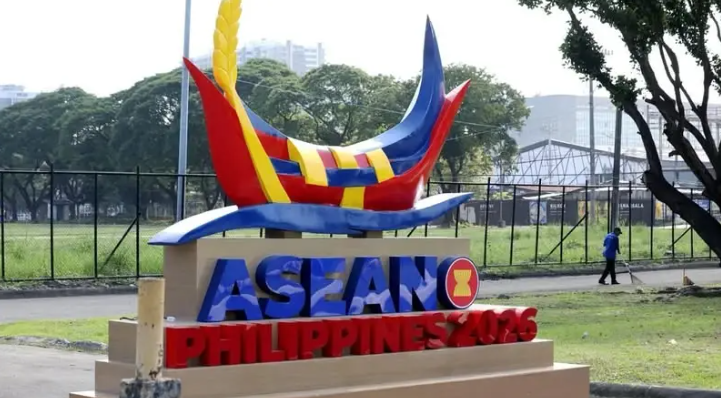
The Association of Southeast Asian Nations is approaching a consequential decision on Myanmar as its leaders prepare to meet in Manila from November 15 to 17. Five years after the military takeover that removed the elected government and plunged the country into prolonged conflict, the organisation faces growing pressure to reconsider restrictions on the participation of Myanmar’s military backed leadership. Thailand and several other members have expanded bilateral engagement, while calls for reintegration have become more explicit. Yet the circumstances that led ASEAN to restrict Myanmar’s political representation remain largely unchanged. Violence continues, millions remain displaced and the peace framework agreed by the bloc has produced little meaningful progress.
The restrictions were introduced after the February 2021 coup, when then military chief Min Aung Hlaing removed the elected government and seized power. The takeover triggered widespread resistance and armed conflict across the country. ASEAN responded with the Five Point Consensus, which called for an end to violence, dialogue among all parties, humanitarian assistance and mediation through a special envoy. The envoy was also expected to meet relevant stakeholders. When the military authorities failed to implement these commitments, ASEAN restricted Myanmar’s participation in its summits and foreign ministers’ meetings to non political representatives.
The current debate has emerged as several member states have intensified direct contact with Myanmar’s military backed leadership. Laos, Thailand, Vietnam, Cambodia and Malaysia have received Min Aung Hlaing on official visits this year. Malaysian Prime Minister Anwar Ibrahim has expressed willingness to work towards Myanmar’s reintegration, while Thailand has openly advocated allowing the country’s foreign minister to participate in ASEAN meetings at ministerial level. Thai Foreign Minister Sihasak Phuangketkeow argues that direct engagement would enable the bloc to communicate its concerns to the authorities responsible for decisions. His recent visit to Myanmar, including a meeting with Min Aung Hlaing on November 12, demonstrates Bangkok’s determination to pursue this approach.
Thailand’s position is shaped by immediate national interests. Its long border with Myanmar exposes it to the consequences of fighting, displacement and cross border insecurity. Trade, migrant workers and energy cooperation are also affected by instability. Bangkok therefore has practical reasons to maintain communication with Myanmar’s authorities and encourage arrangements that reduce tensions along the frontier. Its engagement may help address problems that diplomatic isolation cannot resolve. However, the concerns of one neighbouring country should not automatically determine the collective position of an organisation whose credibility depends on its agreed commitments.
The distinction between engagement and political recognition is therefore central to the debate. ASEAN members remain free to maintain bilateral relations with Myanmar’s authorities. Such contacts do not necessarily require the bloc to restore political representation at its highest level. Allowing a foreign minister to attend ASEAN meetings would carry a different significance from a working level visit or a discussion focused on humanitarian assistance. It would signal that the military backed administration is again being accepted as the country’s political representative despite the continuing conflict and its failure to implement the Five Point Consensus.
The military backed Union Solidarity and Development Party’s overwhelming victory in the elections held across December and January has added to pressure for normalisation. However, the election took place without a viable opposition and amid continuing conflict. It has not resolved the central question of political legitimacy. An electoral result cannot by itself establish an inclusive political settlement when major opponents are excluded, the country’s civilian leadership remains detained and large parts of the country are affected by armed violence. Treating the outcome as sufficient grounds for restoring political representation would risk confusing an electoral process with genuine national reconciliation.
The latest position ahead of the Manila summit indicates that ASEAN has not collectively agreed to restore Myanmar’s political participation. The Philippines has confirmed that leaders will review implementation of the Five Point Consensus and reflect their conclusions in a negotiated document. Myanmar will be represented by a director general from its Foreign Ministry’s ASEAN Affairs Department rather than a senior political leader. The existing restrictions therefore remain in place as the summit approaches. The central issue is whether the review will produce a more effective approach to implementation or create an opening for political normalisation without substantial changes on the ground.
The continuing humanitarian crisis makes that distinction particularly important. Fighting has persisted, millions remain displaced and efforts to bring the military authorities and armed opposition groups into dialogue have failed to produce a breakthrough. The Five Point Consensus was intended to create a path towards de escalation, but its implementation has made little headway. ASEAN must therefore assess the reasons for this failure rather than allow repeated diplomatic reviews to become a substitute for progress. A negotiated document will have limited value if it does not establish practical steps for reducing violence and improving humanitarian access.
Aung San Suu Kyi’s continued detention is another important measure of political openness. Myanmar’s elected civilian leader has remained in detention since the coup. She was moved to house arrest in April following the military backed election process, and a Red Cross official was permitted to meet her in August. However, foreign leaders and ASEAN envoys have not been granted comparable access despite requests. Her situation demonstrates the continuing restrictions on political engagement within the country. Any assessment of progress should therefore consider her treatment, access to other detained political figures and the possibility of meaningful dialogue beyond the military leadership.
The ASEAN special envoy mechanism also requires attention. The position changes annually with the organisation’s rotating chairmanship, creating discontinuity and making it difficult to sustain a long term mediation process. Philippine Foreign Secretary Theresa Lazaro, the current special envoy, visited Myanmar in October on a humanitarian mission and met representatives of the military backed administration. The mission sought to improve humanitarian assistance, but the scale of need across the country remains substantial. Aid delivery is essential, yet it cannot substitute for political progress or an end to the fighting.
There is also uncertainty over the future of the envoy’s mandate. Myanmar’s authorities have shown reluctance towards the special envoy mechanism, while discussions within ASEAN have included the possibility of appointing a permanent envoy. A permanent position could provide continuity, institutional knowledge and a more sustained channel for mediation. However, changing the structure alone would not resolve the problem if the envoy continued to face restrictions on access to relevant parties. The priority should be to strengthen the mechanism’s ability to engage with all sides and support a credible political process.
Separate diplomatic approaches carry another risk. If some ASEAN governments offer greater political acceptance while others maintain restrictions, Myanmar’s military authorities could exploit those differences and engage selectively with the members offering the most favourable terms. This would weaken the collective influence that ASEAN retains. Bilateral engagement can be useful, but it should operate within the common framework rather than become an alternative to compliance. A divided organisation would find it harder to persuade the military leadership that meaningful progress is necessary for a change in its political status.
There is nevertheless a reasonable argument for maintaining communication. Excluding Myanmar’s political leadership from high level meetings does not mean ASEAN should abandon contact with the authorities or lose opportunities to discuss humanitarian access and a reduction in violence. Thailand has repeatedly offered to facilitate talks between Myanmar’s authorities and ethnic armed groups along their shared border. Its foreign minister has said that Myanmar agreed in principle to send a delegation to possible discussions, although no date has been established. Such efforts could contribute to practical progress if they remain connected to the wider peace framework.
The challenge is to prevent pragmatism from turning into premature political acceptance. ASEAN should distinguish between maintaining diplomatic channels and restoring the privileges of full political participation. The former may be necessary to manage the crisis, while the latter should depend on demonstrable improvements. These could include a sustained reduction in military violence, meaningful humanitarian access, the release of political prisoners and regular access to Aung San Suu Kyi. Without clear benchmarks, reintegration risks becoming detached from the objectives that originally guided the bloc’s response.
Human rights organisations have urged ASEAN to maintain its restrictions and increase pressure on the military authorities to end abuses and pursue a transition towards civilian rule. Their concerns are particularly relevant following the military backed election process, which has been presented as a step towards political normalisation despite the exclusion of meaningful opposition. ASEAN must avoid giving the impression that an electoral exercise conducted under these conditions is sufficient to restore political legitimacy. The treatment of political opponents and the continuing conflict remain central to any credible assessment.
Singapore will face an important responsibility when it assumes the ASEAN chairmanship next year. It will inherit a divided diplomatic landscape in which some members favour deeper engagement while others remain concerned that concessions will weaken the Five Point Consensus. Maintaining a common position will require balancing practical cooperation with continued pressure for implementation. ASEAN can accommodate different diplomatic approaches, but those approaches must not undermine the collective framework or allow Myanmar’s military authorities to play individual members against one another.
The Manila summit is therefore an important test of ASEAN’s credibility. The failure of the Five Point Consensus to deliver an end to violence and inclusive dialogue should prompt a serious review of its implementation, not an automatic abandonment of the agreement. The organisation needs to examine why its special envoy has struggled to secure access, why humanitarian assistance remains insufficient and why the military authorities have not been persuaded to engage with all relevant parties. The negotiated document expected from the summit should identify practical next steps and provide a clearer basis for evaluating progress.
Myanmar remains an integral part of Southeast Asia, and its crisis cannot be managed indefinitely through diplomatic distance. However, regional membership and political recognition are not the same thing. ASEAN can preserve channels of communication, support humanitarian assistance and encourage negotiations while maintaining the restrictions imposed after the coup. The military authorities should not be allowed to treat a return to high level meetings as an entitlement detached from their conduct. Political acceptance must follow tangible progress, not precede it. If ASEAN eases its restrictions without securing meaningful changes, it risks weakening the peace framework it created and signalling that refusal to meet collective commitments can eventually be rewarded. The Manila summit should demonstrate that the organisation can remain pragmatic without abandoning the principles on which its response to Myanmar was built.