

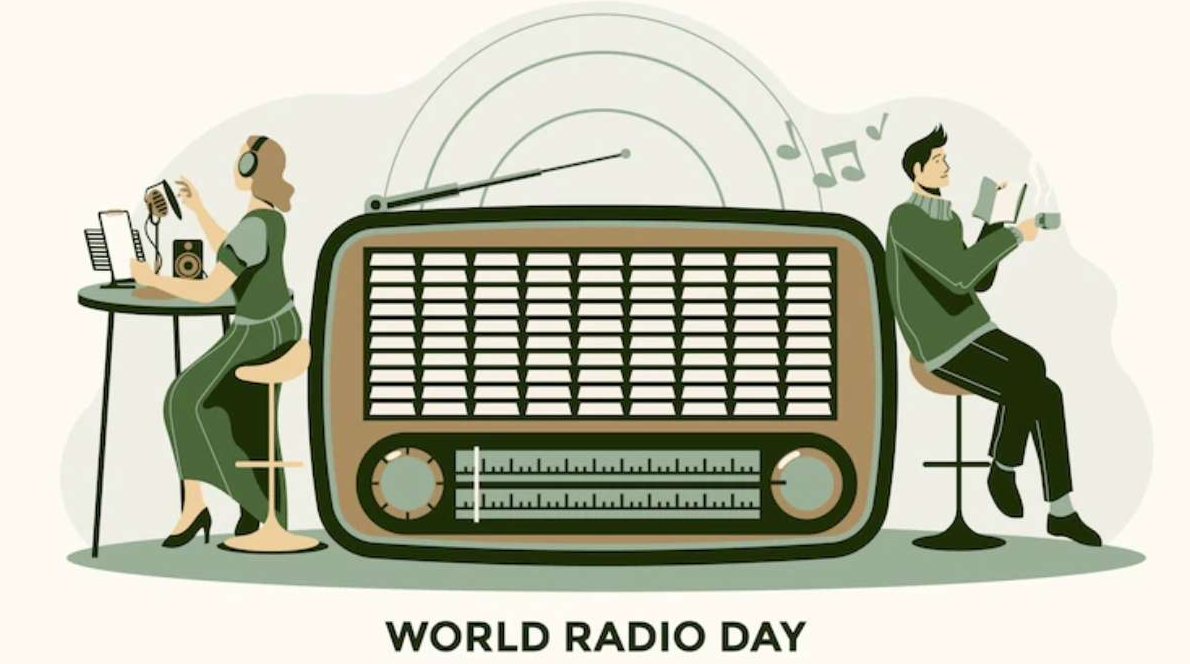
On February 13, 2026, the world observes World Radio Day, an annual United Nations-designated day that celebrates radio as a powerful medium for information, entertainment, education, diversity, and social change.
Established by UNESCO in 2011 and officially recognized by the United Nations General Assembly in 2012 (resolution 67/124), World Radio Day is held every February 13 to highlight radio’s unique ability to reach the most remote and marginalized communities, often where internet or television access is limited or non-existent. Radio remains one of the most accessible and affordable media platforms globally — requiring only a low-cost receiver and no literacy to use — making it a lifeline in emergencies, a tool for education, and a platform for voices that are rarely heard.
2026 Theme: “Radio: A Century Informing, Entertaining and Connecting” In 2026, the theme commemorates over 100 years of radio broadcasting (since the first regular broadcasts in the early 1920s) while looking forward to radio’s evolving role in the digital age. It celebrates radio’s enduring strengths — immediacy, intimacy, portability, low cost — and its adaptation through online streaming, podcasts, and hybrid formats, while emphasizing the need to protect and fund independent, community, and public-service radio in an era of misinformation and media consolidation.
Significance in 2026:
- Radio reaches an estimated 4.5 billion people worldwide daily — more than any other medium — and remains the primary source of news, emergency alerts, and cultural content in rural areas, conflict zones, and low-income communities.
- The day raises awareness of challenges: declining funding for public and community radio, threats to press freedom, the digital divide, and the importance of diverse, multilingual, and inclusive programming.
- It also highlights radio’s role in achieving the Sustainable Development Goals — from health education (SDG 3) and gender equality (SDG 5) to climate awareness (SDG 13) and peacebuilding (SDG 16).
Global Observances and Activities:
- UNESCO events: UNESCO organizes the global launch (often virtual or hybrid) with panels, messages from the Director-General, and the announcement of the UNESCO-Guillermo Cano World Press Freedom Prize shortlist (if timed together). Radio stations worldwide air special programs.
- Radio station initiatives: Thousands of stations — public (BBC, NPR, Deutsche Welle), community, and commercial — broadcast live events, interviews with listeners, special documentaries, music marathons, and call-in shows on the theme. Many offer free on-air dedications or “radio weddings” (symbolic renewals).
- Community and youth programs: Schools, youth clubs, and community radio stations host workshops on radio production, storytelling, and media literacy; children create their own mini-broadcasts or podcasts.
- Public campaigns: Social media campaigns (#WorldRadioDay, #RadioDay) share listener stories, favorite radio memories, and facts about radio’s impact. Many stations run contests or give away radios in underserved areas.
- Symbolic acts: Radio towers and studios light up in blue (UNESCO’s color for the day); people are encouraged to tune in, share a radio memory, or simply say thank you to their favorite station or presenter.
World Radio Day is not a public holiday anywhere but a joyful, meaningful celebration — a day when the world tunes in to remember that in a fragmented digital age, radio still brings people together with a human voice.
A key message from UNESCO: “Radio reaches where no other medium can — it informs, educates, connects, and saves lives.”
On February 13, turn on your radio, listen to a voice from somewhere far away or close to home, and celebrate the medium that has informed, entertained, and united humanity for over a century. 📻