

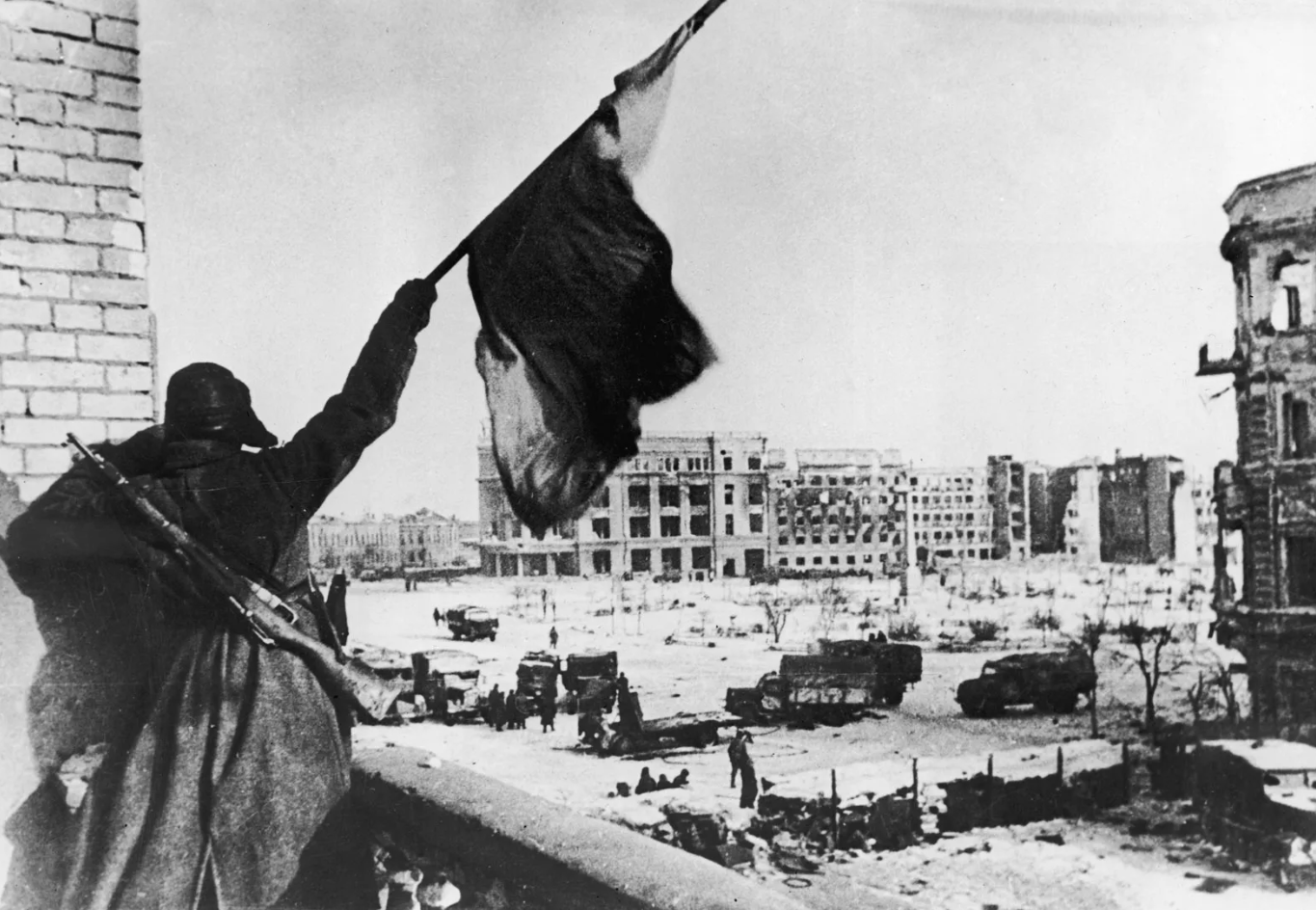
On February 2, 2026, Russia observes the Day of Military Glory dedicated to the Victory in the Battle of Stalingrad — one of the most decisive and bloodiest battles in human history and the turning point of World War II on the Eastern Front.
The date marks February 2, 1943, when the last German forces in the ruined city of Stalingrad (now Volgograd) surrendered to the Red Army after a 200-day siege. The encirclement and destruction of the German 6th Army (along with parts of the 4th Panzer Army and Romanian allies) resulted in the capture of Field Marshal Friedrich Paulus and over 91,000 Axis troops — the first time a German field marshal had ever surrendered. Total casualties on both sides are estimated at nearly 2 million (killed, wounded, missing, or captured), making Stalingrad the single bloodiest battle in recorded history.
The victory shattered the myth of German invincibility, halted the Wehrmacht’s advance into the Soviet heartland, and marked the beginning of the Red Army’s relentless westward push that ultimately led to Berlin in May 1945.
Significance in 2026:
- In 2026, Russia marks the 83rd anniversary of the Stalingrad victory — a cornerstone of national memory and identity in the Great Patriotic War (1941–1945).
- The battle is seen as the moment the tide turned against fascism, saving not only the Soviet Union but the entire world from Nazi domination.
- It remains a powerful symbol of sacrifice, endurance, and collective will — themes that resonate deeply in Russian culture and official narratives.
Celebrations and Observances:
- Main ceremonies in Volgograd: The central event takes place at the Mamaev Kurgan memorial complex — the massive hill that was the site of some of the fiercest fighting. The centerpiece is the Motherland Calls statue (the tallest statue of a woman in the world) overlooking the city. President, government officials, military leaders, veterans’ organizations, and thousands of citizens lay wreaths, observe a minute of silence, and listen to speeches.
- Military parades and salutes: In Volgograd and other cities, ceremonial marches, artillery salutes (30 salvos in Moscow), and fly-pasts honor the fallen and the victors.
- Nationwide tributes: Similar wreath-laying at war memorials across Russia; schools hold lessons on the battle; museums (especially the Battle of Stalingrad Museum in Volgograd) offer special exhibitions, survivor testimonies, and reenactments.
- Media and cultural programs: State television broadcasts documentaries, concerts dedicated to wartime songs, and films about Stalingrad (e.g., “The Battle of Stalingrad” series). Social media shares archival photos, stories of veterans, and the famous phrase: “No land for you beyond the Volga.”
- Public reflection: Many Russians light candles at home or visit local memorials; the day is solemn rather than festive — a moment of profound gratitude and remembrance.
The Day of Military Glory: Victory in the Battle of Stalingrad is not a public holiday with closures nationwide, but it is one of Russia’s 18 official Days of Military Glory — marked with deep reverence and national pride.
A phrase forever linked to the battle: “За Волгой для нас земли нет.” (“There is no land for us beyond the Volga.”) — words attributed to defenders who refused to retreat.
On February 2, Russia bows its head to the heroes of Stalingrad — those who turned the course of history through unimaginable sacrifice and unbreakable resolve. 🇷🇺