

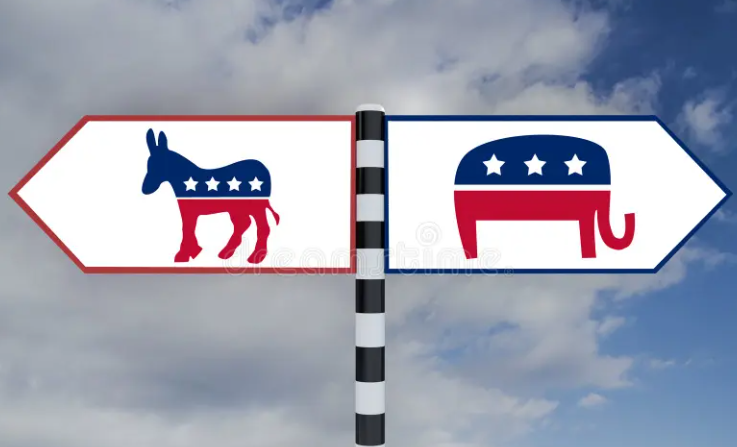
Just over a year after Donald Trump reclaimed the presidency in January 2025, the shape of his foreign policy is no longer ambiguous. What initially appeared as disruption now looks far more deliberate, a sustained effort not to redefine American leadership but to dismantle the diplomatic architecture built by Democrats and punish those who aligned too closely with it. Across continents, the pattern is unmistakable. This is not strategy driven by vision or long term problem solving. It is grievance based governance projected onto the global stage.
From the outset, the animating force of the Trump administration’s foreign policy has been reversal. Alliances nurtured under Democratic administrations are treated not as assets but as liabilities, symbols of an order Trump is determined to erase. Economic pressure has become the preferred weapon. Tariffs, sanctions, and threats are deployed not to advance coherent objectives but to discipline partners for their past loyalties. Canada, Europe, and India have all found themselves on the receiving end of this punitive approach, learning quickly that proximity to the old Democratic playbook now comes at a cost.
Canada, America’s closest neighbour and one of its most reliable partners, was among the first targets. The administration imposed aggressive tariffs and tightened border measures, framing them as corrections to Democratic era “weakness” on trade and migration. Europe soon followed. NATO commitments were repeatedly questioned, while blanket tariffs on European Union goods were floated as leverage, undermining the very multilateral framework Washington once championed. India, long courted by Democrats as a strategic counterweight to China, was publicly rebuked and hit with trade barriers for refusing to fully align with Washington’s demands on energy purchases and defence procurement. None of this reflects strategic foresight. It is dismantling by design, leaving allies unsettled and the United States increasingly isolated.
Nowhere is this approach more stark than in the Middle East and America’s relationship with international institutions. Under Trump, hostility toward the United Nations has intensified, with funding withdrawals and diplomatic pressure used as blunt instruments. The consequences are not abstract. Countries dependent on UN aid for food, healthcare, and post conflict recovery now operate under the shadow of American retaliation. Seeking assistance risks sanctions, isolation, or punitive measures from Washington. Iran, predictably, remains the central adversary, facing escalated military and economic pressure that closely mirrors Israeli security priorities rather than any balanced or independent U.S. assessment of regional stability.
Israel’s influence over this posture is undeniable, but what marks the shift is not ideological alignment. Israel maintained strong relationships with Democratic administrations as well. What has changed is the transactional nature of the relationship. Trump’s policy reflects the gravitational pull of lobbying power and campaign financing, with American diplomacy bending to those who bankroll political survival. This is not a partnership rooted in shared values or long term peace building. It is a financial equation, one that subordinates humanitarian concerns and multilateral cooperation to donor driven priorities.
Against this backdrop of confrontation and coercion, Trump’s open admiration for Russia and China appears almost surreal. While Democrats consistently framed Moscow and Beijing as systemic challengers to the rules based order, Trump has gone out of his way to praise Vladimir Putin as a decisive leader and Xi Jinping as a master negotiator. These gestures are not accompanied by a clear strategic framework. Instead, they function as political signalling, a rebuke to domestic opponents rather than a recalibration of global priorities. Personal rapport with authoritarian leaders is elevated above institutional policy, producing an erratic diplomacy that confuses allies and emboldens rivals.
Latin America offers a case study in the administration’s short term calculus. Trump’s projection of power in the region has prioritised resource acquisition over political stability. The seizure of strategic assets, including direct interventions aimed at controlling oil wealth in Venezuela, has generated immediate gains without addressing the underlying corruption or governance failures that fuel regional instability. Republicans have historically struggled to generate sustainable economic returns through reform driven engagement. Trump compensates by extracting value directly, whether oil in Latin America, minerals in Africa, or strategic resources in South Asia. It is a smash and grab model of foreign policy, profitable in the moment and corrosive in the long run.
In West Asia, the same logic prevails. American policy has become openly transactional, subordinated to financial influence rather than diplomatic balance. The administration’s near total alignment with Israeli demands ignores the more nuanced relationships Israel previously maintained across party lines in Washington. What remains is not alliance management but patronage politics, with U.S. credibility eroding as policy becomes indistinguishable from donor preference.
After a year, the contours of Trump’s foreign policy are clear. It rests on three pillars: undoing Democratic legacies, aggressively acquiring strategic assets, and cultivating inexplicable warmth toward Russia and China. What it lacks is vision. There is no serious engagement with climate change, global inequality, institutional reform, or long term security architecture. The approach is reactive, personal, and opportunistic, driven more by vendetta than by values.
If this is “America First,” it is a hollow version of the slogan. One that prioritises grudges over governance, extraction over stability, and spectacle over strategy. In a fractured world, the United States finds itself not leading, but lashing out, armed with power yet increasingly devoid of purpose.