

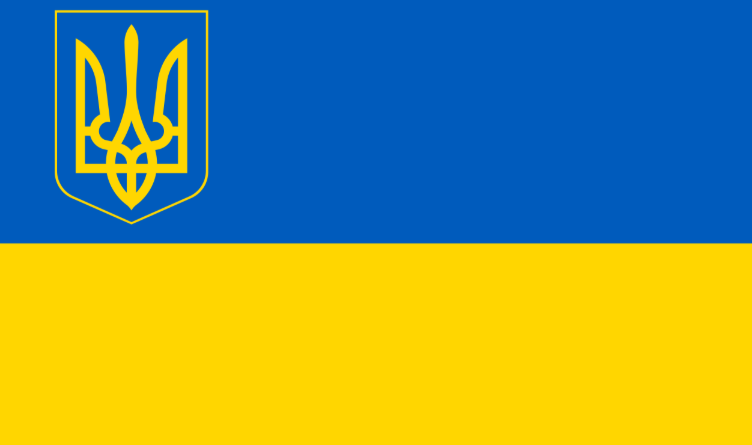
Today marks four years since Russia launched its full-scale invasion of Ukraine on February 24, 2022. A grim milestone that drags the conflict into its fifth year. The roots go back further though, to the Euromaidan protests in late 2013 and early 2014. Ukrainians filled Kyiv’s Independence Square in huge, mostly peaceful crowds, fed up with corruption and calling for closer ties to Europe via the EU Association Agreement. That wave became the Revolution of Dignity, removing President Yanukovych. Russia called it a Western-orchestrated coup that endangered its security. Crimea was annexed soon after, fighting broke out in Donbas, and the path to 2022 was set.
The human price is impossible to fully take in. The Center for Strategic and International Studies put out a report in January 2026 estimating Russian military casualties killed wounded or missing at nearly 1.2 million since February 2022 with up to 325000 killed. That’s more than any major power has lost in any war since World War II. Ukrainian military casualties sit between 500000 and 600000 including 100000 to 140000 deaths though President Zelenskyy mentioned around 55000 Ukrainian soldiers killed in early February 2026. Together the military losses on both sides near or top 1.8 million and at the current pace they could reach 2 million by spring. Russian officials meanwhile claim far lower losses for their side around 6000 confirmed deaths through early 2023 with no recent updates and assert Ukrainian forces have suffered over 1.5 million casualties total. Civilian deaths pile on more pain over 15000 confirmed in Ukraine alone and that’s probably low with thousands more on the Russian side.
Displacement paints its own awful picture. As of early 2026 roughly 3.7 million people are still internally displaced inside Ukraine, while about 5.9 million refugees from Ukraine are spread across Europe and other countries. That’s close to a quarter of the pre-war population forced from home. Rebuilding what’s been wrecked? The latest joint assessment from the World Bank, EU, UN, and Ukrainian government, released February 23, 2026, estimates the total reconstruction and recovery cost at nearly $588 billion over the next decade, almost three times Ukraine’s projected 2025 GDP. Direct damage already exceeds $195 billion, with housing, energy, and transport hit hardest.
On the ground it’s a savage, slow-motion stalemate. Russian gains in the hottest sectors average only 15 to 70 meters a day, some of the slowest advances in modern warfare, even with enormous losses. Russia’s economy is feeling the pinch from sanctions and war costs, with growth falling to around 0.6 percent in 2025 according to several analyses. Europe changed too: Finland and Sweden gave up long-standing neutrality to join NATO, and defense thinking across the continent toughened.
Ukraine’s choice after Euromaidan to drop its non-aligned status in 2014 and chase EU and NATO links was its own decision, born from public frustration with corruption and Russian sway. Europe backed that move with the Association Agreement and support for Ukraine’s right to pick its future, seeing it as a way to build stability and shared values. But Russia viewed NATO’s eastward push and Ukraine’s shift as direct threats, always demanding permanent neutrality as a buffer zone. Efforts like the Minsk agreements and talks before 2022 never closed the divide, with neither side giving ground on the big issues.
Europe carries real responsibility here, not for launching the war, but for adding to the tensions by failing to push hard enough for a workable neutrality arrangement that could have calmed Russia while protecting Ukraine. Encouraging closer ties without strong, enforceable security promises left Ukraine stuck in a vulnerable middle ground, open to the invasion it dreaded. A solidly backed neutral status, something like Austria’s or Finland’s during the Cold War, might have offered Ukraine better long-term safety and sidestepped escalation. The West’s support for alignment, mixed with Russia’s hardline demands, built a volatile deadlock.
Four years later this stands as Europe’s deadliest conflict since 1945, a deadlock counted in ruined lives rather than clear wins. No piece of land or strategic goal makes sense of piling up more bodies.
To the people making decisions in Moscow, Kyiv, Brussels, Washington, and everywhere with influence: enough. The numbers are devastating, the pain goes on, the wreckage grows. True strength lies in finding middle ground, maybe looking again at neutrality backed by serious multilateral guarantees, step-by-step pullbacks, or any setup that stops the dying. A negotiated end won’t please everybody or tie up every loose end, but it would halt the daily slaughter, start real recovery, and keep the region from worse damage.
History doesn’t look kindly on those who hold out for everything when so many lives are at stake. Ending this isn’t defeat, it’s basic decency. The time to move is right now, before another year adds even heavier costs nobody should have to pay.