

Carbon, the sixth element on the periodic table, is often hailed as the backbone of life—forming the basis of organic molecules like DNA, proteins, and carbohydrates. But beyond its starring role in biology and everyday materials, carbon harbors a trove of lesser-known properties and applications that border on the clandestine. From a scientific lens, let’s peel back the layers of this versatile atom, exploring its “hidden” features (obscure physical and chemical traits) and “covert” uses (niche, often classified or under-the-radar applications in tech, defense, and beyond). Buckle up—this is carbon like you’ve never seen it.
1. Hidden Features: The Chameleon of the Atomic World
Carbon’s atomic number (6) gives it four valence electrons, allowing it to form stable bonds with itself and others in ways no other element can match. This tetravalency enables catenation—the ability to create long chains and rings—making it the king of molecular diversity. But dig deeper:
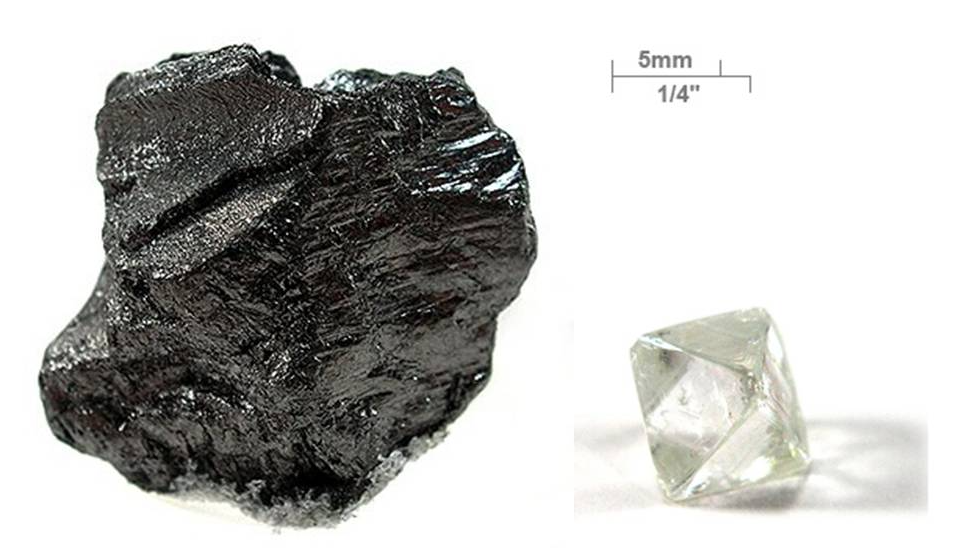
- Allotropic Mastery: Carbon doesn’t just exist as one form; it shape-shifts into allotropes with wildly different properties. Graphite is soft and conductive (due to delocalized pi electrons in hexagonal layers), while diamond is the hardest natural material (thanks to its tetrahedral sp3 bonding, with a Mohs hardness of 10). Lesser-known? Amorphous carbon (like soot) hides quantum dots—nanoscale particles that fluoresce under UV light, used in bioimaging. Then there’s graphene: a single layer of graphite, stronger than steel yet flexible, with electron mobility 200 times that of silicon. Hidden gem: Graphene’s “magic angle” (twisted bilayers at ~1.1°) creates superconductivity at low temperatures, potentially revolutionizing quantum computing.
- Isotopic Secrets: Carbon-12 is stable, but carbon-14 (radioactive, half-life ~5,730 years) powers radiocarbon dating, revealing ancient artifacts’ ages by measuring decay in organic remains. Covert twist: Carbon-13, non-radioactive, is used in NMR spectroscopy to map molecular structures invisibly—scientists can “see” inside proteins without destroying them.
- Thermal and Electrical Prowess: Carbon nanotubes (rolled graphene sheets) conduct heat better than diamond (up to 3,500 W/m·K) and electricity like copper, but weigh far less. Hidden feature: They’re auxetic—expanding when stretched—defying typical material behavior, due to their chiral structure.
- Quantum Weirdness: In diamond, nitrogen-vacancy (NV) centers—defects where nitrogen replaces carbon next to a vacancy—act as qubits. These trap electrons, enabling room-temperature quantum sensing with atomic precision, detecting magnetic fields down to nanotesla levels.
These traits stem from carbon’s ability to hybridize orbitals (sp, sp2, sp3), creating bonds from weak van der Waals in fullerenes (buckyballs) to ultra-strong covalent in diamonds.
2. Covert Uses: From Stealth Tech to Shadow Science
Carbon’s innocuous appearance belies its role in high-stakes, often secretive applications. While not “illegal,” many are shrouded in patents or classified research, blending science with strategy.
- Military Stealth and Composites: Carbon fiber-reinforced polymers (CFRP) are lightweight yet tougher than steel, used in fighter jets like the F-35 for radar-absorbing skins. Covert angle: Carbon black (amorphous nanoparticles) in paints absorbs 99.965% of light, creating “Vantablack”—the blackest material—deployed in spy satellites to evade detection. Scientifically, this exploits carbon’s high surface area (up to 2,000 m²/g in activated forms) for photon trapping.
- Nuclear Moderation and Shielding: Graphite moderates neutrons in nuclear reactors (slowing them for fission), as in early designs like Chicago Pile-1. Hidden use: Pyrolytic carbon coats nuclear fuel pellets, preventing fission product release—critical in covert nuclear programs. Carbon-14, produced in reactors, has been traced in atmospheric studies to detect undisclosed nuclear tests.
- Nanotech Espionage Tools: Carbon nanotubes enable “invisible” sensors—embedded in fabrics for wearable tech that detects biotoxins or explosives via conductivity changes. In forensics, carbon dots (fluorescent nanoparticles) reveal latent fingerprints under UV, outperforming traditional powders. Covertly, they’re explored in “smart dust”—microscopic sensors for surveillance, dispersing like pollen.
- Biomedical Shadows: Fullerenes (C60) act as antioxidants, scavenging free radicals 100 times better than vitamin E. Hidden application: In targeted drug delivery, carbon cages encapsulate toxins for cancer therapy, releasing them via pH triggers. More covert: Carbon-based neuromodulators, like graphene interfaces, could interface brains with machines—think neural implants for enhanced cognition, researched in classified DARPA projects.
- Environmental and Energy Intrigue: Activated carbon filters toxins in water (porous structure adsorbs organics), but covertly, it’s used in gas masks against chemical agents. In energy, carbon aerogels store hydrogen for fuel cells, potentially powering stealth drones. Graphene batteries charge in seconds, enabling rapid-deploy tech.
Why Carbon Rules the Shadows
Scientifically, carbon’s dominance comes from its abundance (0.025% of Earth’s crust) yet infinite tunability—engineer it at the nanoscale, and you unlock properties from superconductivity to biocompatibility. But with great power comes caution: Overuse in nanomaterials raises toxicity concerns (e.g., nanotubes piercing cell membranes like asbestos). Future frontiers? Carbon-based life detection on exoplanets via spectroscopy, or diamond anvils simulating planetary cores at gigapascal pressures.
Carbon isn’t just an element—it’s a scientific Swiss Army knife, hiding feats in plain sight. What’s your favorite carbon quirk? Drop it below!