

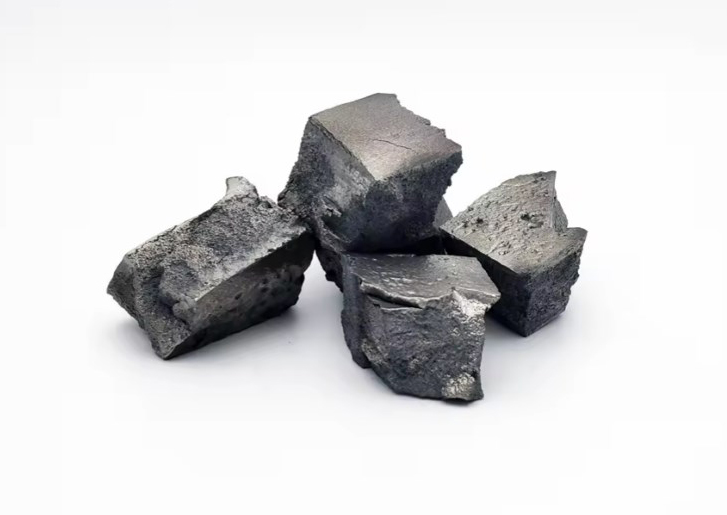
Neodymium (Nd, atomic number 60), a silvery-white rare-earth metal in the lanthanide series (f-block), is the unsung hero behind the strongest permanent magnets on Earth. Discovered in 1885 by Carl Auer von Welsbach (who separated it from praseodymium, its chemical “twin”), neodymium was named from Greek “neos didymos” meaning “new twin.” Though relatively abundant in Earth’s crust (more common than gold or silver), it’s rarely found pure—mostly in minerals like monazite and bastnäsite, with China dominating global supply and processing. As of early 2026, neodymium remains one of the most strategically critical elements, fueling the electrification boom while sparking trade tensions and innovation races to diversify supply chains.
1. Hidden Features: Extreme Magnetism, Relativistic Colors, and Reactivity
Neodymium’s electron configuration [Xe] 4f⁴ 6s² drives its standout properties.
- World’s Strongest Permanent Magnets: Neodymium-iron-boron (Nd₂Fe₁₄B) alloys, discovered in the 1980s, produce magnets over 1000 times stronger than earlier types (energy products up to ~50–55 MGOe). Their high coercivity and remanence come from unpaired 4f electrons aligning ferromagnetically in a complex crystal lattice—making NdFeB magnets tiny yet powerful enough for compact motors.
- Rapid Tarnishing & Oxide Colors: Neodymium oxidizes quickly in air, forming a flaky oxide (Nd₂O₃) that exposes fresh metal. When heated or polished, it develops vibrant purple, blue, and yellow interference colors on the oxide layer—similar to bismuth but subtler.
- High Reactivity & Electropositivity: As a typical lanthanide, neodymium is highly electropositive (reduction potential ~−2.43 V), reacting slowly with cold water but vigorously with acids and halogens. It burns in air if finely divided, producing a bright flame.
- Optical & Laser Magic: Neodymium ions (Nd³⁺) in yttrium aluminum garnet (Nd:YAG) create the ubiquitous 1064 nm infrared laser—used in medicine (eye surgery, tattoo removal), industry (cutting/welding), and research (pumping other lasers). Nd-doped glasses give purple hues to protective goggles and produce ultrashort femtosecond pulses.
- Isotopic & Nuclear Notes: Neodymium has seven stable isotopes (¹⁴²Nd to ¹⁵⁰Nd); ¹⁴³Nd/¹⁴⁴Nd ratios serve as powerful tracers in geochemistry for mantle evolution and plate tectonics.
2. Covert Uses: EVs, Wind Power, Defense, and Everyday Tech
Global neodymium demand (as NdPr oxide/metal) surges in 2025–2026, with prices volatile amid EV/wind growth and supply-chain diversification efforts.
- Electric Vehicles & Motors: NdFeB magnets power ~80–90% of EV traction motors (Tesla, BYD, GM, etc.)—delivering high torque in compact, lightweight packages. A typical EV uses 1–3 kg of neodymium; global demand could exceed 70,000 tonnes by 2026 as EV adoption accelerates.
- Wind Turbines & Renewables: Direct-drive wind generators use large NdFeB magnets (up to tons per multi-MW turbine) for efficiency without gearboxes—critical for offshore wind farms where maintenance is costly.
- Electronics & Consumer Tech: Hard disk drives, smartphone speakers/vibration motors, headphones (AirPods, high-end audio), electric power tools, and e-bikes rely on tiny NdFeB magnets for miniaturization and performance.
- Defense & Aerospace: Neodymium magnets enable compact actuators in missiles, drones, fighter jets (F-35 flight controls), and radar systems. Their strength-to-weight ratio is vital for lightweight military hardware.
- Medical & Lasers: Nd:YAG lasers power precision surgery, dermatology, and industrial cutting; emerging Nd-doped fibers explore high-power applications.
In 2025–2026, Western supply ramps up: MP Materials (US) scales sintered NdFeB production, Neo Performance Materials opens Europe’s first large-scale NdFeB plant in Estonia, Solvay expands La Rochelle processing, and heavy-rare-earth-free magnets (e.g., Proterial’s NMX series) emerge to reduce dysprosium/terbium dependence. Trade tensions persist—China’s dominance sparks US strategic reserves and recycling pushes from HDDs.
In summary, neodymium isn’t just another rare earth—it’s the magnetic engine of the energy transition, the invisible force in your phone and EV, and a geopolitical flashpoint as the world races toward electrification.
What’s your favorite neodymium application—the tiny magnets in your earbuds, the massive ones in wind turbines, or something else? Drop it below!