

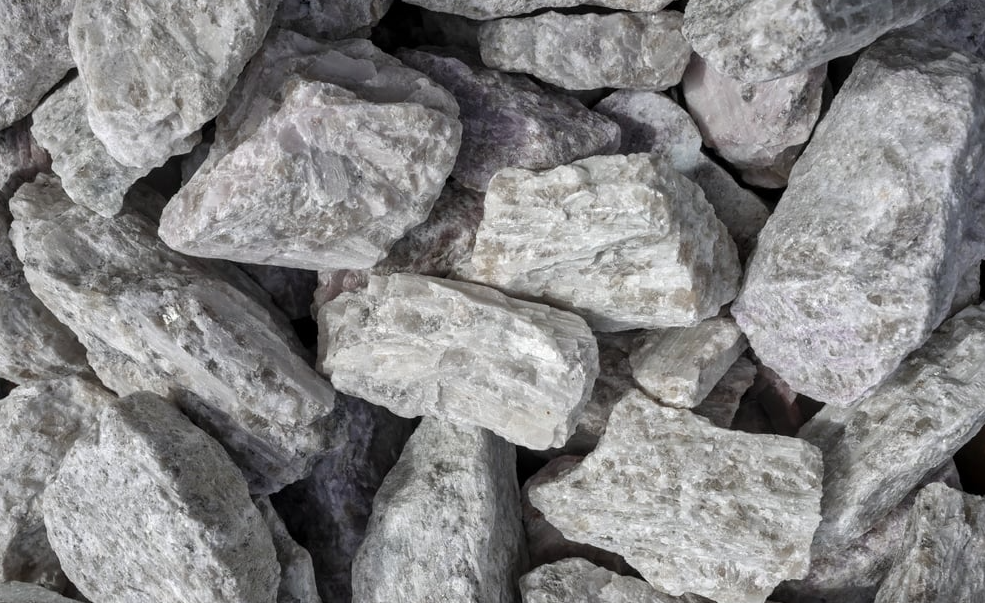
Lithium (Li, atomic number 3), the lightest metal and the first solid element in group 1 (the alkali metals), is deceptively unassuming: a soft, silvery-white metal so light it floats on most oils and reacts violently with water. Discovered in 1817 by Johan August Arfwedson in a petalite mineral from Sweden and named from the Greek lithos (“stone”), lithium was once a minor curiosity in mineralogy and medicine. Today, it is the cornerstone of the modern energy transition—powering smartphones, electric vehicles, grid storage, and the dream of sustainable electrification.
1. Hidden Features: Extreme Reactivity, Quantum Simplicity, and Electrochemical Dominance
Lithium’s electron configuration [He] 2s¹ gives it the most negative standard reduction potential (−3.04 V) of any element, making it extraordinarily reactive.
- Ultra-Low Density & Floatability: At ~0.534 g/cm³, lithium is less dense than any other solid element except possibly some exotic forms of hydrogen under pressure. It floats not only on water (while reacting explosively) but on many organic liquids, a property exploited in niche buoyancy applications.
- Violent Water Reaction & Hydrogen Generation: Lithium reacts with water to produce hydrogen gas and lithium hydroxide (Li + H₂O → LiOH + ½H₂ + heat), often igniting the hydrogen plume. In larger pieces or moist air, it can self-ignite—hence its storage under mineral oil or argon. The reaction is less violent than sodium or potassium due to slower kinetics, but still hazardous.
- Highest Electrochemical Potential: Lithium has the highest specific capacity (3860 mAh/g) and lowest electrochemical potential of any metal, making Li-metal anodes theoretically ideal for batteries. This drives the massive energy density advantage of lithium-ion cells over alternatives.
- Isotopic Split: Lithium has two stable isotopes: ⁶Li (~7.5%, used in nuclear fusion as tritium breeder via ⁶Li + n → ⁴He + ³H) and ⁷Li (~92.5%, the dominant form in batteries and most applications). Natural lithium’s ⁶Li/⁷Li ratio varies slightly by source, useful in geochemical tracing.
- Quantum & Superconductivity Notes: In ultracold dilute gases, lithium-7 forms a stable Bose-Einstein condensate (1995 experiment); lithium-6 is fermionic. Under extreme pressure (~40 GPa), lithium becomes a superconductor at relatively high temperatures for an elemental metal.
2. Covert Uses: Batteries, Fusion Fuel, Ceramics, and Mental Health
Lithium’s annual production (~130,000 tonnes LCE equivalent in 2025) is dominated by battery demand (~80–85%), but its roles span high-tech and strategic domains.
- Lithium-Ion Batteries (The Dominant Use): Lithium cobalt oxide (LCO), NMC (nickel-manganese-cobalt), LFP (lithium iron phosphate), and emerging high-nickel cathodes power everything from phones to Tesla Megapacks. Solid-state lithium batteries and lithium-metal anodes promise 500+ Wh/kg in the 2030s—doubling current EV ranges.
- Nuclear Fusion Fuel Cycle: ⁶Li is the primary tritium breeding material in future deuterium-tritium fusion reactors (ITER, DEMO). Neutrons from fusion convert ⁶Li to tritium, closing the fuel cycle—making lithium a strategic material for fusion energy.
- Glass & Ceramics: Lithium lowers melting points and thermal expansion in glass-ceramics (e.g., Corning’s Gorilla Glass, cooktop panels, telescope mirrors). Lithium aluminosilicates provide near-zero thermal expansion—critical for precision optics and induction cookware.
- Greases & Lubricants: Lithium 12-hydroxystearate is the most common thickener in multi-purpose greases—used in automotive, industrial, and aerospace applications for its wide temperature range and water resistance.
- Psychiatric Medicine: Lithium carbonate and citrate remain a first-line treatment for bipolar disorder—stabilizing mood via mechanisms still not fully understood (possibly involving inositol depletion and GSK-3 inhibition). Doses are carefully monitored due to narrow therapeutic window and nephrotoxicity risk.
- Air Purification & CO₂ Scrubbing: Lithium hydroxide canisters on spacecraft (Apollo missions, ISS) absorb CO₂ (2 LiOH + CO₂ → Li₂CO₃ + H₂O), providing breathable air in closed environments.
In summary, lithium isn’t just the lightest metal—it’s the electrochemical kingpin of the 21st-century energy shift, a fusion tritium factory, a mood-stabilizing enigma, and a material that makes glass survive thermal shocks and phones survive drops.
What’s your favorite lithium fact—its role in EVs, its reactivity demo, or something else entirely? Drop it below!