

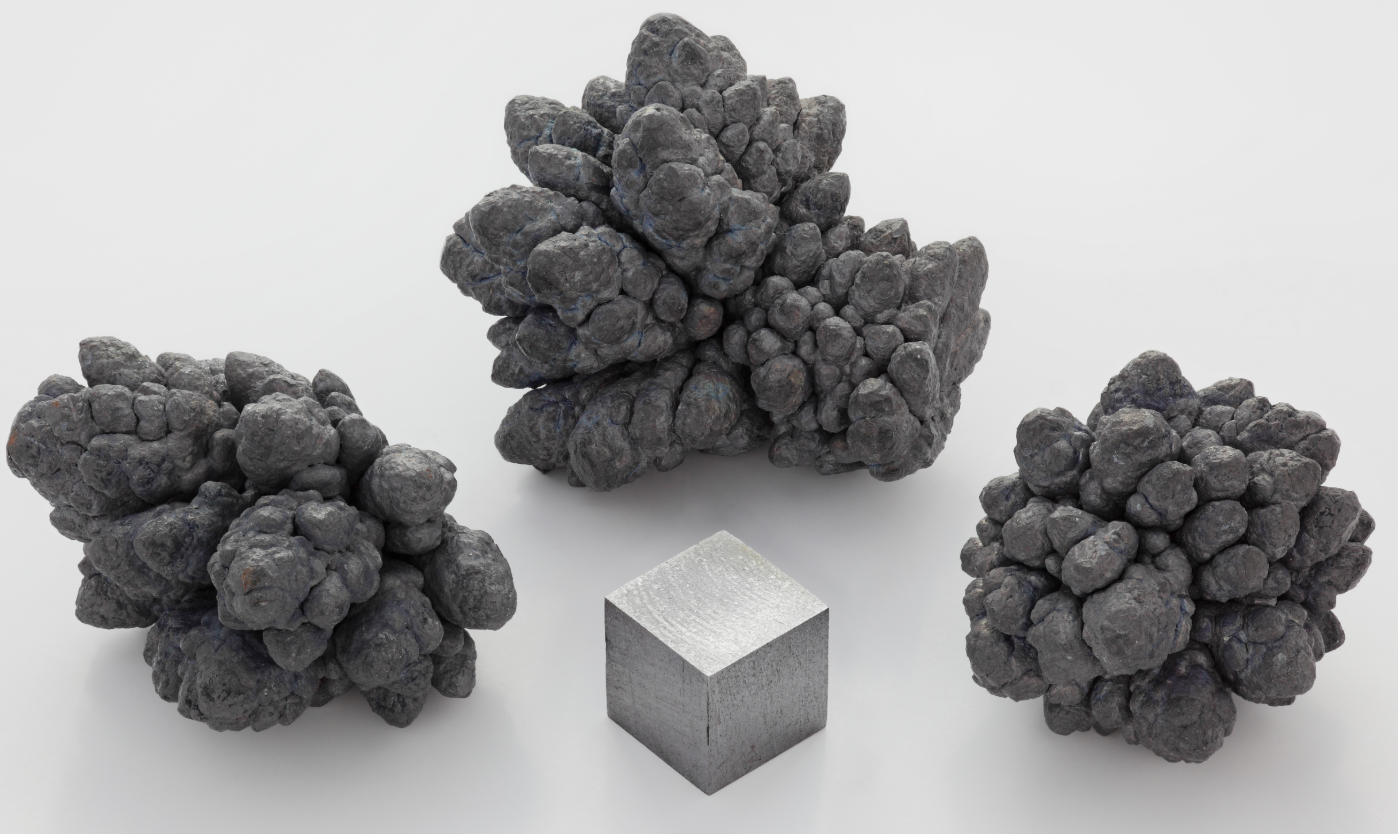
Lead (Pb, atomic number 82), a soft, dense, bluish-gray post-transition metal in group 14 (below carbon, silicon, germanium, tin), has been known and used by humanity for over 7,000 years—longer than almost any other metal. Its symbol Pb comes from the Latin plumbum, its low melting point (~327 °C) and malleability made it one of the first metals smelted and shaped. From Roman aqueducts and medieval stained glass to modern radiation shielding and car batteries, lead has shaped civilization. Yet beneath its usefulness lies a profoundly toxic nature, relativistic electronic quirks, and surprising nuclear stability that make it one of the most dual-natured elements on the periodic table.
1. Hidden Features: Inert Pair, Relativistic Shielding, and Nuclear Magic
Lead’s electron configuration [Xe] 4f¹⁴ 5d¹⁰ 6s² 6p² reveals why it behaves so differently from lighter group 14 elements.
- Extreme Inert-Pair Effect: Relativistic contraction of the 6s orbital (the “inert pair”) makes the two 6s electrons extremely reluctant to participate in bonding. This stabilizes the +2 oxidation state far more than +4—Pb²⁺ dominates chemistry while Pb⁴⁺ compounds are strong oxidants that readily decompose. Result: lead(II) salts are common and relatively stable; lead(IV) compounds (like PbO₂ or PbCl₄) are rare and reactive.
- Density & Softness: At 11.34 g/cm³, lead is one of the densest non-radioactive elements—over 40% denser than iron. Its metallic bonding is weak due to poor orbital overlap from the filled d and f shells, making it soft (Mohs hardness ~1.5) and easily scratched or extruded.
- Nuclear Magic Number Stability: Lead has the magic proton number Z=82 (closed shell) and several isotopes near magic neutron numbers (N=126 for ²⁰⁸Pb). ²⁰⁸Pb is doubly magic—the most stable heavy nucleus—and has the highest binding energy per nucleon after ⁶²Ni (~7.87 MeV). This stability is why lead-208 is the end point of the thorium decay series and why lead isotopes are so abundant in nature.
- Superconductivity & Low-Temperature Behavior: Pure lead becomes superconducting below ~7.2 K (one of the highest critical temperatures among elemental superconductors), with a strong Meissner effect used in early demonstrations and shielding.
- Toxicity Mechanism (Hidden Biochemical Saboteur): Pb²⁺ mimics Ca²⁺ and Zn²⁺ due to similar ionic radius and charge, binding to sulfhydryl groups in enzymes, displacing essential metals, and disrupting heme synthesis (causing anemia) and neural signaling. It crosses the blood-brain barrier and placenta, explaining its devastating neurotoxicity, especially in children.
2. Covert Uses: Shielding, Batteries, and Lingering Legacy
Despite global efforts to phase out lead due to toxicity (banned in paint, gasoline, pipes in most countries), it retains critical, often irreplaceable roles.
- Radiation Shielding: Lead’s high density and atomic number make it the go-to material for X-ray, gamma-ray, and neutron shielding—in medical imaging rooms, nuclear reactors, particle accelerators, and radioactive waste containers. Lead aprons, bricks, and sheets remain standard despite alternatives like tungsten composites.
- Lead-Acid Batteries: Still powers most conventional cars (starter, lighting, ignition), forklifts, backup power systems, and submarines. The chemistry (Pb + PbO₂ + H₂SO₄ → PbSO₄ + H₂O) is robust, recyclable (~99% recovery rate), and cheap—accounting for ~85% of global lead use.
- Solders & Alloys (Legacy & Niche): Lead-tin solders were ubiquitous in electronics until the RoHS directive (2006); lead-free alternatives are now standard, but leaded solders persist in aerospace, military, and high-reliability applications where thermal fatigue resistance is critical.
- Sound & Vibration Damping: Lead’s high density and low stiffness make it excellent for acoustic damping—used in recording studios, shooting ranges, and industrial noise barriers (lead vinyl sheets, lead-lined drywall).
- Ammunition & Fishing Weights (Phasing Out): Historically dominant; now restricted in many regions due to environmental lead poisoning of wildlife (birds ingest spent shot or weights).
In summary, lead isn’t just a heavy metal—it’s the poster child for the inert-pair effect, a doubly magic nucleus, humanity’s oldest metallurgical companion, and one of the most regulated toxins of the modern era.
What’s your take on lead—fascinating ancient metal, necessary evil in tech, or something we should have banned completely long ago? Drop it below!