

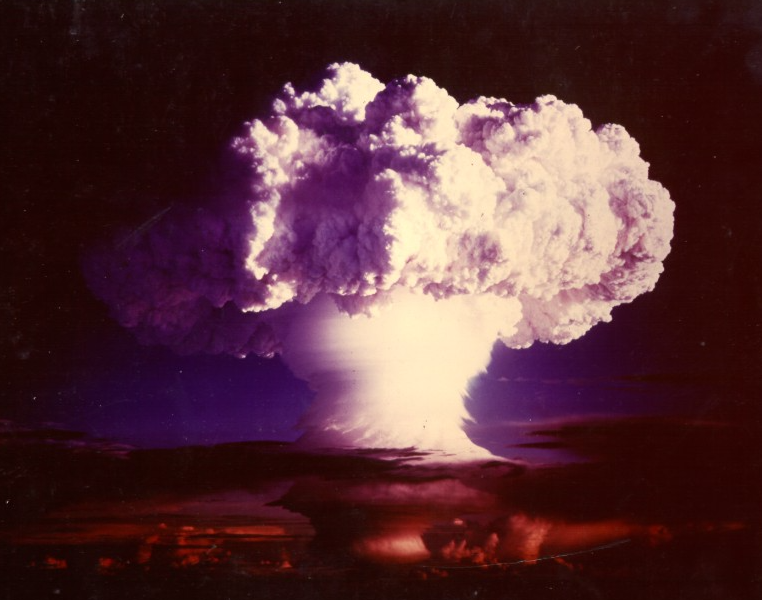
Fermium (Fm, atomic number 100), the eighth transuranium element in the actinide series, represents one of the heaviest elements producible in macroscopic (though minuscule) quantities—yet it remains profoundly elusive and radioactive. Named in honor of Enrico Fermi, the architect of the first nuclear reactor and pioneer of neutron physics, fermium was discovered in 1952 amid the fallout of the world’s first thermonuclear explosion (“Ivy Mike”), where intense neutron fluxes transformed uranium into heavier actinides. Synthesized later in labs via heavy-ion bombardment (e.g., oxygen-16 on uranium-238) or intense neutron capture on lighter actinides like einsteinium or californium, fermium exists only through human ingenuity. With no stable isotopes and the longest-lived one (²⁵⁷Fm) having a half-life of just 100.5 days, it decays via alpha emission or spontaneous fission. Despite its extreme rarity—annual production totals less than a millionth of a gram—fermium unveils deep “hidden” features in nuclear structure, relativistic chemistry, and the actinide contraction, plus “covert” value as a probe into the heaviest reachable elements.
1. Hidden Features: Shell Effects, Relativistic Shadows, and Nuclear Smoothness
Fermium sits at the upper limit of elements formable by neutron bombardment, where nuclear shell structure and relativistic effects dominate behavior.
- Actinide Contraction and Relativistic Influence: As Z increases through the actinides, inner 5f electrons experience strong relativistic contraction, shrinking orbitals and increasing effective nuclear charge. This leads to the “actinide contraction” (analogous to lanthanide contraction), making fermium’s ionic radii smaller than expected and favoring +3 oxidation state in aqueous solutions (though +2 appears in some solid compounds). Relativistic effects stabilize higher orbitals, altering valence configurations compared to lighter homologs.
- Nuclear Charge Radii and Shell Quenching: Recent laser spectroscopy (2024, GSI/FAIR and Mainz University) measured isotope shifts across fermium isotopes (N=145–157), revealing smooth, nearly linear increases in mean-square nuclear charge radii with added neutrons—even across the deformed N=152 subshell gap. This indicates reduced influence of localized shell effects on nuclear size in fermium, contrasting their strong role in binding energies. Unlike lighter nuclei where shell closures cause dramatic “kinks” in radii, fermium shows subdued shell impact, hinting at a transition toward more uniform nuclear matter at high Z.
- Isotopic Diversity and Decay Quirks: 20+ known isotopes (241–260Fm), but most short-lived: ²⁵⁵Fm (~20 hours, from bomb debris), ²⁵²Fm (~25 hours), ²⁵³Fm (~3 days), while ²⁵⁷Fm (100.5 days) enables most studies. Heavier ²⁵⁸Fm fissions in <1 ms after neutron capture on ²⁵⁷Fm—highlighting a sudden fission barrier drop. Recent fission mode studies (2025) show asymmetric-to-symmetric transitions in mass/charge yields for fermium isotopes, probing fragment orientations and quantum fragmentation theory.
- Electronic Spectroscopy Breakthroughs: First atomic transitions observed in fermium (early 2000s onward), with 2024+ laser work extending to charge radii and moments. These benchmark relativistic quantum chemistry, confirming deviations from periodicity due to 5f/6d/7s mixing.
These properties stem from fermium’s position where N≈152 deformed shell and relativistic many-body effects compete, offering a window into nuclear stability limits before superheavies.
2. Covert Uses: Pure Research Beacon, No Bulk Applications
Fermium has zero commercial or practical uses—its extreme radioactivity and scarcity preclude anything beyond lab-scale science. Its “covert” impact lies in frontier nuclear and atomic physics.
- Nuclear Structure Benchmark: Laser spectroscopy on fermium isotopes (e.g., RADRIS method at GSI) tests shell-model predictions, deformed subshells, and fission barriers—insights that inform r-process nucleosynthesis in neutron stars and superheavy stability.
- Relativistic Quantum Validation: Atomic-level studies refine models incorporating Breit/QED corrections, crucial for predicting properties of yet-unsynthesized elements (e.g., beyond 118).
- Actinide Series Endpoint Probe: As the heaviest neutron-bombardment product, fermium marks the practical boundary for bulk actinide production; heavier elements require rarer fusion routes. “Fermium cow” sources (from neutron-irradiated targets) enable off-line spectroscopy.
- Philosophical Limit Tester: Fermium asks: Where do shell effects fade, and does nuclear existence end? Its smooth radii trends suggest a softening of magic numbers in heavy nuclei, guiding searches for the superheavy island.
In summary, fermium isn’t just another actinide—it’s a radioactive sentinel from the dawn of thermonuclear testing, a charge-radii smoothness demonstrator, and a litmus test for how shell structure and relativity shape the heaviest nuclei. While carbon builds worlds, fermium whispers about their radioactive, fleeting edges.
What’s your favorite superheavy or actinide quirk? Drop it below!