

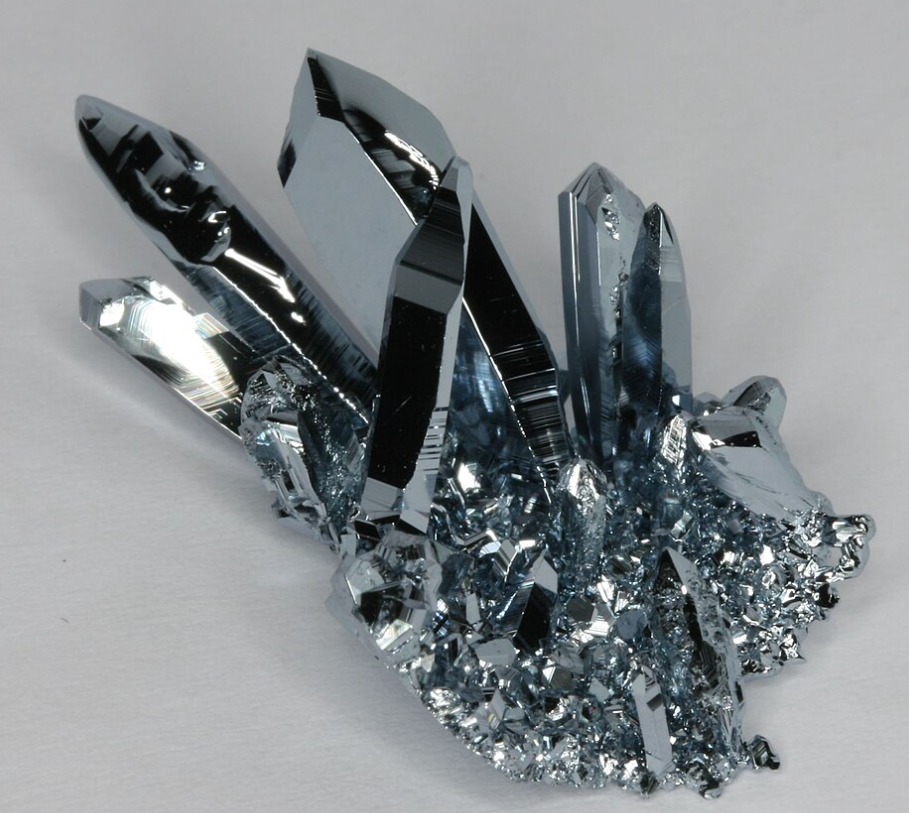
Osmium (Os, atomic number 76), a rare platinum-group metal, stands as the undisputed densest naturally occurring stable element on Earth. This bluish-white, brittle transition metal in group 8 (below ruthenium and above hassium) was discovered in 1803 by Smithson Tennant during platinum ore analysis—alongside iridium—and named from the Greek “osme” meaning “odor,” due to the pungent, chlorine-like smell of its volatile tetroxide. Found only in trace amounts in platinum ores, alluvial deposits, and nickel-copper sulfide deposits, osmium is one of the rarest stable elements in the crust (~0.001–0.005 ppm). Its extreme properties make it both a scientific marvel and a hazardous curiosity, with “hidden” features rooted in its electronic structure, crystal lattice, and extreme reactivity in certain forms, plus “covert” niche roles in microscopy, catalysis, and high-wear applications.
1. Hidden Features: Density King, Toxic Vapor, and Surface Secrets
Osmium’s [Xe] 4f¹⁴ 5d⁶ 6s² configuration and compact 5d orbitals drive its standout traits.
- Unmatched Density: At 22.59–22.61 g/cm³ (depending on measurement precision), osmium edges out iridium (22.56 g/cm³) for the title of densest element—about twice as dense as lead and 22 times denser than water. This arises from relativistic contraction of inner electrons and efficient packing in its hexagonal close-packed (hcp) lattice. Hidden twist: Under extreme pressure, osmium shows anomalous compressibility and potential phase transitions, probed in diamond-anvil cell experiments simulating planetary cores.
- Hardness vs. Brittleness: One of the hardest metals (Vickers hardness ~392–500 HV), yet extremely brittle—osmium shatters under impact rather than deforming. This paradox stems from strong directional d-bonding and limited slip systems in its hcp structure.
- Osmium Tetroxide (OsO₄) Toxicity: The most infamous “hidden” danger—OsO₄ is a volatile, colorless-to-pale-yellow solid that sublimes easily and forms whenever finely divided osmium contacts air or oxygen. It has a characteristic acrid odor (hence the name) and is one of the most toxic compounds known: it rapidly oxidizes organic tissues, attacks double bonds in lipids, and causes permanent blindness upon eye exposure even at trace levels. This makes pure osmium powder hazardous to handle without inert atmosphere.
- Catalytic Surface Activity: Osmium’s d-electrons enable exceptional catalysis, especially in finely divided or supported forms. It excels in hydrogenation, ammonia synthesis (historically), and asymmetric dihydroxylation (Sharpless reaction uses OsO₄ with chiral ligands for enantioselective alkene oxidation). Hidden gem: Recent research revives osmium-based electrocatalysts for oxygen evolution/reduction in fuel cells and water splitting—cheaper than iridium yet competitive in activity and stability.
- Isotopic and Nuclear Notes: Osmium has seven stable isotopes (¹⁸⁴Os to ¹⁹²Os), with ¹⁸⁷Os produced by beta decay of ¹⁸⁷Re (half-life ~41 billion years)—a key tool in rhenium-osmium dating of meteorites, mantle rocks, and ore deposits to trace Earth’s differentiation.
2. Covert Uses: Niche Hardness, Staining Power, and Emerging Catalysis
Osmium’s scarcity (annual production ~a few hundred kg globally) limits it to specialized, often low-volume applications.
- Ultra-Hard Alloys (Osmiridium/Iridium-Osmium): Naturally occurring alloys like osmiridium were historically used for fountain pen nib tips, phonograph styli, instrument pivots, and electrical contacts—where extreme wear resistance is critical. Modern equivalents use osmium-iridium alloys for precision bearings and high-end luxury pen tips.
- Electron Microscopy Staining (OsO₄): The dominant use today—osmium tetroxide fixes and stains biological tissues by crosslinking lipids and proteins, making cell membranes electron-dense and visible under TEM. It’s irreplaceable in ultrastructural studies of cells, viruses, and neural tissues.
- Catalysis in Organic Synthesis and Energy: OsO₄ drives dihydroxylation in pharmaceutical synthesis; supported osmium catalysts handle selective hydrogenation. Emerging: Osmium nanoparticles and complexes show promise in green hydrogen production (OER/HER electrocatalysis) and CO₂ reduction—leveraging its stability under oxidative conditions where cheaper metals fail.
- Scientific Instruments and Luxury: Tiny amounts in high-precision pivots, needles, or as investment-grade crystalline osmium (since ~2010s, marketed as “osmium stars” or bars for collectors due to unique sparkle and rarity).
In summary, osmium isn’t just another platinum-group metal—it’s the density champion, a brittle hardness record-holder, a dangerously volatile toxin in oxide form, and an underappreciated catalyst powerhouse.
What’s your favorite dense or toxic element quirk? Drop it below!