

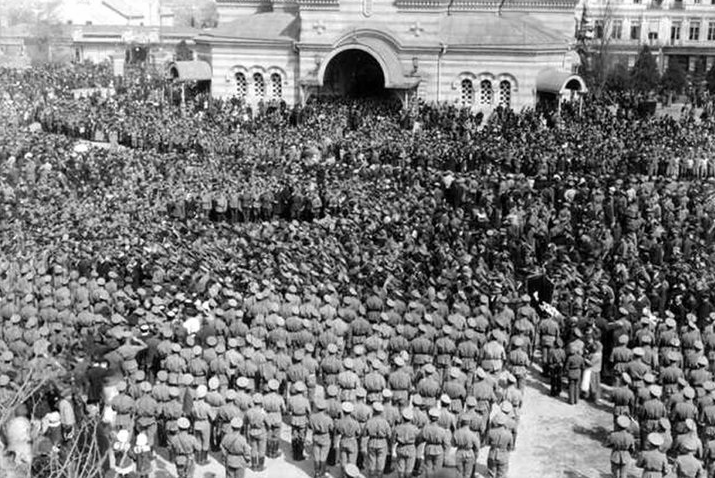
On February 25, 2026, Georgia observes Soviet Occupation Day (საბჭოთა ოკუპაციის დღე / Sabch’ota Ok’up’ats’iis Dghe), a national day of mourning and remembrance commemorating the Soviet invasion and occupation of the Democratic Republic of Georgia on February 25, 1921.
On that day, the 11th Red Army of Soviet Russia crossed into Georgia, overthrew the independent democratic government led by Noe Zhordania (Menshevik Georgian Social Democratic Party), and installed a Bolshevik regime. The invasion ended three years of independence (1918–1921) that had followed the collapse of the Russian Empire. The occupation led to the forcible incorporation of Georgia into the Transcaucasian SFSR (1922) and later the Georgian SSR (1936), marked by mass repressions, the Great Purge, collectivization, and the loss of sovereignty until the restoration of independence on April 9, 1991.
Soviet Occupation Day was officially established as a national remembrance day by the Parliament of Georgia in 2011 to honor the victims of Soviet rule — tens of thousands executed, deported to Siberia, or killed during uprisings (especially 1924) — and to affirm Georgia’s irreversible choice of freedom and European integration.
Significance in 2026:
- In 2026, Georgia marks the 105th anniversary of the 1921 occupation — a solemn reminder of lost independence, Stalinist terror, and the long struggle for self-determination.
- The day reaffirms Georgia’s rejection of Russian/Soviet imperialism, especially resonant amid the ongoing Russian occupation of 20% of Georgian territory (Abkhazia and South Ossetia) since 2008.
- It underscores national values: sovereignty, democracy, human rights, and the aspiration to join the European Union and NATO.
Observances and Commemorations:
- National ceremony in Tbilisi: The main event is held at the Memorial of the Victims of Soviet Occupation (near the Parliament building) or the National Museum. The President, Prime Minister, Speaker of Parliament, and opposition leaders lay wreaths, observe a minute of silence, and deliver speeches. A candle-lighting ceremony often takes place in the evening.
- Nationwide tributes: Similar ceremonies occur in Kutaisi, Batumi, Gori, Zugdidi, and other cities; schools and universities hold lessons on the 1918–1921 independence period, the 1921 invasion, and Soviet repressions.
- Cultural and religious events: Orthodox churches hold memorial services (panikhida) for victims; cultural centers and theaters stage performances or exhibitions on Georgian independence and resistance.
- Public reflection: The Georgian flag flies at half-mast in the morning; many citizens light candles at home or visit memorials; social media fills with black-and-white photos of 1921, quotes from Noe Zhordania, and messages of remembrance.
- Symbolic acts: The national anthem is sung; the white-red-white flag of the 1918–1921 Democratic Republic of Georgia is displayed alongside the current five-cross flag in many places; the day is observed with dignity and mourning rather than festivity.
Soviet Occupation Day is a public holiday in Georgia — government offices, schools, banks, and most businesses close — allowing the nation to mourn, reflect, and reaffirm its commitment to freedom and independence.
A phrase often recalled on this day: “საქართველო თავისუფალი იქნება!” (“Georgia will be free!”)
On February 25, Georgia bows its head in memory of the lost independence of 1921 — and stands firm in its resolve to defend the freedom regained in 1991 and beyond. 🇬🇪