

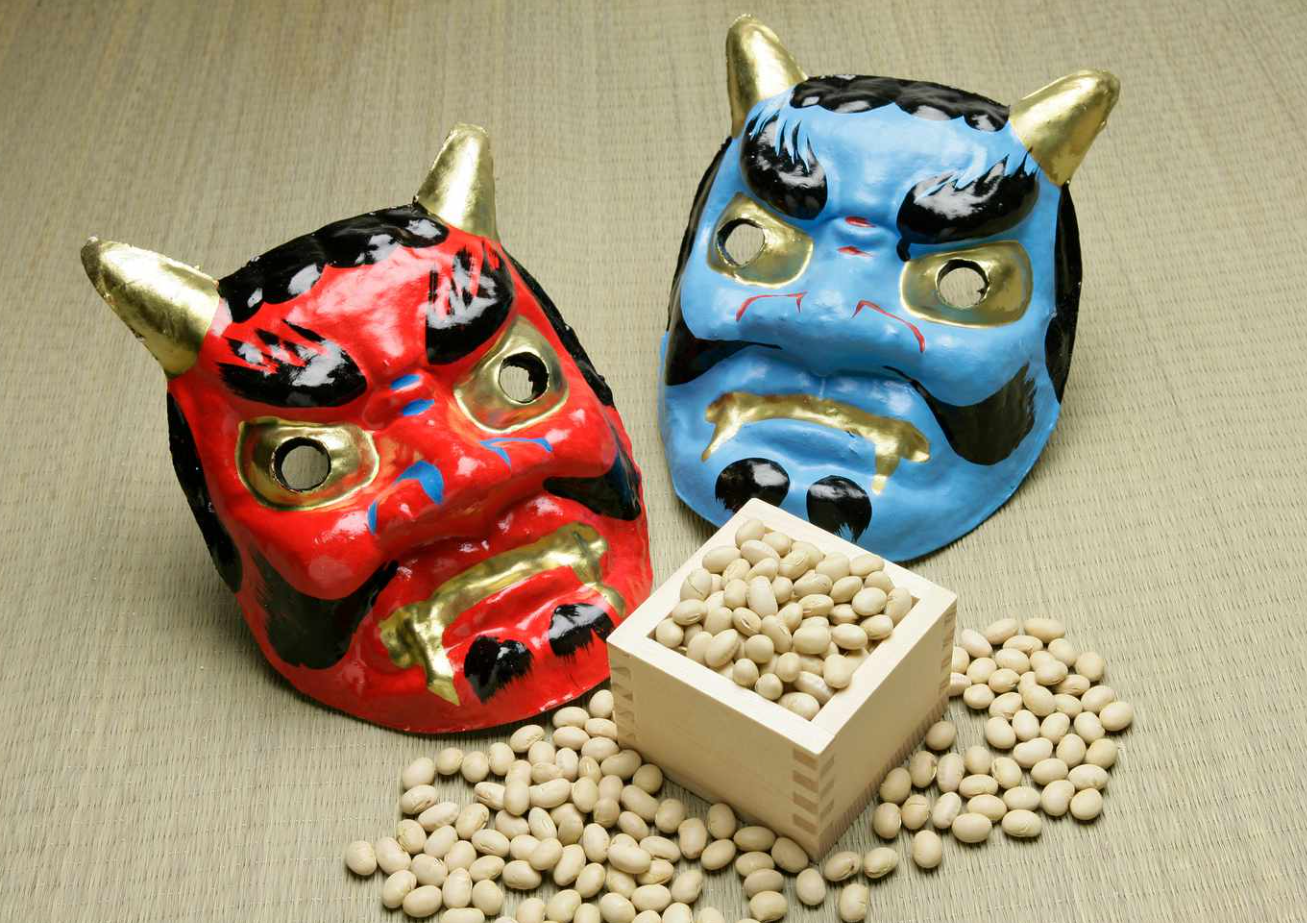
On February 3, 2026, Japan celebrates Setsubun (節分), the traditional “seasonal division” festival that marks the eve of spring according to the old lunar calendar. Although it’s not a public holiday (schools and offices stay open), Setsubun is one of the most colorful and widely enjoyed seasonal customs in the country — a lively way to drive out evil spirits, bad luck, and winter, and welcome good fortune for the coming year.
The name “Setsubun” literally means “seasonal division,” referring to the day before the start of each season in the traditional Japanese lunisolar calendar. The February Setsubun (around early February) is the most famous because it signals the transition from winter to spring — the most important seasonal shift.
Core Traditions:
- Mamemaki (bean-throwing) — The highlight of Setsubun. People (usually the father or a male family member designated as the “toshiotoko” — man born in the zodiac year of the current year) scatter roasted soybeans (called “fortune beans” or “demon beans”) inside and outside the house while shouting: “Oni wa soto! Fuku wa uchi!” (“Demons out! Good fortune in!”) Children (and sometimes adults) dress up as oni (demons/ogres) with red or blue masks, horns, and fangs, and the bean-thrower chases them away. The beans are believed to ward off evil spirits for the year.
- Eating the beans — After the throwing, everyone eats roasted soybeans — one for each year of their age plus one extra for good luck in the coming year (called “toshi no kazu” — number of years). Some families eat them while facing the lucky direction of the year (based on the zodiac).
- Eho-maki (lucky direction roll) — In the Kansai region (especially Osaka), people eat an uncut eho-maki (a thick sushi roll) in silence while facing the year’s lucky compass direction (determined by the zodiac animal). You must eat the whole roll without speaking or cutting it — a fun, slightly awkward tradition believed to bring good fortune.
- Other customs: Burning old talismans (omamori) from shrines, decorating homes with sardine heads and holly branches (to repel demons), and visiting temples or shrines for special Setsubun ceremonies with bean-throwing by priests.
Significance in 2026:
- In 2026, Setsubun falls on February 3 — the traditional date in the modern calendar — and marks the transition into the Year of the Horse (in the Chinese zodiac cycle used for lucky directions).
- It remains one of Japan’s most beloved seasonal festivals, blending ancient Shinto and folk beliefs with family fun and community spirit.
- Many kindergartens, schools, and companies hold small mamemaki events; major shrines (like Sensō-ji in Tokyo or Yasaka Shrine in Kyoto) host large public bean-throwing ceremonies with celebrities or sumo wrestlers as the “bean-throwers.”
How It’s Celebrated Today:
- Families with children especially love the demon-chasing game — kids get to play the oni and scream with delight as beans fly at them.
- Supermarkets sell special Setsubun packs: roasted soybeans, oni masks, and eho-maki ingredients.
- Convenience stores (konbini) and sushi chains offer ready-made eho-maki rolls with lucky direction maps.
- Social media fills with photos of families in oni masks, bean-throwing videos, and people eating eho-maki facing the “correct” direction.
Setsubun is lighthearted, joyful, and deeply symbolic — a perfect Japanese way to sweep away the old year’s troubles and welcome spring with laughter and roasted soybeans.
A traditional chant you’ll hear everywhere: “Oni wa soto! Fuku wa uchi!” (“Demons out! Fortune in!”)
On February 3, Japan throws beans at demons, eats sushi rolls in silence, and hopes for a lucky, happy year ahead.