

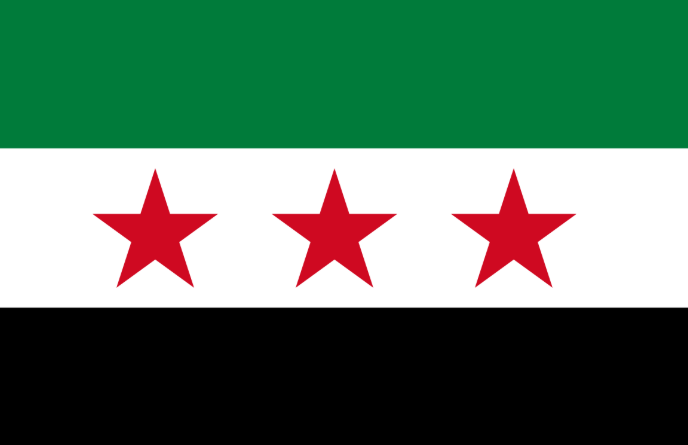
Syrian Democratic Forces (SDF) says it agreed under a ceasefire to withdraw from Aleppo after days of deadly clashes with government forces in the northern city.
– Governor Azzam al-Gharib tells Al Jazeera that Aleppo has become “empty of SDF fighters” after Syrian troops coordinated their withdrawal on buses overnight.
– Dozens of people have been killed in the clashes, with more than 150,000 displaced.
– Heavy fighting in Aleppo began on Tuesday in the predominantly Kurdish neighbourhoods of Sheikh Maqsoud, Ashrafieh, and Bani Zaid amid tensions over a failure to implement a March 2025 agreement to reintegrate the Kurdish forces into state institutions.
The main foreign actors involved in Syria
Turkiye
- Before the withdrawal of the Syrian Democratic Forces, Turkiye said it’s ready to “support” Syria in its fight against the militia.
- Turkiye, which struggled with a decades-long rebellion and attacks by Kurdish fighters, views the SDF as a threat to its security.
- An ally of Ahmad al-Sharaa’s government, Turkiye has launched multiple military operations in northern Syria to push the group away from its border.
Israel
- Israel also spoke out on the fighting with Foreign Minister Gideon Saar, saying the attacks on the “Kurdish minority were … serious and dangerous”.
- The country has already intervened in Syria repeatedly over the past year, including bombing Damascus in July, claiming to support Druze fighters battling government forces in the south.
- The Israeli army has also expanded its occupation beyond the Golan Heights, setting up checkpoints and abducting people deep inside Syrian territory.
United States
- The US, which has troops in eastern Syria, is allied with all the parties involved – Turkiye, Israel, the Syrian government and the SDF – and has been trying to mediate between them.
- About 1,000 US soldiers are stationed in Syria.
- President Trump pushed for the withdrawal of US troops from Syria during his first term from 2017 to 2021, but he abandoned the plan after officials warned of a backslide in the anti-ISIL fight and implications of abandoning Kurdish allies in the region.
What is the March agreement?
The recent fighting is linked to the failure to implement an agreement signed last March that would have integrated Kurdish-run institutions and SDF fighters into the Syrian state.
The deal emphasised the unity of Syria and stipulated “all civil and military institutions in northeastern Syria” be merged “into the administration of the Syrian state, including border crossings, the airport, and oil and gas fields”.
The SDF has controlled a semi-autonomous region in northeastern Syria since 2015. The agreement was meant to bring that territory under the government’s full control, enforce a ceasefire in all of Syria, and bring the SDF on board to help combat pro-al-Assad fighters.
It also included an affirmation that the Kurdish people are integral to Syria and have a right to citizenship and guaranteed constitutional rights.
– Syrian government regains full control of Aleppo but ‘risk’ remains
– Much of Syria’s energy resources, including oilfields, lie in the northeast and are controlled by the SDF.