

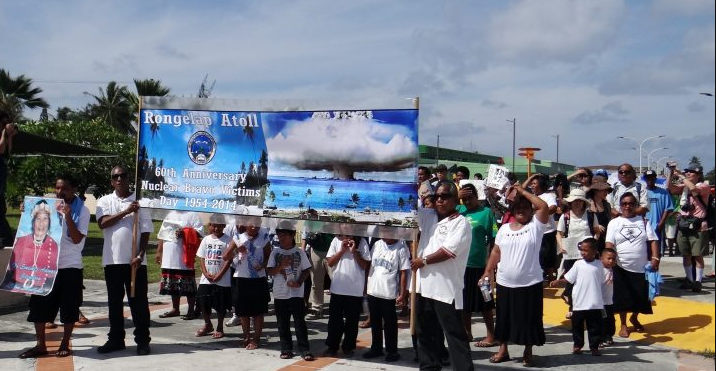
On March 1, 2026, the Republic of the Marshall Islands observes Remembrance Day (also known as Nuclear Victims Remembrance Day or Bikini Day in some contexts), a solemn national holiday commemorating the Bravo Castle hydrogen bomb test conducted by the United States on March 1, 1954, at Bikini Atoll.
On that day, the U.S. detonated a 15-megaton thermonuclear device — the most powerful atmospheric nuclear test ever conducted by the United States — as part of Operation Castle. The explosion was far more powerful than expected (1,000 times stronger than the Hiroshima bomb), contaminating large areas of the Marshall Islands, particularly Rongelap, Utirik, and Ailinginae atolls. Radioactive fallout poisoned islanders, forced evacuations, caused long-term health crises (thyroid cancer, leukemia, birth defects), destroyed ecosystems, and rendered parts of the islands uninhabitable for decades.
Remembrance Day honors the victims of this and 66 other U.S. nuclear tests conducted in the Marshall Islands between 1946 and 1958 (including the Baker and Castle series at Bikini and Enewetak atolls). It is a day of mourning, remembrance, and continued advocacy for justice, compensation, and environmental remediation.
Significance in 2026:
- In 2026, the Marshall Islands mark the 72nd anniversary of the Castle Bravo detonation — a tragic milestone that underscores the enduring human and environmental legacy of nuclear testing.
- The day serves as a powerful reminder of the disproportionate burden borne by small island nations in the name of Cold War “security,” and the ongoing struggle for full recognition, compensation, and cleanup from the U.S. government.
- It reaffirms Marshallese resilience, cultural identity, and the fight for nuclear justice — including demands for fulfillment of the Compact of Free Association obligations and support for radiation-affected communities.
Celebrations and Observances:
- National ceremony in Majuro: The main event is held at the Capitol Building or Nuclear Victims Memorial in Majuro Atoll. The President, Cabinet ministers, traditional chiefs (iroij), survivors, and community leaders gather for prayers, speeches, and a moment of silence. Wreaths are laid at memorials, and names of victims are read aloud.
- Commemorations on affected atolls: Special observances take place on Rongelap, Utirik, Bikini, and Enewetak — often including church services, traditional chants, and storytelling by elders about the tests and their aftermath.
- Cultural and educational programs: Schools hold assemblies with lessons on nuclear history, Marshallese resilience, and the Compact of Free Association. Students perform songs, dances, or recite poems about peace and remembrance.
- Religious services: Christian churches (predominantly Protestant and Catholic) hold memorial services, prayers for healing, and blessings for survivors and their descendants.
- Public reflection: The Marshall Islands flag (blue with white sun and rays, symbolizing hope and peace) flies at half-mast in the morning; many citizens light candles or place flowers at memorials; social media shares black-and-white photos of the tests, survivor testimonies, and calls for justice.
- Symbolic acts: The day is observed with solemnity rather than festivity — no parades or fireworks. Many wear black or white in mourning; the national anthem (“Forever Marshall Islands”) is sung at events.
Remembrance Day is a public holiday in the Marshall Islands — government offices, banks, and most schools close — allowing the nation to mourn, remember, and renew its call for nuclear justice and healing.
A common sentiment on this day: “We remember so that it never happens again.”
On March 1, the Marshall Islands pause to honor the victims of nuclear testing — the Rongelapese, Utirikese, Bikinians, and all whose lives were forever changed — and continue their quiet, dignified struggle for recognition, compensation, and a world free of nuclear harm. 🇲🇭