

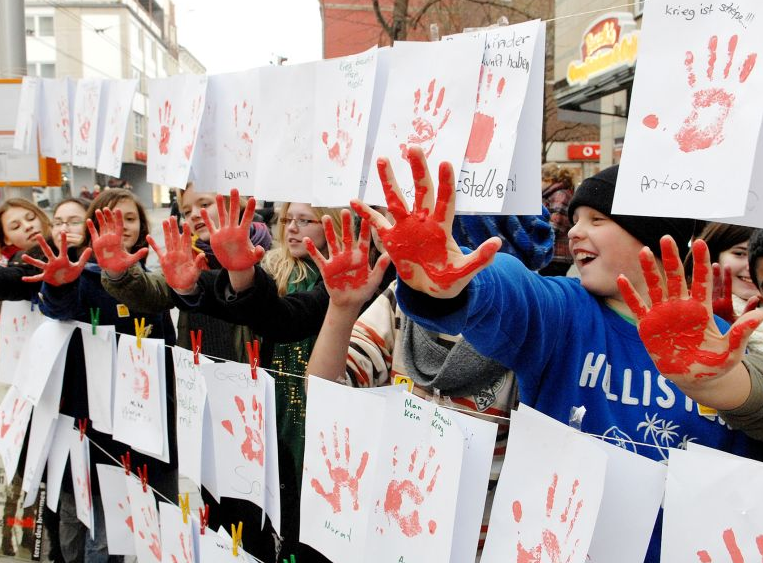
On February 12, 2026 , the world observes Red Hand Day (also known as the International Day Against the Use of Child Soldiers), a United Nations-supported global campaign to raise awareness about the recruitment and use of children in armed conflict and to call for an end to this grave violation of human rights.
The date was chosen to mark the entry into force of the Optional Protocol to the Convention on the Rights of the Child on the involvement of children in armed conflict (OPAC) on February 12, 2002. This protocol raised the minimum age for compulsory recruitment and participation in hostilities to 18 years and set 15 as the minimum age for voluntary recruitment (with strict safeguards). Red Hand Day has been observed annually since 2002, spearheaded by organizations such as Child Soldiers International, UNICEF, Save the Children, and the Coalition to Stop the Use of Child Soldiers.
The red handprint — stamped by children on petitions and posters — symbolizes the blood-stained handprints left on child soldiers’ recruitment papers, representing the urgent need to “stop” the use of children in war.
Significance in 2026:
- Despite progress, tens of thousands of children (under 18) are still recruited and used by armed forces and non-state armed groups in at least 20 countries (UN Secretary-General’s 2025 “Children and Armed Conflict” report). They serve as fighters, porters, cooks, messengers, spies, and in sexual slavery.
- The day highlights ongoing violations in conflict zones (e.g., Myanmar, Somalia, South Sudan, Yemen, the Democratic Republic of the Congo, Syria, and others) and calls for stronger implementation of international law, including the OPAC and Security Council resolutions.
- In 2026, the focus includes the impact of new technologies (drones, cyber warfare) on child recruitment, the role of girls in armed groups, and the need for reintegration programs for former child soldiers.
Global Observances and Activities:
- UN and partner events: The United Nations (UNICEF, OHCHR, Special Representative for Children and Armed Conflict) hosts virtual and in-person events, survivor testimonies, policy briefings, and the release of updated reports. The Secretary-General often issues a statement.
- Red Hand campaigns: Children and youth worldwide create red handprints on paper, posters, or murals and send them to governments, parliaments, and the UN, urging ratification and enforcement of the OPAC and an end to child recruitment.
- Community and school programs: Schools, youth clubs, and NGOs organize workshops, art exhibitions, film screenings (e.g., documentaries on former child soldiers), debates, and awareness marches. Many children write letters to world leaders or sign petitions.
- Advocacy and policy focus: Civil society groups lobby governments to end support for armed groups using child soldiers, release children from armed forces, and invest in rehabilitation and reintegration programs.
- Symbolic acts: Red handprints appear on social media (#RedHandDay, #ChildrenNotSoldiers), buildings, and public spaces; many light candles or hold moments of silence for children killed or harmed in conflict.
International Day Against the Use of Child Soldiers (Red Hand Day) is not a public holiday but a vital global advocacy day — a moment when the world says: children belong in school, not in armies.
A core message from the campaign: “Children are not soldiers. They are children.”
On February 12, the world unites in red handprints and resolve to end the recruitment of child soldiers — so every child can grow up safe, free, and with hope for the future.