

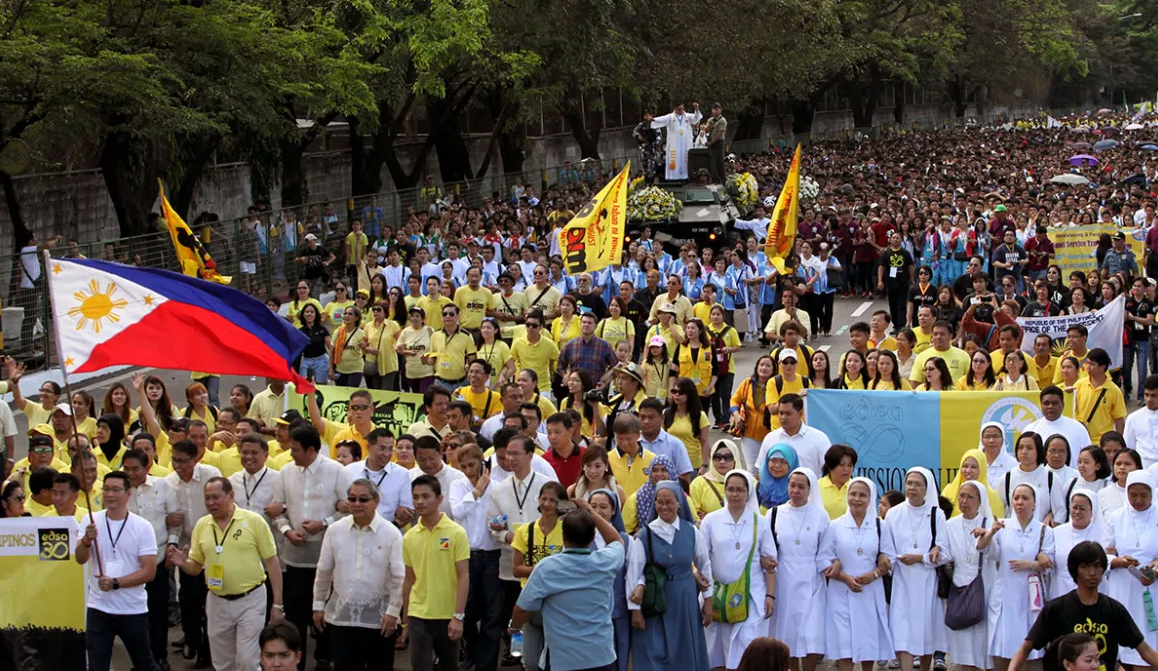
On February 25, 2026, the Philippines celebrates People Power Day (Araw ng Lakas ng Bayan), also known as EDSA People Power Revolution Anniversary, a national holiday commemorating the People Power Revolution of February 22–25, 1986 — the peaceful uprising that ended the 20-year dictatorship of Ferdinand Marcos.
The revolution unfolded along Epifanio de los Santos Avenue (EDSA) in Metro Manila, where millions of ordinary Filipinos — civilians, nuns, priests, soldiers, students, and families — gathered to protect defecting military leaders (Defense Minister Juan Ponce Enrile and AFP Vice Chief of Staff Fidel V. Ramos) from Marcos loyalist forces. They formed human barricades, linked arms, offered flowers and food to soldiers, and prayed as tanks approached. On February 25, Marcos fled the country, and Corazon “Cory” Aquino was sworn in as President, restoring democracy through non-violent people power.
People Power Day was declared a special non-working holiday in 2001 to honor the courage and unity of the Filipino people and to serve as a reminder that true power resides with the citizenry.
Significance in 2026:
- In 2026, the Philippines marks the 40th anniversary (Ruby Jubilee) of the EDSA Revolution — a historic milestone that reflects on the triumph of peaceful resistance, the restoration of democracy, and the ongoing struggle to protect and strengthen it.
- The day celebrates core Filipino values: bayanihan (community spirit), courage in the face of tyranny, faith, and the belief that ordinary people can change history without bloodshed.
- It also serves as a moment of reflection amid contemporary challenges — political polarization, disinformation, threats to press freedom, and the need to safeguard democratic institutions.
Celebrations and Observances:
- Main ceremony at EDSA Shrine: The focal point is the Our Lady of EDSA Shrine (EDSA Shrine) in Quezon City, where the revolution’s key events unfolded. The President, Vice President, government officials, military leaders, and representatives of civil society gather for a Mass, wreath-laying at the People Power Monument, speeches, and a moment of silence. The national flag is raised, and the national anthem is sung.
- Nationwide tributes: Similar ceremonies and Masses take place in major cities (Cebu, Davao, Baguio, Iloilo) and at local EDSA monuments or churches. Many communities hold candle-lighting vigils or prayer rallies.
- Cultural and educational programs: Schools and universities organize assemblies with readings of Cory Aquino’s speeches, screenings of documentaries (“EDSA: The People Power Revolution”), and student performances. Historical exhibits and photo displays are common.
- Public engagement: The yellow ribbon (symbol of Cory Aquino and the revolution) is worn or tied to vehicles; many people visit the EDSA Shrine or People Power Monument to offer flowers or light candles. Social media fills with #PeoplePowerDay, #EDSA1986, old protest photos, and messages of gratitude.
- Symbolic acts: The Philippine flag flies at full staff; many recite the EDSA Prayer or sing “Bayan Ko” and “Magkaisa”; the day often includes interfaith prayers for peace and unity.
People Power Day is a special non-working holiday in the Philippines — government offices, banks, and most schools close — allowing Filipinos to reflect, remember, and renew their commitment to democracy and people power.
A phrase forever linked to EDSA: “Tama na! Sobra na! Palitan na!” (“Enough! Too much! Replace him!”)
On February 25, the Philippines remembers the millions who stood on EDSA — ordinary citizens who proved that courage, unity, and faith can topple dictators without a single shot fired. 🇵🇭