

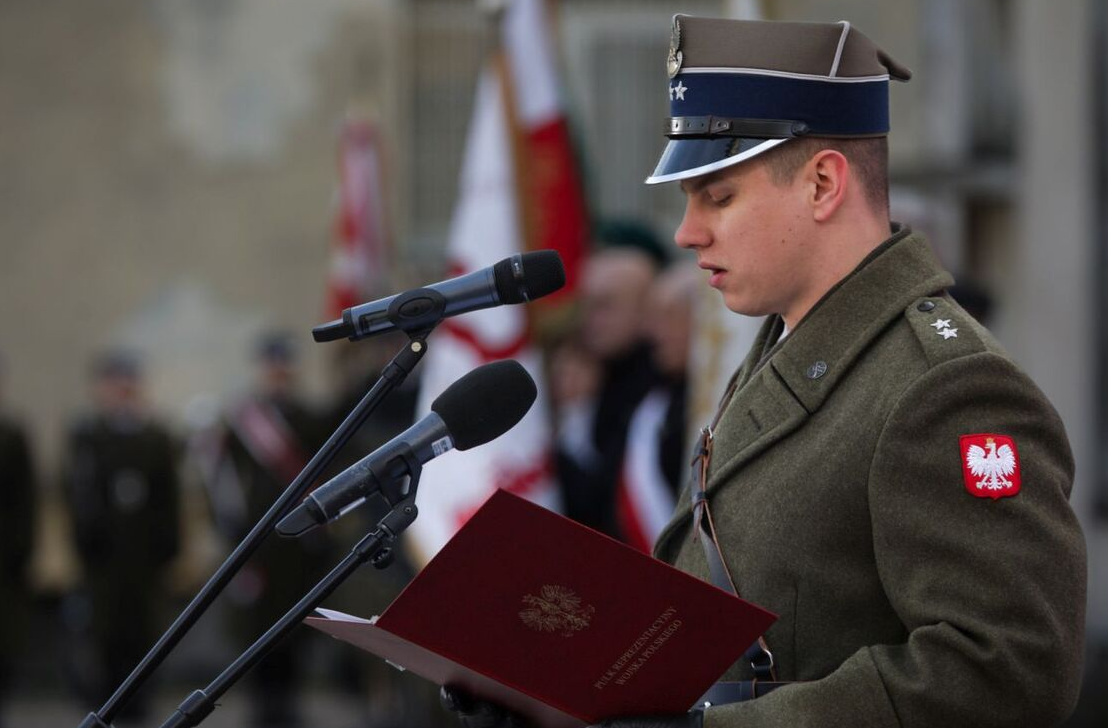
On March 1, 2026, Poland observes National “Cursed Soldiers” Remembrance Day (Narodowy Dzień Pamięci “Żołnierzy Wyklętych”), a solemn national holiday dedicated to commemorating the soldiers of the anti-communist underground resistance who fought against Soviet occupation and the imposed communist regime after World War II.
The “Cursed Soldiers” (Żołnierze Wyklęci) or “Doomed Soldiers” were members of various clandestine organizations — most notably the Home Army (Armia Krajowa) remnants, National Armed Forces (NSZ), Freedom and Independence (WiN), and other partisan groups — who refused to lay down their arms after the official end of the war in 1945. They continued guerrilla warfare against the communist security apparatus (UB, NKVD) and Soviet forces until the early 1950s. The communists branded them “bandits” and “cursed” them in propaganda; most were hunted down, tortured, executed in secret prisons (e.g., Mokotów, Wronki), or sentenced in show trials and buried in unmarked graves.
The holiday was established by an Act of Parliament on February 3, 2011, and is observed on March 1 — the anniversary of the 1951 execution of the last top commanders of the Freedom and Independence organization: Maj. Łukasz Ciepliński (“Pług”) and his comrades, who were shot in the basement of Mokotów Prison in Warsaw.
Significance in 2026:
- In 2026, Poland marks the 15th anniversary of the holiday’s establishment and the 75th anniversary of the execution of Ciepliński and his men — a powerful symbol of unbroken resistance and the final chapter of Poland’s post-war struggle for freedom.
- The day honors tens of thousands of partisans who chose armed resistance over submission, paying with their lives, families, and reputations. Their story was suppressed for decades under communism and only fully emerged after 1989.
- It reaffirms Poland’s rejection of totalitarianism, commitment to historical truth, and gratitude for those who fought for independence when the world had already accepted the Yalta division of Europe.
Celebrations and Observances:
- National ceremony in Warsaw: The main event is held at the Mausoleum of Struggle and Martyrdom (former Mokotów Prison execution site) or the Monument to the Cursed Soldiers in Żoliborz. The President, Prime Minister, Speaker of the Sejm, military leaders, and families of the fallen attend. Wreaths are laid, names of the executed are read aloud, and a minute of silence is observed at 7:00 pm (approximate time of many executions).
- Nationwide tributes: Similar ceremonies take place at local memorials, churches, and cemeteries across Poland — especially in places tied to major resistance operations (Augustów, Radom, Łódź, Białystok, Rzeszów). Many municipalities light up monuments or buildings in white-red national colors.
- Religious services: Catholic Masses (and services in other denominations) are held for the souls of the Cursed Soldiers; candles are lit at graves and memorials nationwide.
- Educational and cultural programs: Schools organize lessons, exhibitions, film screenings (“Wyklęci” documentaries, “Historia Roja”), and student projects on the post-war underground. The Institute of National Remembrance (IPN) releases new publications and hosts conferences.
- Public engagement: The Polish flag flies at half-mast in the morning on public buildings; many citizens wear white-red ribbons or pins with the “WiN” anchor symbol; social media fills with black-and-white photos of partisans, quotes from their letters, and the hashtag #ŻołnierzeWyklęci.
- Symbolic acts: Candles are placed at windows across the country in the evening; the day is observed with solemnity and quiet pride rather than large-scale festivity.
National “Cursed Soldiers” Remembrance Day is a public holiday in Poland — government offices, banks, and most schools close — allowing the nation to mourn, remember, and pay tribute to those who fought for freedom long after the official war ended.
A phrase forever associated with the Cursed Soldiers: “Za Polskę walczyli do końca.” (“They fought for Poland to the end.”)
On March 1, Poland lights candles, reads their names, and bows its head — honoring the forgotten heroes who refused to accept defeat and paid the ultimate price for an independent, free Poland. 🇵🇱