

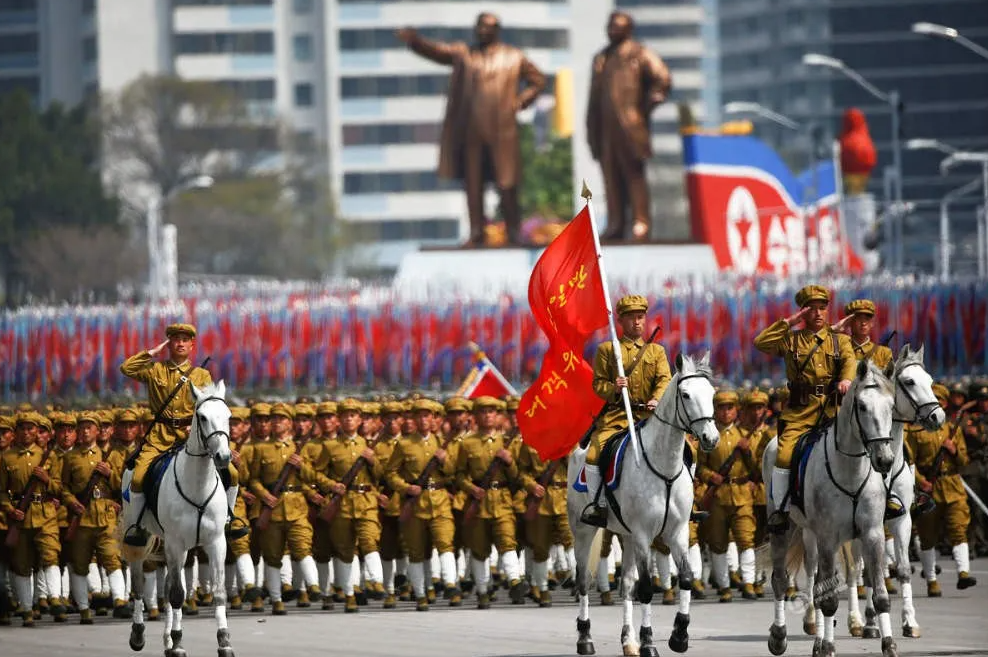
On February 8, 2026, the Democratic People’s Republic of Korea (North Korea) observes Military Foundation Day (인민군 창건일, Inmin-gun Changgŏn-il), also known as Korean People’s Army (KPA) Foundation Day, one of the country’s most important national holidays.
This date marks the official founding of the Korean People’s Revolutionary Army (the predecessor to the modern Korean People’s Army) on February 8, 1932 (by the Juche calendar; 1932 in the Gregorian calendar), under the leadership of Kim Il-sung during the anti-Japanese armed struggle in Manchuria. North Korea regards this as the birth of its revolutionary armed forces, which later became the Korean People’s Army after liberation from Japanese rule in 1945.
Military Foundation Day was historically celebrated on April 25 (the date the KPA was formally established in 1948), but in 2018 the date was shifted back to February 8 to emphasize Kim Il-sung’s role as the eternal founder and supreme commander of the revolutionary armed forces. It is now one of the two major military holidays in North Korea (the other being April 25, Army Day, which remains a significant but secondary observance).
Significance in 2026:
- In 2026, the DPRK marks the 94th anniversary of the founding of its revolutionary army — a date that underscores the centrality of the military in North Korean ideology (“songun” or military-first politics) and the Kim family’s leadership over the armed forces.
- The holiday glorifies the KPA as the “revolutionary armed forces of the Workers’ Party of Korea,” the “army of the leader,” and the defender of Juche (self-reliance), socialism, and national sovereignty.
- It is a day of intense patriotic fervor, loyalty displays to Kim Jong Un (Supreme Commander), and demonstrations of military strength and readiness.
Celebrations and Observances:
- Mass events in Pyongyang: The capital hosts large-scale military parades, artillery salutes, fireworks, and mass games/performances at Kim Il-sung Square or May Day Stadium (if a major anniversary). Elite units of the Korean People’s Army march in formation, showcasing tanks, missiles, rocket launchers, and new weapons systems.
- Leader participation: Kim Jong Un typically attends major events, inspects troops, delivers a speech (or message is read), and receives loyalty oaths from soldiers. Senior party and military officials are prominently featured.
- Nationwide tributes: Similar (smaller) ceremonies occur at military bases, provincial capitals, and factories; soldiers and civilians lay flowers at statues of Kim Il-sung and Kim Jong-il; revolutionary songs and military marches are broadcast continuously.
- Cultural and propaganda programs: State media (KCNA, Rodong Sinmun, Korean Central Television) publish special editorials, air documentaries on Kim Il-sung’s guerrilla days, and broadcast concerts featuring military bands and mass choirs singing songs like “Song of General Kim Il-sung” and “We Will Defend the Leader with Our Lives.”
- Public participation: Citizens in towns and villages attend loyalty rallies, pledge meetings, and cultural performances; children in schools learn about the founding of the revolutionary army and perform patriotic skits.
- Symbolic displays: Red flags, portraits of the Kim leaders, and military slogans are everywhere; the Korean People’s Army flag is flown prominently.
Military Foundation Day is a public holiday in North Korea — work, schools, and most activities stop — allowing the entire population to participate in or watch the celebrations, which are among the most militaristic and ideologically charged events of the year.
A phrase frequently chanted on this day: “장군님과 함께라면 우리는 백승!” (“With the General, we are invincible!”)
On February 8, North Korea salutes its armed forces as the invincible shield of the revolution — the proud heirs of the 1932 revolutionary army — and renews its vow of absolute loyalty to the Supreme Leader and the socialist fatherland. 🇰🇵