

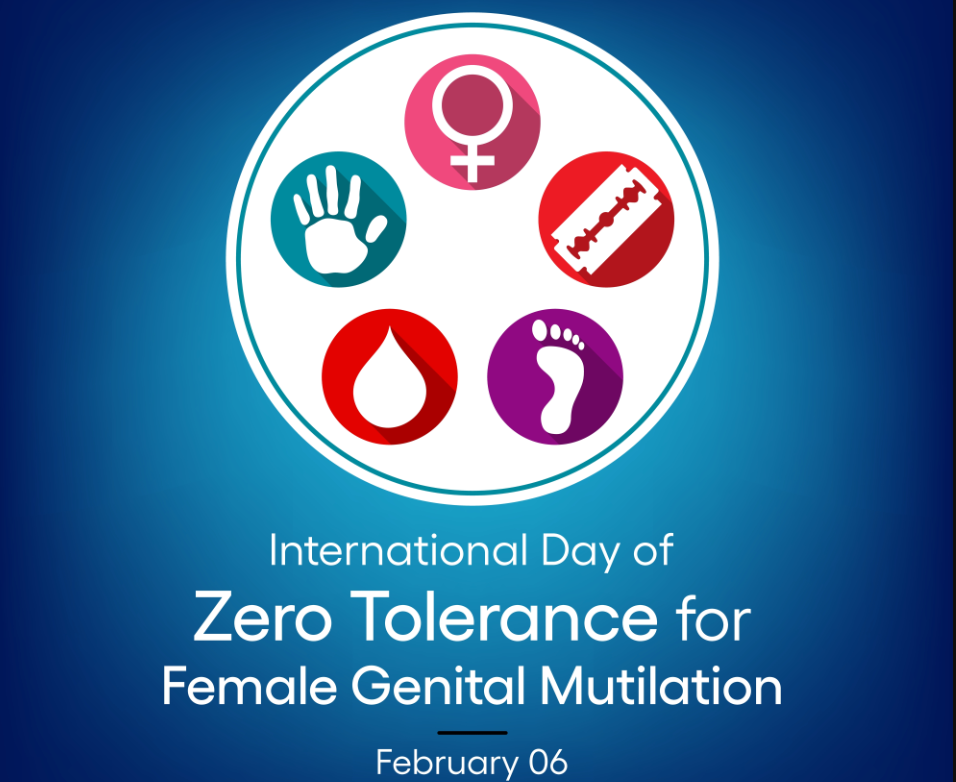
On February 6, 2026, the international community observes the International Day of Zero Tolerance for Female Genital Mutilation (also known as International Day of Zero Tolerance to FGM or Zero Tolerance Day), a United Nations-designated awareness day aimed at ending the harmful practice of female genital mutilation/cutting (FGM/C) worldwide.
The date was established by the United Nations General Assembly in December 2012 (resolution 67/146) and has been observed annually since 2003 (initially promoted by the UN Population Fund and UNICEF). February 6 was chosen to create a unified global platform for advocacy, education, and action against FGM — a human rights violation that affects millions of girls and women.
Female genital mutilation refers to all procedures that involve partial or total removal of the external female genitalia or other injury to the female genital organs for non-medical reasons. It is recognized internationally as a violation of the human rights of girls and women — including rights to health, security, physical integrity, and freedom from torture and cruel treatment. The practice has no health benefits and can cause severe, long-term physical, psychological, and sexual harm.
Significance in 2026:
- An estimated 200 million girls and women alive today have undergone FGM, with over 4 million girls at risk of the practice each year (UNICEF data). It remains prevalent in 30 countries across Africa, the Middle East, and Asia, and occurs in diaspora communities worldwide.
- The 2026 observance continues the multi-year push toward zero tolerance and the global goal of ending FGM by 2030, as set out in Sustainable Development Goal 5.3 (eliminate all harmful practices, including child, early and forced marriage and female genital mutilation).
- Progress has been made — prevalence rates are declining in some countries — but the pace is too slow, and medicalization (FGM performed by health workers) and cross-border cutting are growing concerns.
Global Observances and Activities:
- UN and partner events: The United Nations (UNFPA, UNICEF, WHO) and civil society partners host high-level virtual and in-person events, including panel discussions with survivors, policymakers, religious leaders, and youth advocates. The UN Secretary-General and other leaders issue statements calling for accelerated action.
- Awareness campaigns: Governments, NGOs, and grassroots organizations run social media drives (#EndFGM, #ZeroToleranceDay), share survivor testimonies, and distribute educational materials. Many countries launch national action plans or renew commitments to legislation, enforcement, and community education.
- Community-level events: In high-prevalence countries (e.g., Somalia, Guinea, Djibouti, Egypt, Mali, Sudan), local NGOs and women’s groups organize dialogues with traditional leaders, religious figures, and youth to challenge social norms that uphold FGM. Alternative rites of passage (without cutting) are promoted in some communities.
- Educational outreach: Schools, health centers, and youth clubs hold workshops on girls’ rights, reproductive health, and the harms of FGM; survivor-led storytelling and theater performances raise awareness.
- Symbolic acts: Orange (the color of the campaign) ribbons, candles, and public statements of commitment are common; many share the UN slogan: “Accelerate action: Invest in girls’ rights and empowerment to end FGM.”
International Day of Zero Tolerance for Female Genital Mutilation is not a public holiday anywhere but a critical global advocacy day — a moment when the world reaffirms that FGM has no place in the 21st century and that every girl deserves to live free from violence and harm.
A core message from the UN: “Female genital mutilation is a violation of human rights — it must end in our generation.”
On February 6, the international community unites to say: every girl deserves protection, dignity, and a future without FGM. 🌍