

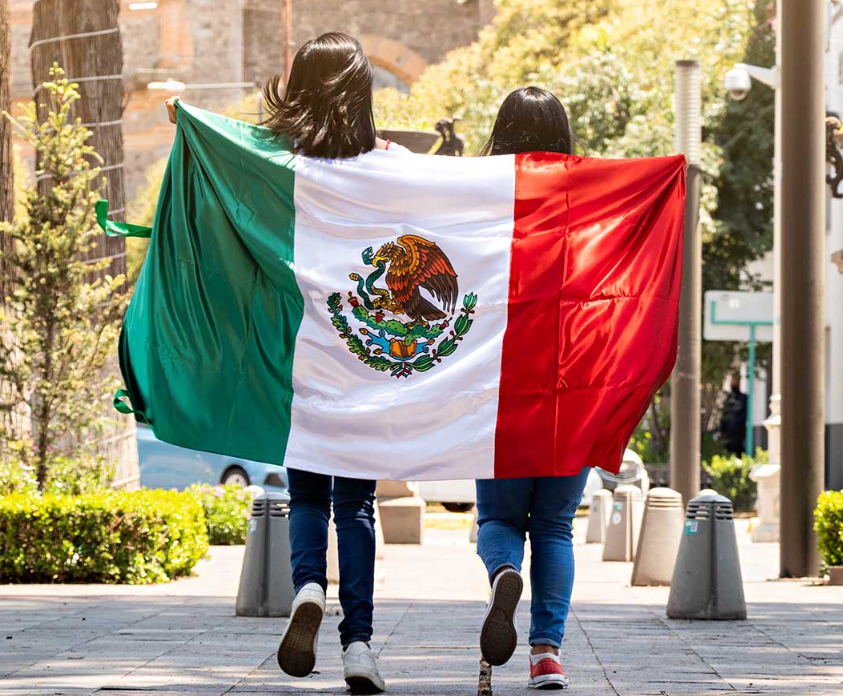
On February 24, 2026, Mexico observes Flag Day (Día de la Bandera), a national patriotic holiday dedicated to honoring the Mexican flag — one of the most cherished symbols of national identity, history, and unity.
The date commemorates the first time the current Mexican tricolor flag was officially presented on February 24, 1821, during the final stages of the War of Independence. It was unfurled by Agustín de Iturbide (then leader of the Army of the Three Guarantees) in Iguala, Guerrero, as part of the Plan of Iguala — the agreement that ended Spanish colonial rule and established Mexico as an independent nation. The flag’s design has evolved slightly over time, but the core elements — green (hope), white (unity), red (blood of heroes), and the national coat of arms (eagle on a cactus devouring a snake) — have remained symbols of Mexican pride since 1821.
Flag Day was officially established as a national observance in 1935 by President Lázaro Cárdenas to promote patriotism, respect for the flag, and national unity.
Significance in 2026:
- In 2026, Mexico marks the 205th anniversary of the flag’s first official use — a powerful reminder of the long struggle for independence and the enduring values the flag represents: independence, unity, and sacrifice.
- The day reinforces the flag as a symbol of national identity in a diverse country with indigenous, mestizo, Afro-Mexican, and immigrant roots, and emphasizes respect for the flag as a sacred emblem of sovereignty.
- It also serves as an educational moment for younger generations to learn flag etiquette, history, and the meaning of the colors and emblem.
Celebrations and Observances:
- Official flag-raising ceremonies: The main national event is held at the Zócalo (Plaza de la Constitución) in Mexico City or the Monument to the Flag in Iguala, Guerrero (the birthplace of the tricolor). The President, Secretary of National Defense, military leaders, and schoolchildren participate in a solemn flag-raising, the singing of the national anthem (“Mexicanos, al grito de guerra”), and speeches on patriotism and unity.
- School and civic programs: Across the country, schools hold special assemblies with flag-raising, recitations of the Loyalty Oath to the Flag (Juramento a la Bandera), patriotic songs, and student performances. Children often wear school uniforms with the flag emblem and make crafts or write essays about the flag’s history.
- Military and public displays: The Mexican Army, Navy, and Air Force participate in parades or demonstrations in major cities (Mexico City, Guadalajara, Monterrey, Tijuana). Many public buildings, plazas, and homes fly the national flag proudly.
- Cultural events: Museums (e.g., National Museum of History, Chapultepec Castle) offer free or discounted entry and special exhibits on the flag’s evolution. Some communities organize cultural shows with traditional music and dance.
- Public engagement: Media (Televisa, TV Azteca, Canal 11) broadcast live ceremonies and historical documentaries; social media fills with photos of flags, the eagle-and-snake emblem, and patriotic messages with #DíaDeLaBandera.
- Symbolic acts: The flag is flown at full staff on all public buildings; many citizens recite the Flag Oath (“Bandera de México, símbolo de la patria…”) or simply pause to reflect on its meaning.
Flag Day is a public holiday in Mexico — government offices, banks, and most schools close — allowing families to attend ceremonies, visit historical sites, or simply enjoy a day of national pride.
A common phrase on this day: “¡Viva México! ¡Viva nuestra bandera!” (“Long live Mexico! Long live our flag!”)
On February 24, Mexico raises its green-white-red tricolor high — honoring the symbol of independence, unity, and the sacrifices of generations who made the nation free. 🇲🇽