

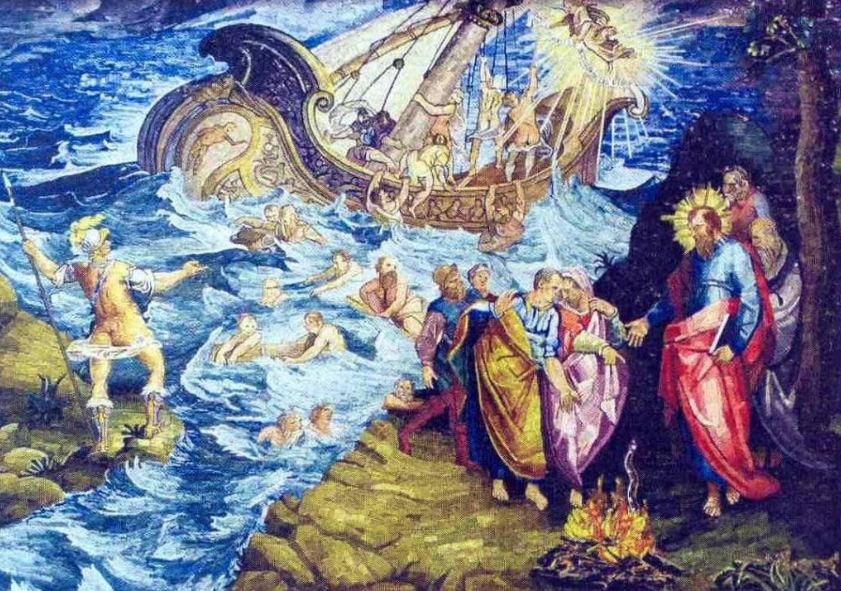
On February 10, 2026, Malta observes the Feast of St. Paul’s Shipwreck (Nawfraġju ta’ San Pawl), one of the most important religious and national feasts in the Maltese calendar. This day commemorates the shipwreck of the Apostle Paul on the Maltese coast around AD 60, an event described in the Acts of the Apostles (Chapter 27–28) that is traditionally regarded as the moment Christianity first arrived in Malta.
According to the biblical account, Paul was a prisoner being transported to Rome when his ship was caught in a violent storm. After 14 days adrift, the vessel ran aground on a reef off Malta (then called Melite). All 276 people on board survived, and Paul spent the winter on the island, healing the sick (including the father of Publius, the Roman governor) and preaching. This episode is seen as the founding moment of Christianity in Malta, making St. Paul the country’s principal patron saint (together with St. Publius).
The feast has been celebrated since at least the 5th century and was declared a national holiday in modern times. It is a public holiday in Malta — government offices, banks, and most businesses close — blending deep religious devotion with national pride.
Significance in 2026:
- In 2026, the feast marks over 1,960 years since St. Paul’s arrival, reinforcing Malta’s identity as one of the oldest Christian nations in the world.
- It celebrates the enduring Christian heritage of the Maltese people, their resilience through centuries of foreign rule (Phoenicians, Romans, Arabs, Knights of St. John, French, British), and their strong Catholic faith.
- The day also highlights St. Paul’s role as protector and intercessor — many Maltese churches, chapels, and families are dedicated to him.
Celebrations and Observances:
- Main religious ceremonies: The focal point is the Collegiate Parish Church of St. Paul in Valletta (St. Paul’s Shipwreck Church), one of the most beautiful Baroque churches in Malta. A solemn pontifical Mass is celebrated in the morning, followed by a procession with the magnificent silver statue of St. Paul through the streets of Valletta.
- Processions and fireworks: In Valletta, the statue is carried shoulder-high by members of the confraternity amid brass bands, incense, and cheering crowds. Smaller but equally fervent processions take place in Mdina (the old capital), Rabat (where St. Paul is believed to have preached and lived), and many villages — often with impressive fireworks displays in the evening.
- Village feasts: Across Malta and Gozo, parishes dedicated to St. Paul (especially in Rabat, Mdina, and Valletta) hold festa celebrations with decorations, band marches, street decorations, and traditional food stalls serving imqaret, pastizzi, and qagħaq tal-għasel.
- Public and family traditions: Many families attend Mass, visit the statue of St. Paul, or light candles in his honor. The day is also a time for family gatherings, special meals, and enjoying the public holiday atmosphere.
- Cultural reflection: Media outlets broadcast programs on St. Paul’s journey, the history of Christianity in Malta, and the significance of the shipwreck; schools often include lessons or short plays about the event.
Feast of St. Paul’s Shipwreck is a public holiday in Malta — a day of religious devotion, national pride, and community joy. It is one of the few feasts in the Maltese calendar that is both deeply spiritual and widely celebrated across the entire country.
A common prayer on this day: “San Pawl, il-patrun tagħna, itlob għalina!” (“St. Paul, our patron, pray for us!”)
On February 10, Malta raises its voice in gratitude to the Apostle who brought the faith to its shores — and celebrates the unbreakable spirit of a people who have carried that faith for nearly two millennia. 🇲🇹