

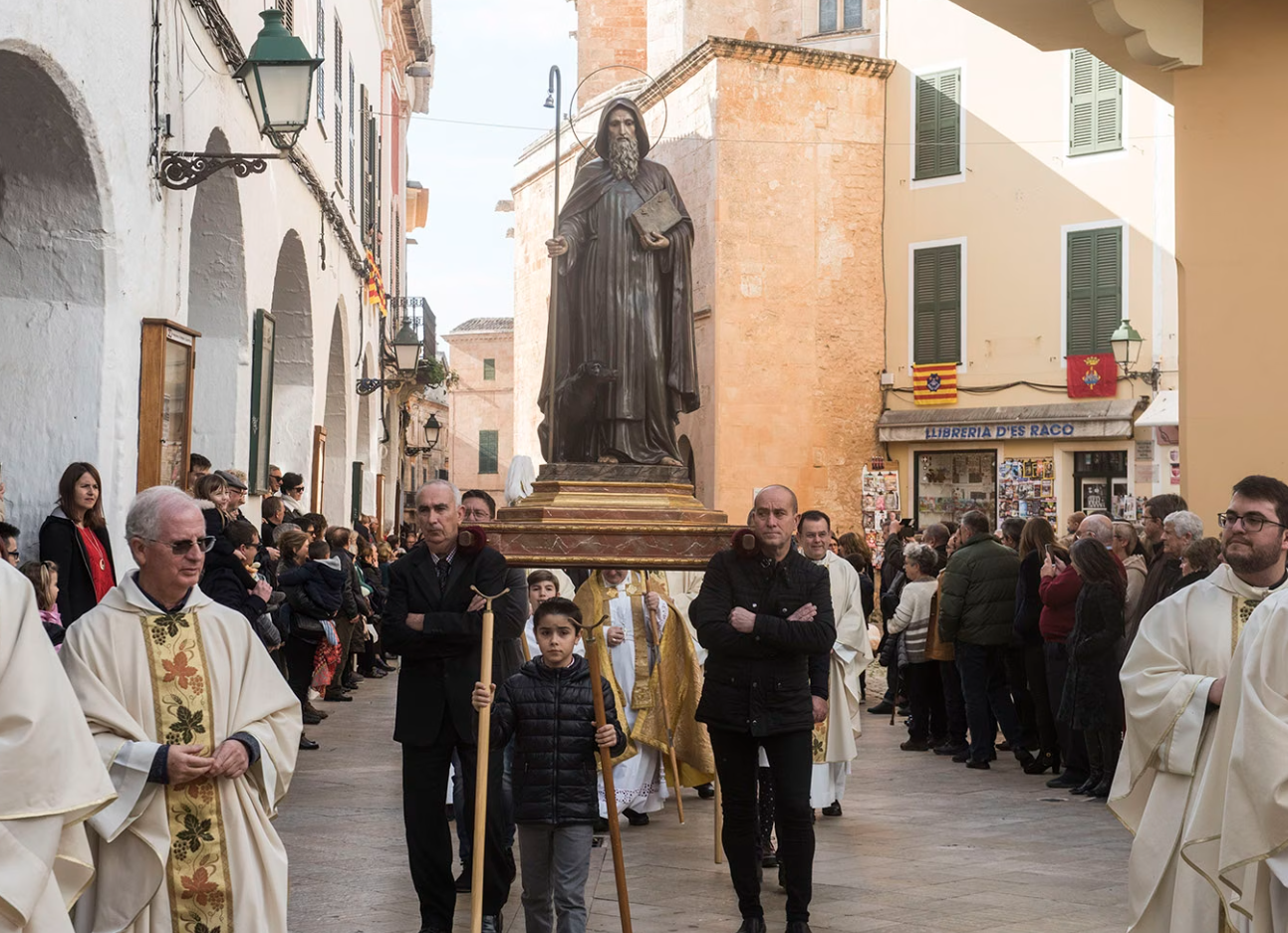
On January 17, 2026, the island of Menorca (one of Spain’s Balearic Islands) observes Día de Menorca (Menorca Day or Diada de Menorca / Diada del Poble de Menorca), an institutional commemoration marking the anniversary of the island’s conquest and incorporation into the Crown of Aragon on January 17, 1287.
This date recalls the arrival of troops led by King Alfonso III of Aragon (also known as Alfons II of Barcelona), who landed in Mahón with around 20,000 men and over 100 ships. After a swift campaign that began earlier in January, the forces defeated the Muslim rulers who had governed the island since the 10th century, ending Taifa control and integrating Menorca into the Catalan-Aragonese realm. The conquest introduced lasting cultural, linguistic, and administrative shifts — most notably the adoption of Catalan as the primary language, which remains Menorca’s co-official language today alongside Spanish.
The observance coincides with the feast of Sant Antoni Abat (Saint Anthony the Abbot), Menorca’s patron saint, blending historical reflection with religious and folk traditions. Since 1982, the Menorca Island Council (Consell Insular de Menorca) has officially recognized the day as a celebration of insular identity, heritage, and pride within the broader Spanish and Catalan context.
Typical Observances:
- A solemn mass in Catalan at the Cathedral of Santa Maria in Ciutadella (with events often also in Mahón), typically beginning around 11:00 AM.
- The symbolic “three knocks” procession (processó dels tres cops): A young councilor or representative strikes the ground three times with the Menorcan flag, followed by a Te Deum sung by the bishop, reenacting the conquerors’ triumphant entry.
- Community and cultural activities: Traditional markets offering oranges, dates, and palmitos (dried palm shoots); concerts by the municipal band; theater performances; bonfires (fogueres); animal blessings (especially for farm animals, honoring Sant Antoni); and “torrades” (toasts) with sobrasada sausage over open fires, accompanied by folk music and dancing.
- Civic events: Official speeches, wreath-layings, and programs organized by the Consell Insular and local municipalities, highlighting unity, cultural preservation, and Menorca’s Catalan roots.
Día de Menorca underscores the island’s peaceful, rural character — distinct from the more tourist-oriented Mallorca or Ibiza — and its rich traditions rooted in medieval history. It celebrates Menorca’s journey from conquest to a UNESCO Biosphere Reserve (since 1993), renowned for its natural beauty, prehistoric monuments (talayots, navetas), and tranquil Mediterranean lifestyle.
On this day, Menorca proudly reflects on its past while embracing its present as a unique gem of the Balearic Islands. 🇪🇸🏝️