

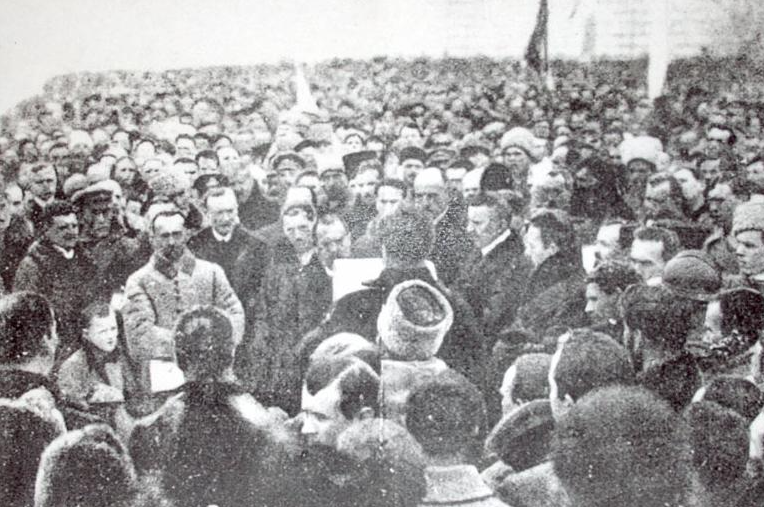
On January 22, 2026 (Thursday), Ukraine observes Day of Unity of Ukraine (День Соборності України, Den Sobornosti Ukrayiny), a state holiday commemorating the historic unification of Ukrainian lands into a single sovereign state. This day marks the 107th anniversary of the Unification Act (Акт Злуки) proclaimed on January 22, 1919, on Sophia Square (Sofiyivska Ploshcha) in Kyiv.
The Act symbolically united the Ukrainian People’s Republic (UNR, centered in Kyiv and representing eastern and central Ukraine) with the West Ukrainian People’s Republic (WUPR, encompassing Galicia, Bukovina, and Transcarpathia). Delegates from the WUPR, led by Longin Tsehelsky, read the declaration before a massive crowd, proclaiming: “From now on, the parts of a single Ukraine, separated for centuries, are united into one.” This “Great Unification” (Velyka Zluka) embodied centuries-old aspirations for a united, independent Ukrainian state, despite the short-lived nature of the republics amid wars, Bolshevik invasion, and Polish occupation.
The holiday was officially established on January 21, 1999, by President Leonid Kuchma’s decree, recognizing its profound political and historical significance for forming a united Ukrainian state. It was briefly merged with other observances under President Viktor Yanukovych (2011–2014) but restored to January 22 in 2014 under Petro Poroshenko. Today, it symbolizes unbreakable national unity, territorial integrity, and shared destiny — especially resonant amid ongoing challenges to Ukraine’s sovereignty.
Significance in 2026:
- Amid the full-scale war and continued defense of independence, the day underscores that unity remains Ukraine’s greatest strength: “United we stand, divided we fall” echoes through official messages and public sentiment.
- It serves as a reminder of historical resilience and the enduring dream of a sovereign, indivisible Ukraine.
Celebrations and Observances:
- Human chains and flash mobs: Iconic “live chains” form across cities, often along the Dnipro River in Kyiv or major streets, with thousands holding hands or blue-and-yellow flags to symbolize unity (a tradition dating back to 1990 during the “Revolution on Granite”).
- Official ceremonies: Wreath-laying at the Monument to the Unification Act on Sophia Square; speeches by the President, government officials, and parliamentary leaders; moments of silence for fallen heroes.
- Cultural and patriotic events: Concerts, poetry readings, exhibitions on the 1917–1921 independence struggle, school programs, and community gatherings emphasizing national symbols (flags, vyshyvanka embroidery, folk songs like “Ukraine Has Not Yet Perished”).
- Nationwide activities: State media broadcasts documentaries, historical reenactments, and tributes; public buildings illuminated in blue and yellow; diaspora communities abroad hold solidarity events.
- Symbolic gestures: Citizens wear vyshyvanka or blue-yellow ribbons, share greetings online, and participate in “unity chains” or marches.
Though not a public holiday with mandatory day off (offices and schools often operate normally), Day of Unity inspires profound patriotism and reflection on shared identity.
A key phrase from the Act often quoted: “Henceforth, there will be a united, independent Ukraine.”
On this day, Ukraine reaffirms its unbreakable spirit: one nation, one destiny, united in freedom and resilience. 🇺🇦