

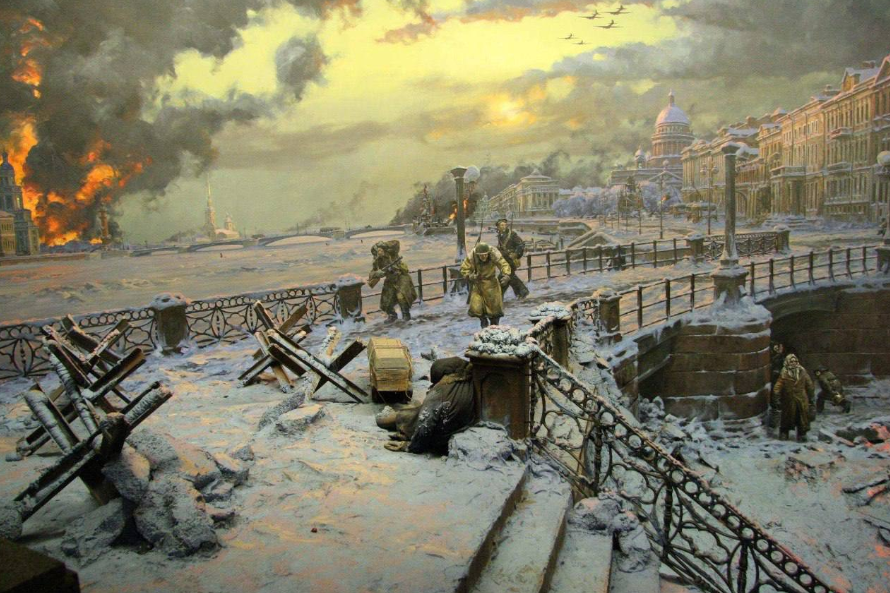
On January 27, 2026, Russia observes the Day of the Complete Liberation of Leningrad from the Fascist Blockade (День полного освобождения Ленинграда от фашистской блокады), a Day of Military Glory established by federal law. This date marks the 82nd anniversary of the final lifting of the Nazi siege of Leningrad (now St. Petersburg) on January 27, 1944, after one of the longest and most devastating sieges in human history.
The siege began on September 8, 1941, when German and Finnish forces encircled the city during Operation Barbarossa. It lasted 872 days (nearly 900 days by common reckoning), during which the population endured extreme famine, constant bombardment, sub-zero winters, and disease. Over 1 million civilians died — mostly from starvation — making it one of the deadliest sieges ever recorded. The “Road of Life” across frozen Lake Ladoga provided the only lifeline for supplies and evacuation.
The blockade was partially broken on January 18, 1943, during Operation Iskra, which opened a narrow land corridor. The full liberation came in January 1944 after the Red Army’s successful Leningrad-Novgorod offensive (Operation January Thunder), pushing German forces back more than 100 km. On January 27, 1944, the order declaring the complete liberation was read over the radio, and a ceremonial artillery salute thundered over the city — the first festive salute in nearly 900 days.
Significance in 2026:
- The day honors the heroism of Leningrad’s defenders — soldiers, civilians, women, children, and workers who kept factories running under siege conditions — and the unbreakable spirit of the Soviet people.
- It pays tribute to the estimated 1.5 million military and civilian deaths, the evacuation of over 1 million residents, and the cultural resistance (e.g., the Leningrad Philharmonic performing Shostakovich’s Symphony No. 7 under siege).
- In modern Russia, it reinforces themes of patriotism, resilience, and the cost of victory in the Great Patriotic War, especially poignant amid current events.
Celebrations and Observances:
- Main events in St. Petersburg: Ceremonial wreath-laying at the Piskarevskoye Memorial Cemetery (the main burial site for siege victims, with over 420,000 graves) and the Monument to the Heroic Defenders of Leningrad on Victory Square. The Governor, military leaders, and residents participate in moments of silence and floral tributes.
- Official ceremonies: Artillery salute recreations, military parades or marches in the city, and meetings with siege survivors (Blockade survivors) and veterans.
- Cultural programs: Concerts featuring wartime music (e.g., Shostakovich’s Leningrad Symphony), exhibitions at the Museum of the Defense and Siege of Leningrad, documentary screenings, and school events teaching the siege’s history.
- Nationwide tributes: Similar observances in other cities, media broadcasts of historical footage, and social media campaigns sharing survivor stories and archival photos.
- Public reflection: Many light candles at home or visit local war memorials; the day evokes solemn pride rather than festivity.
This Day of Military Glory is not a public holiday with closures but a deeply solemn commemoration. It reminds Russians of the immense sacrifice during the siege and the enduring lesson: courage and unity can overcome even the darkest times.
A phrase often recalled from the era: “No one is forgotten, nothing is forgotten.” (Никто не забыт, ничто не забыто)
On January 27, Russia bows its head in memory of Leningrad’s unbreakable defenders. 🇷🇺