

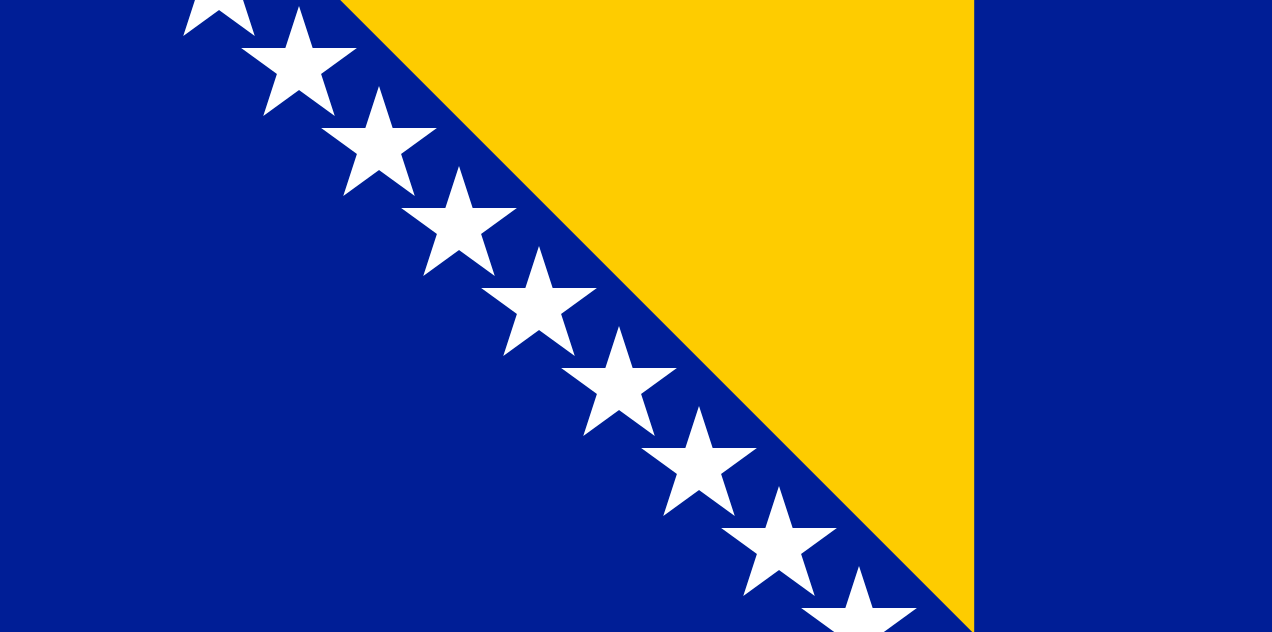
Bosnia and Herzegovina’s Defense Minister Zukan Helez on Friday condemned a Serbian academic’s proposal to partition his country along ethnic lines, urging Serbia’s election-winning Student List to respect Bosnia’s sovereignty and territorial integrity.
In a Facebook post, Helez criticized Kosta Cavoski, a member of the Serbian Academy of Sciences and Arts (SANU), who suggested that Bosnia’s Serb-majority entity, Republika Srpska, declare independence and eventually unite with Serbia.
Cavoski also proposed that predominantly Croat areas join Croatia, leaving Bosniaks to establish their own state.
Speaking to the SRNA news agency Thursday, ahead of the 31st anniversary of the Dayton Peace Agreement, Cavoski argued that Bosnia had no future under its current political structure and called for the closure of the Office of the High Representative, which oversees civilian implementation of the peace deal.
Helez rejected the proposals as part of longstanding efforts to undermine Bosnia’s statehood.
“We have survived dozens of their plans and memorandums,” he wrote, also criticizing SANU’s historical role in Serbian political debates.
Cavoski’s remarks reflected his personal political position, not an official proposal by Serbian authorities.
Appeal to Serbia’s Student List
Helez, who congratulated the Student List after its victory in Serbia’s Oct. 25 snap parliamentary elections, urged the movement to break with what he described as decades of policies undermining Bosnia’s sovereignty.
“I sincerely hope that representatives of the Student List will take a different course in relations between the two countries from what we have witnessed over the past three decades,” he said.
He stressed that the movement would need to demonstrate its intentions through concrete actions, reiterating Bosnia’s willingness to improve ties with Serbia.
“Bosnia and Herzegovina remains sincerely interested in normalizing relations and building better ties with Serbia,” he said.
“However, such relations can be based exclusively on the principles of mutual respect, equality and full recognition of the sovereignty and territorial integrity of both countries.”
Criticism of Vucic
Helez also took aim at former Serbian President Aleksandar Vucic over his appearance during a recent session of Serbia’s newly elected parliament.
“What a political turnaround!” Helez wrote, mocking Vucic’s conduct during the debate.
He accused the former president of years of interference in Bosnia’s affairs and pursuing divisive policies.
Helez also repeated allegations linking Vucic to sniper attacks on civilians during the 1992-1995 Bosnian war, accusations Vucic has previously denied.
Dayton peace agreement
The dispute comes ahead of the 31st anniversary of the Dayton Peace Agreement, initialed on Nov. 21, 1995, in the US and formally signed in Paris the following month.
The agreement ended the Bosnian war and established the country’s current constitutional structure, comprising two entities: the Federation of Bosnia and Herzegovina and Republika Srpska.
Bosnia remains an internationally recognized sovereign state, with its territorial integrity affirmed under the agreement.
Serbia’s Student List secured a parliamentary majority in the Oct. 25 elections, ending the longstanding rule of Vucic’s political bloc.
The newly elected parliament held its inaugural session on Nov. 17, but a new government has yet to be formed.