

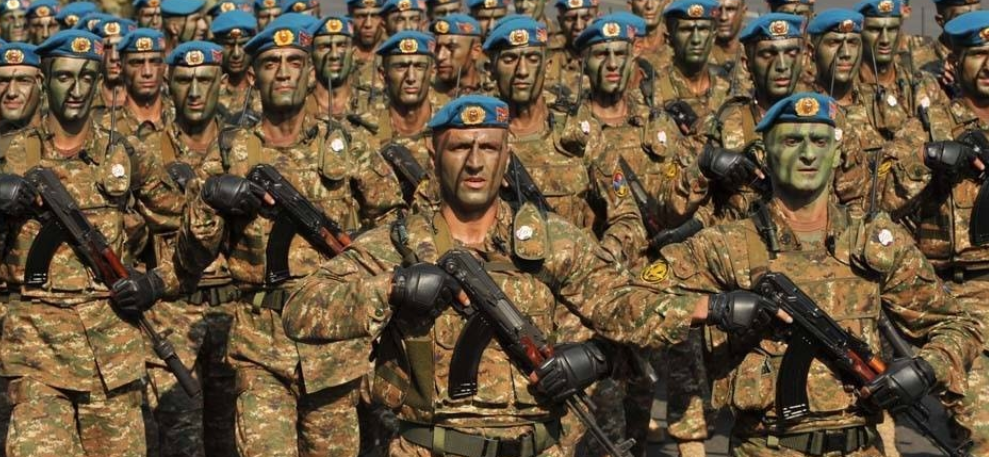
On January 28, 2026, Armenia observes Army Day (also known as National Army Day or Armed Forces Day), a public holiday and Day of Military Glory commemorating the official establishment of the Armed Forces of Armenia on January 28, 1992.
This date marks the moment when, shortly after declaring independence from the Soviet Union in September 1991, President Levon Ter-Petrosyan signed a decree formalizing the creation of Armenia’s national armed forces. At the time, Armenia was already engaged in the Nagorno-Karabakh conflict (1988–1994), and volunteer detachments (fedayeen) had been defending Armenian-populated areas. The decree transformed these irregular units into a structured, professional army, laying the foundation for the modern Armed Forces of Armenia (ground forces, air force, and defense structures).
Army Day was first celebrated as a holiday in 2001, when President Robert Kocharyan officially declared January 28 a non-working public holiday to honor the troops and their role in safeguarding national sovereignty, territorial integrity, and the security of the people.
Significance in 2026:
- The day celebrates the 34th anniversary of the Armenian Army’s formal founding, underscoring its evolution from a volunteer force amid war to a professional military defending the homeland.
- It pays tribute to the sacrifices of soldiers in past and recent conflicts, including the First Nagorno-Karabakh War, the Four-Day War (2016), and the 2020 Artsakh War, as well as the ongoing commitment to border security and national defense.
- In Armenia’s context, the army is seen as a symbol of statehood, independence, and the unbreakable will to protect the nation — a cornerstone of modern Armenian identity.
Celebrations and Observances:
- Main events in Yerevan: Official ceremonies include wreath-laying at key memorials, such as the graves of legendary military leaders Vazgen Sargsyan (former Defense Minister and Prime Minister, killed in the 1999 parliament shooting) and Andranik Ozanyan (a hero of the early 20th-century liberation struggles). The President, Prime Minister, Catholicos of All Armenians, Chief of the General Staff, Defense Minister, and other dignitaries attend.
- Military displays and parades: Depending on the year, there may be military parades, marches, equipment exhibitions, or demonstrations of readiness at central locations like the Ministry of Defense or Victory Park.
- Tributes and awards: Promotion ceremonies, medals for outstanding service, and honors for active personnel and veterans. Families often visit military cemeteries or memorials to lay flowers.
- Public and community activities: Concerts, patriotic programs, school events, and media broadcasts highlighting the army’s history and achievements. Many families gather privately to honor relatives serving or who have served.
- In the diaspora: Armenian communities abroad hold similar tributes, often with cultural performances and speeches.
Army Day is a public holiday — government offices, schools, and most businesses close — allowing citizens to participate in or reflect on the celebrations. It is a day of solemn pride, gratitude to the armed forces, and renewed commitment to national defense.
A common sentiment on this day: “Glory to the Armenian Army — guardian of the homeland.”
On January 28, Armenia salutes its soldiers — past, present, and future — who stand as the shield of the nation. 🇦🇲