

Geopolitics has always been a theater of nomenclature, a domain where a single hyphenated phrase can signal the birth of an alliance or the remapping of a superpower’s global priorities. In May 2018, when the United States officially renamed its oldest and largest unified combatant command from the U.S. Pacific Command to the U.S. Indo-Pacific Command, the change was celebrated in New Delhi as an epochal moment. Media reports at the time described the change as a strategic “nod to India,” a semantic coronation that officially integrated the Indian Ocean into Washington’s premier security architecture. It was an explicit recognition by then Defense Secretary Jim Mattis of New Delhi’s growing importance in Washington’s regional calculations, designed to formally acknowledge India as an indispensable pillar in counterbalancing China’s expanding maritime ambition. Eight years later, that symbolic architecture has been abruptly dismantled.
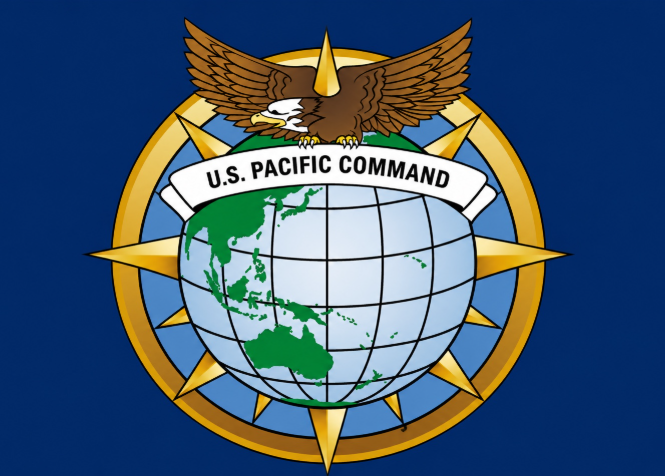
The decision by the U.S. Department of War to strip the prefix and restore the historic designation of the U.S. Pacific Command (USPACOM) carries profound geopolitical weight. The restoration of this name, which the command had carried since 1947 before its 2018 rebranding, was punctuated by Defense Secretary Pete Hegseth on social media with a blunt announcement: “U.S. Pacific Command…is back.” Coming on the eve of a crucial meeting between Prime Minister Narendra Modi and President Donald Trump at the G7 summit on Wednesday, June 17, the timing of the announcement is as precise as it is disruptive, casting a distinct shadow over a diplomatic encounter between two leaders who have not met in person since early 2025. During this interim, bilateral ties have already faced mounting challenges over trade and sensitive cross-border issues, making this rhetorical retreat from the Indo-Pacific concept an unmistakable signal of a calculated re-evaluation of strategic investments.
The Pentagon has described the move as a restoration of the command’s historical legacy, honoring the institution’s role in shaping the post-Second World War security architecture in the Pacific. Headquartered in Hawaii, this command oversees military operations across a region that includes more than three dozen countries and encompasses some of the world’s most important maritime trade routes. To mitigate immediate panic, the official statement noted that the command’s area of responsibility, mission, and partnerships would remain completely unchanged. The Pentagon explicitly clarified that USPACOM’s vast area of responsibility, spanning from the waters off the West Coast of the United States to the western border of India, remains exactly the same. Yet, despite these operational assurances, the decision directly reverses one of the most visible symbolic manifestations of the Indo-Pacific concept that came to define American strategy in Asia during Trump’s first term.
To understand the full gravity of this reversal, one must revisit the strategic landscape of late 2017 and 2018. At the time, the Trump administration was reshaping its entire approach to Asia around the concept of a “Free and Open Indo-Pacific,” identifying China as its principal long-term strategic competitor. The renaming coincided with the dramatic revival of the Quadrilateral Security Dialogue, or Quad, comprising India, the United States, Japan, and Australia. Dormant for nearly a decade after its initial formation in 2007, the grouping was brought back to life amid growing concerns over China’s expanding military and economic influence. Indian officials publicly welcomed the broader Indo-Pacific concept in the years that followed. Delivering the keynote address at the Shangri-La Dialogue in Singapore in June 2018, just two days after the command was renamed, Prime Minister Modi described the Indo-Pacific as a free, open, and inclusive region, intentionally placing India at the center of an emerging regional architecture.
The term subsequently became deeply embedded in Indian foreign policy vocabulary, appearing regularly in official statements, strategic documents, and multilateral initiatives. New Delhi later launched the Indo-Pacific Oceans Initiative and deepened cooperation with Quad partners on maritime security, supply chains, critical technologies, and infrastructure. The significance attached to the concept within India was reflected in a 2025 study of India’s understanding of the region, which noted that the 2018 renaming was viewed by several Indian diplomats and analysts as validating the growing importance of India in the American strategic framework through the integration of the Indian Ocean, a maritime space in which New Delhi considers itself a central player.
Unsurprisingly, Beijing has watched this rhetorical rollback with a sense of quiet vindication. China has consistently rejected the terminology, preferring the older formulation of “Asia-Pacific” and viewing the Indo-Pacific as a synthetic geopolitical construct designed strictly to constrain Beijing’s rise. In March 2018, Chinese Foreign Minister Wang Yi famously dismissed the concept as an idea that would “dissipate like sea foam.” In subsequent years, Chinese officials repeatedly characterized the U.S. Indo-Pacific strategy as an attempt to build exclusive blocs in Asia, describing the Quad as a vehicle for containment and arguing that the framework artificially elevated India’s role as part of a broader effort to counterbalance China. By dropping the explicit military focus on the Indian Ocean, Washington may inadvertently signal to Beijing that its pressure tactics have successfully forced a consolidation of an overextended global posture.
The restoration of the Pacific Command designation comes at a time when the geopolitical environment that produced the Indo-Pacific framework has changed substantially. While the Trump administration continues to maintain security partnerships across Asia, it has simultaneously pursued greater direct engagement with Beijing. Following Trump’s travel to China last month and an expected visit by Xi Jinping to the United States later this year, questions have already been raised about the political momentum of the Quad. While foreign ministers from the four countries continue to meet regularly, the leaders’ summit expected to be hosted by India has yet to take place, leading strategic analysts to question whether the grouping retains the political prominence it enjoyed during the final years of Trump’s first term and the Biden administration.
The domestic reaction within India’s strategic community has been a mixture of concern and sober realism. A former Indian foreign secretary noted that the renaming should be viewed as part of a broader pattern of signals suggesting that India occupies a less central place in current American strategic thinking. According to the former diplomat, the shift is consistent with a strategic reorientation that became visible in the Trump administration’s 2025 National Security Strategy, which placed a much greater emphasis on the immediate Pacific theater and less focus on the Indian Ocean region. With the United States no longer as dependent on Gulf energy supplies and with tensions involving Iran appearing less pressing than before, Washington’s attention has increasingly shifted toward managing direct competition with China in East Asia. The feeling among some analysts is that India’s role is not viewed as particularly substantial in that specific framework anymore, especially as the United States appears increasingly focused on strengthening a tighter network of regional security partnerships involving Japan, Australia, the Philippines, and Indonesia.
This shift highlights a fundamental disconnect that has plagued India-US relations for years. While Washington viewed the Indo-Pacific as an operational framework to recruit a massive regional counterweight against China, New Delhi consistently interpreted it through a more defensive, localized lens. India sought American technology, intelligence, and diplomatic support to secure its borders and counter Beijing’s encirclement strategies in the Indian Ocean, but it remained deeply hesitant to commit to any form of collective defense that could pull it into a conflict in East Asia. This divergence in expectations has inevitably led to a cooling of strategic momentum. For a Washington establishment that now demands allies carry their own weight and show immediate returns on security investments, India’s strategic autonomy is increasingly viewed less as a virtue and more as an operational limitation.
However, it would be a mistake to view the return of the U.S. Pacific Command as a complete rupture in India-US relations. The underlying drivers of the partnership, particularly deep intelligence sharing, co-production of critical military technologies, and a shared concern over China’s long-term regional trajectory, remain structurally intact. The Pentagon’s statement was careful to emphasize that the command’s mission, resources, and actual geographical scope are unchanged. The move is less about abandoning the region and more about stripping away the rhetorical fluff that has cloaked American strategy for the past decade. It represents a shift toward a businesslike model of international relations where actions, hard power, and direct capabilities matter far more than expansive definitions on a map.
For India, this moment offers a vital opportunity for strategic clarity. For too long, New Delhi allowed itself to be comforted by the warm rhetoric of Washington’s Indo-Pacific embrace, occasionally mistaking symbolic inclusion for a blank check of American support. The restoration of the Pacific Command name reminds India that its security remains fundamentally its own responsibility. New Delhi must continue to build its own independent maritime capabilities, strengthen its partnerships throughout Southeast Asia on its own terms, and leverage its unique position in the Indian Ocean without relying on the shifting semantics of a distant superpower. In the theater of global power, names will change and alliances will morph, but true strategic autonomy is anchored solely in a nation’s capacity to defend its own interests.