

The announcement of a comprehensive, fourteen point memorandum of understanding between the United States and Iran brings a definitive close to a catastrophic one hundred and seven day war that pushed the global economy to the precipice of ruin. Triggered by the high stakes opening salvos of Operation Epic Fury on February 28, which fundamentally altered the Iranian state by eliminating Supreme Leader Ayatollah Ali Khamenei, this brief but deeply destructive conflict paralyzed international shipping and reawakened existential anxieties across the globe. As the international community prepares for the formal signing ceremony in Geneva, the defining revelation of this geopolitical breakthrough is not found in the capitals of the combatants, but rather in the quiet, persistent statecraft of Islamabad. Pakistan’s highly calculated role as a trusted mediator has managed to pull off what many seasoned strategists dismissed as an impossibility: bridging a vast trust deficit between a transactional Washington administration and a deeply wounded, newly consolidated regime in Tehran.
The strategic reality confronting Pakistan on the first day of the conflict was intensely perilous. Situated precariously between an unstable Western border with Iran and its vital geopolitical partnerships with China, the Gulf monarchies, and the West, Islamabad recognized early on that a prolonged regional conflagration would destroy its own vulnerable domestic economic stabilization efforts. When Iran responded to the initial strikes by establishing strict management over the critical Strait of Hormuz, effectively reducing commercial maritime traffic to a trickle and triggering unprecedented global energy price surges, the crisis ceased to be a localized confrontation. It became an existential economic threat to the industrialized world, particularly to Beijing, which depends on the waterway for the vast majority of its energy inflows. This economic paralyzation provided the structural momentum for Pakistan’s intervention, culminating in the historic March 31 joint five point peace plan signed with China, a pact that combined Beijing’s massive economic weight with Islamabad’s deep diplomatic channels in Tehran.
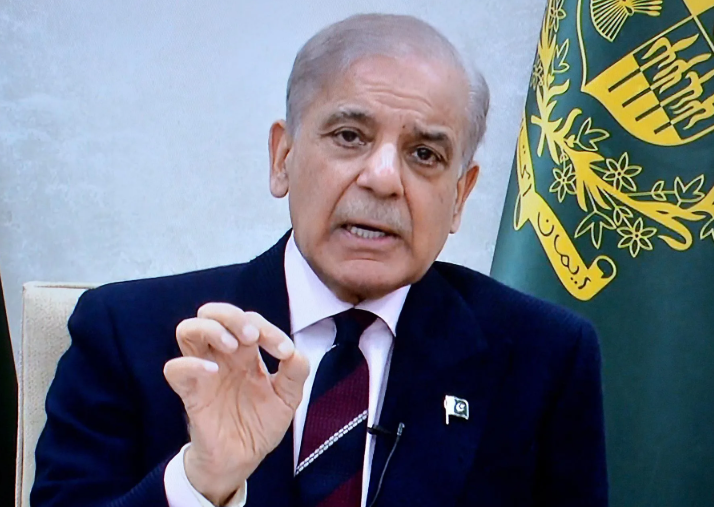
Yet, translating structural necessity into a binding diplomatic accord required an extraordinary, relentless deployment of backchannel security diplomacy, executed primarily by Pakistan’s military leadership. Prime Minister Shehbaz Sharif’s unprecedented, highly specific public praise before the National Assembly regarding Field Marshal Asim Munir confirms that the survival of the peace process depended entirely on the credibility of the army chief as a fair intermediary. It was Munir’s direct, middle of the night interventions on April 8 that averted a massive American deadline to strike Iranian critical infrastructure, establishing a fragile, narrow ceasefire that barely held against immense regional friction. By positioning the military apparatus as the central conduit for communication, Pakistan managed to bypass the grandstanding public rhetoric of both Donald Trump and Iran’s new, insular Supreme Leader, Mojtaba Khamenei, allowing for a realistic, transactional exchange of security guarantees away from the media spotlight.
The historical significance of this diplomatic achievement was demonstrated during the high level April talks in Islamabad, which brought US Vice President JD Vance and top Iranian officials into the most substantive direct engagement since 1979. Though those initial meetings concluded without an immediate signature, the failure did not derail the momentum. Instead, it initiated an intensive, two month phase of shuttle diplomacy led by Interior Minister Mohsin Naqvi and Foreign Minister Ishaq Dar, who continually traveled between Washington and Tehran to carefully dismantle the complex hurdles raised by domestic hardliners on both sides. Pakistan’s unique leverage during this volatile period lay in its status as a non aligned well wisher, a rare state actor capable of maintaining absolute confidentiality while simultaneously reassuring a paranoid Iranian leadership that Washington was genuinely seeking an exit strategy rather than total regime decapitation.
The specific, hard won parameters of the fourteen point memorandum of understanding reflect a pragmatic, highly strategic triumph of compromise over ideological absolutism. Under the terms of the deal, the United States has committed to completely lifting its naval port blockade of Iran within thirty days and withdrawing the vast majority of its naval deployments from the immediate peripheral waters of the Islamic Republic. In return, Tehran will immediately restore open, unregulated commercial transit through the Strait of Hormuz, a move that will instantly stabilize global commodity markets. Furthermore, the progressive, phased release of twenty-four billion dollars in frozen Iranian assets over a sixty day window provides the newly established government of Mojtaba Khamenei with the vital financial resources needed to reconstruct its battered economy, effectively neutralizing immediate domestic unrest while ensuring compliance with the broader peace framework.
The true genius of Pakistan’s mediation strategy, however, lies in its deliberate, calculated decision to narrow the scope of the immediate negotiations. By successfully insulating the peace talks from the highly contentious, long-term issues of Iran’s ballistic missile program and its funding of regional proxy groups, Islamabad’s diplomats managed to remove the primary structural obstacles that had caused previous international agreements to collapse. The initial sixty day extension period will focus almost exclusively on stabilizing the nuclear freeze, with Tehran committing to a suspension of advanced uranium enrichment in exchange for targeted, time bound sanctions relief. By separating the urgent necessity of ending an active war from the broader, generations old struggle for regional hegemony, Pakistan provided both Donald Trump and the Iranian leadership with an honorable, face saving exit from an unsustainable conflict.
This diplomatic triumph is not without serious regional casualties, chief among them the total strategic isolation of Israeli Prime Minister Benjamin Netanyahu. Throughout the one hundred and seven days of hostilities, Jerusalem operated under the firm assumption that Washington could be drawn into a permanent, total war to eliminate the Iranian state. By ignoring explicit White House red lines and launching aggressive, unilateral strikes on Beirut just hours before the announcement of the accord, Netanyahu attempted to provoke a severe counter response that would shatter the fragile Pakistani brokered text. Instead, the final hours of the negotiations proved that Washington now views continued Israeli defiance as an active threat to American economic stability. The inclusion of Lebanon in the permanent cessation of hostilities clause is a direct, public rebuke of Jerusalem’s objectives, demonstrating that the United States was entirely willing to override the strategic preferences of its closest regional ally to secure a broader peace.
The meticulous coordination required to finalize the agreement in its dying hours highlights the incredible complexity of Pakistan’s diplomatic role. On the final weekend preceding the announcement, Foreign Minister Ishaq Dar entered an exhaustive round of communications with counterparts across Saudi Arabia, Turkiye, and Egypt to secure regional consensus for the impending text. The diplomatic architecture was built to survive despite intense last-minute skepticism from Tehran, where the Foreign Ministry publicly played down expectations of an imminent signing. When a sudden escalation shook the region on Sunday, threatening to turn the entire negotiation process into a historical footnote, Islamabad’s backchannels operated with silent precision. By managing to decouple the immediate physical hostilities from the finalized diplomatic framework, Pakistani officials maintained the integrity of the text until both Prime Minister Sharif and President Trump could simultaneously broadcast the completion of the pact to an anxious global audience.
Furthermore, this successful intervention signals a major paradigm shift in how middle powers can resolve modern conflicts. For decades, the international community relied on large multilateral organizations or traditional Western superpowers to dictate the terms of global peace agreements. However, the deep structural divisions within the United Nations Security Council have increasingly rendered those conventional avenues obsolete. Pakistan has effectively demonstrated that a regional country with a highly professional military apparatus and an agile, non-dogmatic diplomatic corps can step into major security vacuums to act as an effective anchor of stability. By utilizing a quiet, results-oriented methodology, Islamabad managed to craft a settlement that serves the national interests of both global giants and localized states, transforming itself from a nation frequently plagued by regional instability into a major pillar of international diplomacy.
As the international community prepares to convene in Switzerland for the formal signing ceremony hosted by Pakistan, the geopolitical landscape of the West Asia stands thoroughly transformed. The process has demonstrated that in an era defined by fractured superpowers and intense regional volatility, the most effective arbiters of peace are often middle powers possessing deep localized relationships and unyielding diplomatic persistence. Pakistan has transitioned from a nation managing complex internal crises to the central architect of a global security settlement, earning unprecedented international diplomatic capital in the process. By keeping the fragile channels of communication alive when the conflict seemed destined to expand into a wider regional war, Islamabad did not simply mediate a truce between two bitter adversaries. It successfully averted a global economic catastrophe, charting a new, highly pragmatic course for multilateral diplomacy in the modern era.