

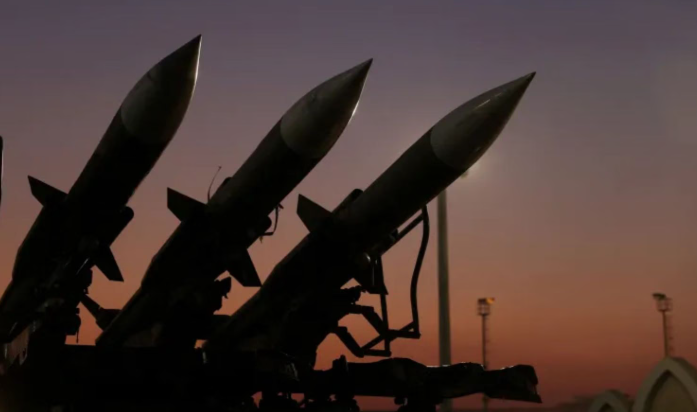
Military conflicts are often judged by what is destroyed. Far less attention is given to what survives. Yet in wars of attrition, survival can be just as important as victory. This is the strategic context in which Iran’s latest claim must be examined. Tehran has announced that it successfully intercepted a United States MQ-9 Reaper drone near the Strait of Hormuz using a previously undisclosed air defence system known as Arash-e Kamangir. While independent verification remains limited, the significance of the claim extends beyond the fate of a single drone. The larger question is whether Iran has managed to preserve enough of its military infrastructure to continue imposing costs on its adversaries despite months of Israeli and American military pressure.
The reported interception comes after one of the most intense periods of military confrontation between Iran, Israel and the United States in recent history. Earlier this year, direct military exchanges resulted in extensive strikes against Iranian military facilities, air defence sites and strategic infrastructure. Throughout that campaign, Washington and Tel Aviv projected confidence that Iran’s defensive capabilities had been severely degraded. The assumption in many Western assessments was that Iran’s integrated air defence network had suffered substantial damage and would struggle to recover in the near term.
Iran’s latest announcement seeks to challenge that narrative.
According to Iranian media reports, the interception occurred near Qeshm Island in the Strait of Hormuz, one of the world’s most strategically important maritime chokepoints. Iranian outlets stated that the drone was brought down by a domestically developed air defence system known as Arash-e Kamangir. Tehran described the system as possessing stealth-detection capabilities and portrayed the operation as a demonstration of Iran’s continuing ability to monitor and defend its airspace despite sustained military pressure.
Iranian officials offered only limited technical information regarding the system. However, the messaging surrounding the announcement appeared carefully designed. State-affiliated media characterised the interception as a warning to foreign aircraft operating near Iranian airspace and maritime boundaries. The timing is particularly notable given ongoing discussions surrounding regional security arrangements and Iran’s continued efforts to maintain strategic leverage in relation to the Strait of Hormuz.
The symbolism behind the system’s name also carries significance. Arash-e Kamangir translates to “Arash the Archer”, a legendary figure in Persian mythology. According to folklore, Arash fired an arrow that established the borders of ancient Iran. Over centuries, the character became associated with resistance, sacrifice and the defence of Iranian sovereignty. By selecting this name, Iranian authorities are clearly attempting to frame the system not simply as a military asset but as part of a broader national narrative centred on resilience and independence.
The immediate challenge for analysts is determining how much weight should be assigned to the claim itself. Iran has frequently publicised military achievements that later proved difficult to verify independently. For this reason, caution remains necessary when assessing official announcements. Yet dismissing the claim entirely would also overlook broader developments within Iran’s defence sector over the past decade.
Iran has spent years adapting its military strategy to compensate for economic sanctions, technological restrictions and conventional military disadvantages. Rather than competing directly with Western powers in expensive platforms such as advanced fighter aircraft, Tehran has increasingly invested in asymmetric capabilities, missile forces, drones and domestically produced air defence systems. This approach reflects a strategic calculation that endurance and affordability can sometimes offset technological disparities.
Even if Arash-e Kamangir is not a revolutionary breakthrough, the broader concept behind it is entirely consistent with Iran’s military doctrine. Iranian planners have long recognised that large radar installations and fixed missile batteries become priority targets during modern air campaigns. Consequently, substantial effort has been devoted to developing mobile, dispersed and comparatively inexpensive systems that can survive repeated attacks and continue operating under wartime conditions.
Security analysts examining the reported interception have suggested that Arash-e Kamangir may represent another step in this evolutionary process rather than a completely new category of weapon. Instead of relying heavily on large radar networks, the system may employ electro-optical tracking, infrared guidance or other methods that allow it to operate with a smaller electronic signature. Such systems are inherently more difficult to detect, target and destroy.
This distinction matters because survivability has become one of the most important characteristics of modern air defence. During recent conflicts, sophisticated missile batteries often attracted immediate attention from enemy intelligence assets. Once identified, they became targets for precision strikes, electronic warfare operations or loitering munitions. Smaller mobile systems can avoid many of these vulnerabilities by remaining concealed until the moment of engagement.
Several analysts have suggested that Arash-e Kamangir may function as a form of mobile surface-to-air missile system designed specifically to engage drones and low-flying aircraft. Such systems can be deployed rapidly, relocated frequently and replaced at lower cost than traditional air defence batteries. Some variants may even operate as loitering interceptors, remaining airborne while searching for potential targets.
This type of capability is particularly relevant when confronting platforms such as the MQ-9 Reaper. Although the Reaper is highly capable as a surveillance and reconnaissance platform, it was not designed primarily for air superiority missions. Its relatively slow speed and predictable flight profile can make it vulnerable to certain forms of air defence, particularly when operating near contested airspace.
From a strategic perspective, the most important issue is not whether Iran possesses an advanced equivalent to Western air defence systems. The more relevant question is whether Tehran retains enough defensive capability to complicate military planning for the United States and Israel.
Available evidence suggests that Iran’s larger air defence network suffered significant damage during recent military operations. Systems associated with long-range surveillance and radar-guided missile interception are widely believed to have been among the targets of Israeli and American strikes. Russian-origin systems, including elements associated with the S-300 family, reportedly experienced varying degrees of degradation alongside domestically produced assets.
Yet the destruction of high-profile systems does not necessarily eliminate a country’s ability to contest its airspace. Modern warfare increasingly demonstrates that dispersed, mobile and lower-cost systems can continue posing operational challenges long after major infrastructure has been damaged.
This is where Iran’s approach becomes strategically significant.
Tehran’s military doctrine has rarely been based on achieving technological parity with the United States. Iranian planners have generally assumed that direct competition with American military capabilities would be unrealistic. Instead, defence strategy has focused on endurance, survivability and the ability to impose costs over extended periods.
In practical terms, this means maintaining enough capability to ensure that military operations against Iran remain expensive, time-consuming and politically risky. Even limited air defence assets can contribute to that objective if they force adversaries to alter tactics, increase operational costs or dedicate additional resources to suppression efforts.
Should Iran retain the ability to threaten surveillance drones, reconnaissance aircraft and selected aerial platforms, the consequences extend beyond individual engagements. The United States and Israel may increasingly rely on long-range precision weapons, stand-off munitions and more sophisticated strike packages. These options are generally effective but significantly more expensive than routine drone operations.
At the same time, Iran continues to demonstrate an ability to produce drones and missiles in substantial numbers. The economic dimension of this equation is often overlooked. A military strategy built around affordable and replaceable systems can become particularly effective when confronting opponents dependent upon expensive precision technologies.
The broader implication concerns deterrence. Iran’s objective is not necessarily to prevent every strike against its territory. Such a goal would be unrealistic against superior air forces. Instead, Tehran seeks to maintain enough retaliatory and defensive capacity to ensure that military action against it always carries consequences.
This approach helps explain why Iranian military planners place such emphasis on mobility, redundancy and domestic production. Systems can be destroyed and replaced. Facilities can be damaged and rebuilt. Networks can be degraded and reconstituted. The central objective is preserving the ability to continue operating despite repeated attacks.
For policymakers in Washington and Tel Aviv, this reality presents a persistent challenge. Military operations may succeed in degrading Iranian capabilities, but permanently eliminating them is a far more difficult task. Every surviving missile battery, mobile launcher, drone production facility or air defence system contributes to Iran’s ability to remain a factor in regional security calculations.
The reported interception near the Strait of Hormuz therefore matters for reasons that extend far beyond a single drone. Whether Arash-e Kamangir proves to be a major technological advance or merely an incremental improvement, the incident reinforces a larger strategic lesson. Iran’s military power is increasingly defined not by technological superiority but by resilience. Its defence strategy is built around survival, adaptation and the ability to absorb pressure while retaining enough capability to continue shaping the battlefield.
The real significance of Tehran’s latest claim lies not in the system itself but in what it suggests about Iran’s continuing capacity to endure. After months of strikes, sanctions and military pressure, the question is no longer whether Iran has suffered damage. The question is whether enough of its military architecture remains intact to impose costs, complicate military planning and sustain deterrence. If the answer is yes, then the strategic balance in the Gulf remains far more contested than many observers assumed only a few months ago.