

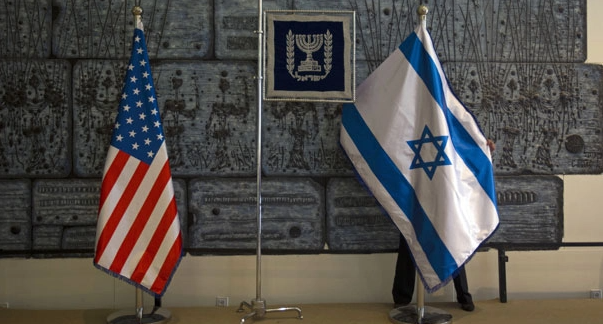
Major strategic transformations rarely arrive with dramatic announcements. More often, they emerge through legislation, institutional reforms and policy decisions that gradually alter the foundations of international relationships. A provision currently making its way through the United States Congress may represent one such moment. While public attention remains focused on conflicts in the West Asia, tensions with Iran and debates surrounding Gaza, lawmakers in Washington are considering a proposal that could fundamentally reshape how the United States and Israel cooperate in the defence sector for decades to come.
The proposal, known as the “United States-Israel Defense Technology Cooperation Initiative”, has been included as Section 224 of the House Armed Services Committee’s version of the Fiscal Year 2027 National Defense Authorization Act (NDAA). Every year, the NDAA serves as the primary legislative framework guiding American military policy, defence priorities and authorised spending. Although Section 224 remains in the early stages of the legislative process and still requires approval from both chambers of Congress before reaching the President’s desk, its significance extends far beyond the normal provisions found in annual defence legislation.
At its core, the initiative signals a possible shift in the nature of the American-Israeli relationship. For decades, that relationship has largely been defined by military assistance, weapons transfers, intelligence cooperation and diplomatic support. Under this model, the United States provided Israel with substantial military aid while ensuring that Israel maintained a technological advantage over potential regional adversaries. The framework proved durable across multiple administrations and changing geopolitical conditions.
Section 224 suggests that Washington may now be exploring a different model. Rather than focusing primarily on financial assistance and weapons sales, the proposal seeks to deepen cooperation at the industrial, technological and operational levels. If enacted, it would move the relationship from one centred on support and assistance towards one increasingly defined by integration and joint development.
One of the most important elements of the proposal is the requirement that the US Secretary of Defense appoint an “executive agent” responsible for overseeing military technology cooperation between the two countries. While this may appear administrative on the surface, it carries considerable strategic importance. The designated official would be tasked with coordinating research programmes, identifying areas for technological cooperation, facilitating joint production initiatives and ensuring that military systems developed by both countries can operate more closely together.
In practical terms, the proposal aims to create a permanent institutional structure capable of accelerating defence cooperation and reducing bureaucratic obstacles that often slow joint military projects. Such arrangements tend to outlast political cycles, making them particularly significant from a long-term strategic perspective.
The scope of cooperation envisioned under Section 224 extends well beyond existing defence partnerships. The United States and Israel already collaborate on missile defence programmes such as Iron Dome, one of the most widely recognised examples of successful bilateral defence cooperation. However, the new initiative would expand collaboration into many of the technologies that are expected to shape future military competition.
Areas highlighted within the proposal include artificial intelligence, autonomous systems, advanced sensing technologies, cyber operations, drone warfare and emerging defence technologies. These sectors are increasingly viewed by military planners as decisive components of future security environments. Nations capable of integrating such technologies effectively are expected to possess significant advantages in intelligence gathering, battlefield awareness, force protection, precision targeting and military decision-making.
From a strategic standpoint, the proposal reflects a broader trend visible across the international security landscape. Military power is no longer measured solely by the number of tanks, aircraft or soldiers a country possesses. Increasingly, military effectiveness depends on access to advanced technologies, resilient supply chains, industrial capacity and the ability to rapidly innovate during periods of crisis. In this environment, partnerships based on technology sharing and industrial cooperation can become as important as traditional military alliances.
The timing of the proposal is also noteworthy. It emerges during a period of considerable instability in the West Asia. Earlier this year, direct military confrontation involving the United States, Israel and Iran brought the region to the brink of a wider conflict. The war lasted several weeks and demonstrated the growing importance of missile defence systems, intelligence integration, cyber capabilities and rapid technological adaptation under combat conditions. Although a ceasefire eventually took hold, the conflict reinforced concerns throughout the region regarding future escalation and long-term security arrangements.
At the same time, Israel continues to face significant international scrutiny over its military campaign in Gaza. Proceedings initiated by South Africa before the International Court of Justice have placed additional diplomatic pressure on Israel and intensified global debate regarding the conflict. Against this backdrop, deeper institutional integration between Washington and Tel Aviv carries implications that extend beyond purely military considerations.
The political dynamics surrounding the proposal are equally important. Section 224 was introduced with support from both major political parties through House Armed Services Committee Chairman Mike Rogers and the committee’s senior Democrat Adam Smith. Bipartisan backing significantly improves the initiative’s prospects during the legislative process and signals that support for strategic cooperation with Israel remains deeply embedded within key segments of the American political establishment.
This support persists despite evidence that public opinion is becoming more divided. Recent polling suggests growing scepticism among portions of both Democratic and Republican voters regarding continued military assistance to Israel. While these shifts have not fundamentally altered congressional policy, they have contributed to a broader debate about the future direction of American engagement in the West Asia.
Understanding the significance of Section 224 also requires examining the historical foundations of US support for Israel. Since 2008, American law has required the United States government to preserve Israel’s “qualitative military edge.” This policy obliges Washington to ensure that Israel maintains military capabilities superior to those of potential regional adversaries. The rationale has long been that Israel, given its relatively small population and geographic size, must compensate through technological superiority rather than numerical strength.
This commitment has shaped American policy for decades and has influenced everything from arms sales decisions to military assistance packages. Under the current memorandum of understanding negotiated during the administration of President Barack Obama, Israel receives approximately $3.8 billion annually in military assistance. The agreement remains in effect until 2028.
Over the broader course of the relationship, Israel has become the largest cumulative recipient of American foreign assistance since 1948. When adjusted for inflation, total US support exceeds hundreds of billions of dollars, with military assistance accounting for the overwhelming majority of recent aid.
Yet the emergence of Section 224 suggests that policymakers may increasingly view traditional aid as only one component of the relationship. Israeli Prime Minister Benjamin Netanyahu recently stated that Israel should seek to reduce and eventually eliminate its dependence on American military assistance over the next decade, arguing that the country has matured strategically and economically.
If that objective becomes official policy, deeper industrial and technological integration offers a logical alternative. Rather than transferring large sums of money through annual aid packages, both countries could increasingly focus on joint development, shared production facilities, collaborative research and integrated defence supply chains. Such an approach would preserve strategic cooperation while reducing reliance on the traditional donor-recipient model that has characterised the relationship for decades.
The broader implication is that the United States and Israel may be entering a new phase of strategic partnership. Previous decades were defined primarily by military aid, arms transfers and diplomatic coordination. The emerging model places greater emphasis on innovation, industrial cooperation, technological development and long-term institutional integration.
For Washington, this approach could strengthen access to technologies developed under real-world operational conditions while expanding the resilience of its defence industrial base. For Israel, it offers an opportunity to move beyond dependence on foreign assistance and position itself as an increasingly indispensable contributor to Western defence innovation.
Whether Section 224 ultimately becomes law remains uncertain. The proposal must still navigate committee review, congressional debate and final legislative negotiations. Amendments are possible and political circumstances may change before the NDAA reaches final passage.
Nevertheless, the proposal already reveals an important strategic reality. The discussion is no longer simply about how much military aid the United States should provide Israel. The discussion is increasingly about how deeply the defence industries, technological ecosystems and long-term security planning of both countries should become intertwined.
If enacted, Section 224 may eventually be remembered not as a routine provision buried within a defence bill, but as the moment when the American-Israeli relationship began evolving from a traditional security partnership into a far more integrated strategic framework, one designed not merely to address today’s challenges, but to shape the military and technological balance of power for years to come.