

The latest dispute between Poland and Ukraine is not about military aid, NATO membership, sanctions, or battlefield strategy. It is about history. Yet history, particularly in Eastern Europe, has never been separate from geopolitics.
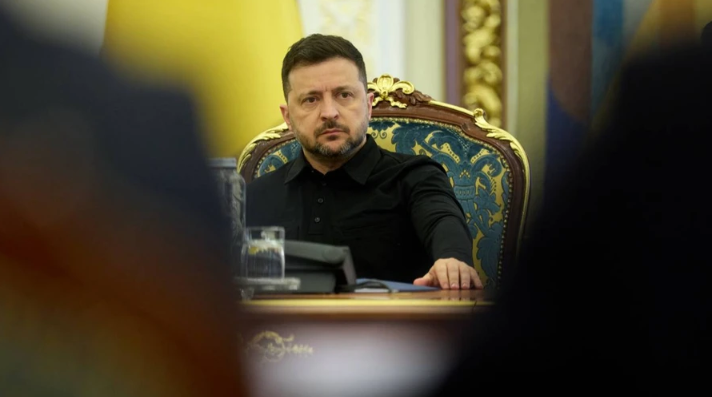
Polish President Karol Nawrocki has announced that he will ask for Ukrainian President Volodymyr Zelenskyy to be stripped of Poland’s highest state honour, the Order of the White Eagle. The controversy erupted after Zelenskyy signed a decree naming an elite Ukrainian Special Operations Forces unit after the Heroes of the Ukrainian Insurgent Army, commonly known as the UPA.
For many Ukrainians, the UPA represents a symbol of resistance against foreign domination and a movement that fought for Ukrainian independence against both Nazi Germany and the Soviet Union. For many Poles, however, the same organisation remains inseparable from one of the darkest chapters in Polish history: the Volhynia massacres of 1943 to 1945, during which tens of thousands of ethnic Poles were killed in organised attacks carried out by UPA units across Volhynia and Eastern Galicia.
The controversy demonstrates a reality that both Warsaw and Kyiv have tried to avoid since Russia launched its full scale invasion of Ukraine in 2022. Strategic partnerships can temporarily suppress historical grievances, but they rarely eliminate them. Eventually unresolved memories return to the surface.
Nawrocki’s reaction was swift and emotional. He stated that he received Zelenskyy’s decision with “great sadness” and argued that glorifying the UPA damages relations between the two nations while simultaneously providing Russian propaganda with fresh opportunities. His proposal to revoke the Order of the White Eagle from Zelenskyy represents one of the strongest symbolic responses ever considered by a Polish head of state toward Ukraine since the beginning of the war.
The symbolism is particularly significant because the honour was awarded by former Polish President Andrzej Duda in April 2023. At that moment, Poland stood as Ukraine’s strongest supporter in Europe. Duda praised Zelenskyy’s leadership as a defence of not only Ukraine but Europe itself against Russian imperial ambitions. Zelenskyy accepted the award on behalf of the Ukrainian people and armed forces, reflecting the unprecedented closeness that had emerged between Warsaw and Kyiv after Russia’s invasion.
Today that symbolism is under strain.
The dispute highlights a deeper political shift inside Poland. Nawrocki emerged from a political environment that places greater emphasis on historical memory and national sovereignty than the previous government. While support for Ukraine remains substantial across the Polish political spectrum, there is increasing insistence that Ukrainian leaders acknowledge Polish historical sensitivities more explicitly.
Prime Minister Donald Tusk attempted to calm the situation. His message was clear: Russia remains the common adversary and neither side can afford to transform historical disagreements into contemporary hostility. Tusk acknowledged that Zelenskyy’s decision hurt Polish historical memory but warned that if Poland and Ukraine become consumed by disputes over the past, others will shape their future.
That argument reflects a growing concern among European policymakers. Since 2022, Poland has become one of Ukraine’s most critical logistical, military and political partners. A deterioration in bilateral relations would not only weaken Ukraine’s support network but also complicate NATO’s eastern security architecture.
Foreign Minister Radosław Sikorski echoed this position. While openly expressing disappointment over Zelenskyy’s decree, he stressed that only Russian President Vladimir Putin would benefit from a prolonged Polish Ukrainian confrontation over historical memory. This balancing act has become the defining feature of Poland’s current policy. Warsaw wants to defend historical truth while avoiding strategic damage to the alliance with Kyiv.
The diplomatic response from Poland was significant. The Foreign Ministry lodged a formal protest. Ukraine’s ambassador to Poland was summoned. Polish diplomats also raised the issue directly with Ukraine’s Foreign Ministry. Yet even within those protests, Polish officials repeatedly emphasised that bilateral relations must not become hostages to history during a period of regional instability.
The strongest criticism came from former Polish president and Nobel Peace Prize laureate Lech Wałęsa. Wałęsa publicly declared that by honouring the UPA, Zelenskyy had insulted Polish victims and their descendants. His decision to remove the Ukrainian flag from his lapel carried powerful symbolic weight, although he simultaneously reaffirmed support for the Ukrainian people in their struggle against Russian aggression.
Ukraine’s response reflects an entirely different historical narrative. Lviv Mayor Andriy Sadovyi argued that every nation has its own heroes and cautioned against judging historical events solely through contemporary interpretations. He also noted that Soviet disinformation had often distorted historical records and emphasised that Ukraine and Poland currently stand on the same side against Russian aggression.
This divergence reveals the fundamental problem. In Poland, the UPA is remembered primarily through the lens of ethnic massacres. In Ukraine, the UPA is remembered primarily as a resistance movement that fought for national independence. Neither narrative fully excludes the other, but each places emphasis on different aspects of the same historical reality.
The numbers involved explain why emotions remain so powerful. Polish historians estimate that between 100,000 and 120,000 ethnic Poles were killed during the Volhynia massacres. The most notorious moment occurred on July 11, 1943, remembered as Bloody Sunday, when dozens of Polish settlements were attacked simultaneously. The Polish parliament has officially recognised these killings as genocide.
Many Ukrainian historians acknowledge atrocities committed by UPA fighters but reject the genocide classification. Instead, they describe the violence as part of a broader wartime ethnic conflict involving multiple actors. This disagreement remains one of the most difficult unresolved issues in Polish Ukrainian relations.
Recent years had actually witnessed progress. Joint commemorations were organised. Discussions on exhumations advanced. In late 2024, Ukraine lifted restrictions that had long complicated efforts to identify and recover victims. These developments suggested that both countries were moving toward a gradual historical reconciliation.
The latest controversy demonstrates how fragile that progress remains.
Strategically, neither side can afford a prolonged dispute. Poland remains one of Ukraine’s principal gateways to Europe. Ukrainian security contributes directly to Polish security. Both countries face a revisionist Russia that seeks opportunities to weaken regional unity. Moscow does not need to manufacture divisions when historical wounds can reopen on their own.
The challenge facing Warsaw and Kyiv is therefore not whether history should be remembered. It must be remembered. The challenge is determining whether historical memory becomes a bridge toward reconciliation or a barrier that undermines contemporary strategic interests.
The deeper lesson is that alliances built solely on shared threats are often temporary. Durable partnerships require agreement not only on the future but also a workable understanding of the past. Poland and Ukraine have achieved remarkable cooperation under extraordinary circumstances. The current dispute is a reminder that strategic necessity can unite nations, but historical reconciliation is what ultimately sustains that unity.
The coming weeks will show whether both governments choose escalation or dialogue. The stakes extend far beyond a military unit’s name or a state decoration. They concern the future of one of Europe’s most important strategic partnerships at a moment when the continent can least afford another division.