
The diplomatic choreography unfolding around the Panama Canal is no longer just about ports, shipping routes, or legal disputes. It is becoming a test case for how middle powers navigate the intensifying strategic rivalry between the United States and China without surrendering sovereignty, economic stability, or diplomatic flexibility. Panama now finds itself standing at the centre of one of the most sensitive geopolitical intersections in the world, where maritime trade, global power competition, legal sovereignty, and multilateral diplomacy are colliding simultaneously.
At the United Nations Security Council this week, Panamanian Foreign Minister Javier Martinez Acha attempted to lower the temperature. Speaking during a high level session chaired by Chinese Foreign Minister Wang Yi, he framed Panama not as a frontline state in a geopolitical contest but as a bridge between competing powers. His remarks that Panama was “born to connect oceans, continents, cultures and economies” were carefully chosen. They reflected an effort to reposition the canal not as an arena of confrontation but as an international artery whose neutrality benefits all nations equally.
His speech also carried a deeper message. Panama understands that escalation with China could become economically painful, while excessive alignment with Washington could damage the country’s long term diplomatic autonomy. In that sense, Panama’s appeal for “useful multilateralism” was not rhetorical idealism. It was strategic survival.
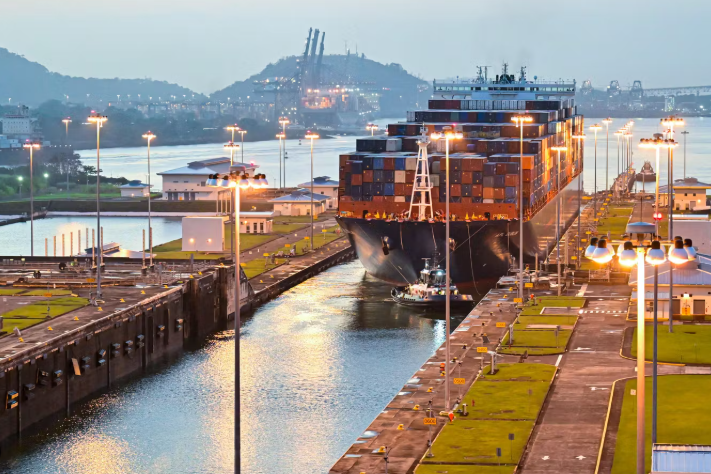
The crisis did not emerge overnight. Relations between Beijing and Panama have sharply deteriorated since Panama’s Supreme Court ruled in January that the concession agreements granted to Panama Ports Company, a subsidiary of Hong Kong based CK Hutchison, were unconstitutional. The ruling effectively dismantled Chinese linked operational control over the Balboa and Cristobal terminals positioned at both entrances of the Panama Canal. Temporary operations were subsequently handed to subsidiaries of European shipping giants Maersk and MSC.
For China, the decision was not viewed merely as a commercial or legal matter. Beijing interpreted it as part of a broader geopolitical push led by Washington to reduce Chinese influence in strategically vital infrastructure across the Western Hemisphere. Chinese officials and state linked voices accused Panama of acting under external pressure, while Panama defended the ruling as an independent constitutional decision grounded in domestic law and judicial sovereignty.
What followed exposed how quickly economic pressure can become an instrument of geopolitical signalling. Chinese authorities reportedly intensified inspections and detentions of Panama flagged vessels entering Chinese ports. According to Panamanian officials, 136 out of 164 vessel detentions in China during April involved Panama flagged ships. President José Raúl Mulino described the pattern as a political message rather than routine enforcement.
At the same time, China reportedly froze some infrastructure discussions, increased scrutiny on shipping operations connected to Panama, and signalled displeasure over the replacement of Chinese linked port operations by European firms. COSCO Shipping temporarily suspended activities at Balboa port, while Chinese authorities reportedly summoned executives from Maersk and MSC for discussions following their involvement in the new temporary operational structure.
Yet Beijing has also avoided completely collapsing diplomatic engagement. On the sidelines of the UN session, Wang Yi and Martinez Acha held talks where both sides publicly reaffirmed interest in maintaining stable bilateral relations. Wang stated that China Panama relations “should not be interfered with by any third party,” a remark widely interpreted as a direct warning against growing American influence over canal politics.
This balancing act reveals the complexity of the current moment. China wants to punish Panama enough to deter similar actions elsewhere, but not so aggressively that it pushes Panama irreversibly into Washington’s strategic orbit. Panama, meanwhile, wants to reassure the United States on security concerns while simultaneously preventing economic retaliation from becoming severe enough to destabilise trade flows and investor confidence.
The United States is equally central to the unfolding drama. President Donald Trump and several American officials have repeatedly framed Chinese involvement around the Panama Canal as a strategic threat. The Trump administration has openly questioned Chinese influence over canal infrastructure and floated rhetoric about restoring stronger American control over the region. Panama’s court ruling was therefore celebrated in some American political circles as a victory against Beijing’s expanding maritime footprint in Latin America.
This is where the canal becomes more than a commercial route. Roughly 5 percent of global maritime trade passes through the Panama Canal. It is not simply an economic corridor but one of the world’s most strategically sensitive chokepoints. In an era where supply chains, energy routes, semiconductor logistics, and naval access increasingly shape geopolitical calculations, control over surrounding infrastructure carries enormous strategic significance.
China understands this reality deeply. Beijing’s global port investments under the Belt and Road framework were never purely economic projects. Ports create leverage, logistics access, trade influence, and long term geopolitical positioning. Washington now sees many of those investments through a national security lens rather than a commercial one. Panama has become one of the clearest battlegrounds of that emerging strategic doctrine.
But perhaps the most important aspect of this crisis is Panama’s attempt to internationalise the question of canal neutrality before it becomes trapped inside a purely bilateral confrontation between Washington and Beijing. That explains why Panama has intensified efforts to secure wider international accession to the Protocol to the Treaty of Permanent Neutrality and Operation of the Panama Canal.
Austria this week became the latest country to accede to the protocol, joining Switzerland and Portugal. More than 40 countries have now signed the 1977 treaty framework that commits signatories to respect the canal’s permanent neutrality and guarantee open passage for all nations. China, notably, is not among them.
This accession strategy is not symbolic diplomacy. It is a calculated attempt by Panama to build an international legal shield around the canal at a time when geopolitical pressure is intensifying from multiple directions. By expanding the number of states formally recognising and defending canal neutrality, Panama is effectively constructing a broader diplomatic coalition designed to discourage unilateral strategic pressure from larger powers.
The irony is striking. Panama is trying to preserve neutrality precisely when the global order is becoming less neutral. The world is moving toward competing strategic blocs, economic coercion, maritime competition, and infrastructure rivalry. In such an environment, countries controlling chokepoints become strategically valuable but also dangerously vulnerable.
The canal dispute therefore reflects a much larger transformation taking place across international politics. Strategic infrastructure is no longer viewed as neutral commercial space. Ports, shipping lanes, energy corridors, undersea cables, and logistics hubs are increasingly being absorbed into the architecture of great power competition.
Panama’s challenge is to avoid becoming another casualty of that transformation.
Its message at the United Nations was therefore more than diplomatic language. It was a warning that if global powers continue converting every strategic corridor into a geopolitical battlefield, the very systems sustaining international trade and economic stability could become politically weaponised. The Panama Canal was built to connect the world. The danger today is that it may increasingly become another dividing line within it.