

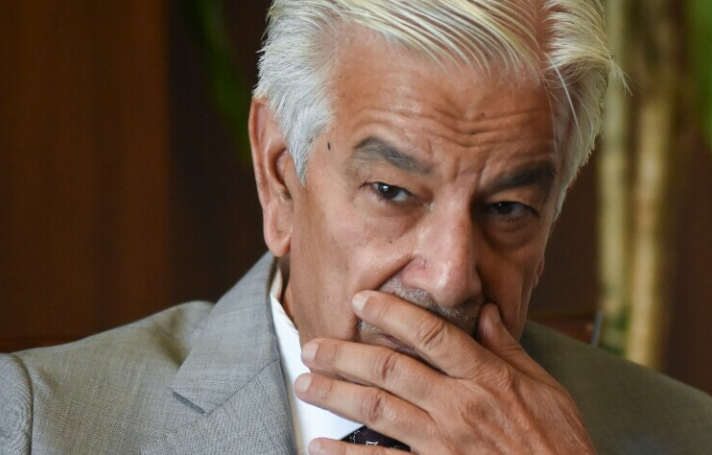
Pakistan’s refusal to join the Abraham Accords has once again exposed the widening fault lines shaping the future of West Asian diplomacy. What initially appeared to be a routine exchange over Israel recognition has now evolved into a much larger geopolitical debate involving Iran, the United States, Gulf normalization, and the strategic credibility of Islamabad as a diplomatic intermediary. Senator Lindsey Graham’s criticism of Pakistan was therefore not merely about Israel. It reflected a broader American anxiety over whether a country that openly rejects normalization with Israel can simultaneously position itself as a trusted mediator in one of the most sensitive regional negotiations involving Tehran and Washington.
The controversy erupted after Pakistan’s Defence Minister Khawaja Asif publicly dismissed the possibility of joining the Abraham Accords, arguing that such a move would clash with Pakistan’s “fundamental ideologies.” His remarks were not accidental rhetoric aimed at domestic audiences. They represented the continuation of a decades old Pakistani foreign policy doctrine linking recognition of Israel to the creation of an independent Palestinian state. Pakistan remains one of the few major Muslim countries whose passports explicitly exclude Israel from recognition. That policy has historically been rooted not only in ideological solidarity with Palestine but also in domestic political realities where support for the Palestinian cause cuts across religious, nationalist and military narratives.
Yet the regional environment surrounding Pakistan has changed dramatically since 2020. The Abraham Accords fundamentally altered the diplomatic architecture of West Asia by bringing Israel into formal political, security and economic partnerships with the United Arab Emirates, Bahrain and Morocco. Saudi Arabia has not formally joined the accords, but the kingdom’s increasingly open strategic engagement with Israel before the Gaza war indicated how rapidly the old regional consensus was shifting. Even countries traditionally hostile toward Israel have gradually begun recalibrating their positions around economic pragmatism, technology partnerships and shared concerns over Iran’s regional influence.
Pakistan now finds itself navigating a difficult balancing act. On one side lies its deepening strategic coordination with China, its longstanding ties with Iran and growing public anger across the Muslim world over Gaza. On the other side remains the reality that Pakistan also depends heavily on Gulf economies, Western financial institutions and a stable relationship with Washington. Islamabad’s mediation role between Iran and the United States during the recent regional crisis was seen by some in Washington as evidence that Pakistan could emerge as a useful diplomatic bridge. But Graham’s remarks reveal how quickly that perception can collapse when Pakistan’s ideological red lines toward Israel become politically visible inside the United States.
The timing of the dispute is equally significant. President Donald Trump has revived efforts to expand the Abraham Accords as part of a broader restructuring of the West Asia following the US Iran confrontation and the fragile ceasefire process now underway. Trump’s vision appears to involve a massive regional realignment in which Saudi Arabia, Qatar, Pakistan, Türkiye and other Muslim majority states would simultaneously normalize ties with Israel after a broader settlement with Tehran. From Washington’s perspective, such a framework would permanently integrate Israel into the region’s security architecture while reducing the probability of future large scale regional wars.
For Pakistan, however, the issue is far more complicated than strategic alignment alone. Any recognition of Israel without a Palestinian settlement would carry enormous domestic political costs. Pakistan’s military establishment may value pragmatic ties with Washington and Gulf monarchies, but it also understands that public opinion on Palestine remains overwhelmingly emotional and uncompromising. The Gaza war further hardened these sentiments across South Asia and the wider Muslim world. Images of destruction in Gaza have politically weakened normalization narratives even inside countries that already established ties with Israel.
This explains why Pakistan’s leadership continues framing its Israel policy not simply as diplomacy but as an ideological principle. Khawaja Asif’s statement that Israel’s commitments “cannot be trusted even for a single day” reflected broader skepticism across parts of the Muslim world following repeated collapses of ceasefire negotiations and ongoing violence in Palestinian territories. Islamabad appears convinced that entering normalization frameworks during such a volatile regional moment would be interpreted domestically as political surrender rather than strategic pragmatism.
At the same time, Washington increasingly views regional diplomacy through the lens of bloc formation. The Abraham Accords are no longer merely bilateral normalization agreements. They have become part of a larger American strategy aimed at constructing a pro US regional order linking Israel, Gulf states and selected Muslim countries economically, technologically and militarily. Pakistan’s hesitation therefore creates friction not only over Israel itself but over the broader strategic architecture Washington hopes to build across West Asia and the Indo Pacific.
The irony is that Pakistan’s refusal to recognize Israel may actually strengthen its utility with Tehran. Iran has long distrusted many Gulf states precisely because of their normalization trajectory with Israel. Islamabad’s position allows it to retain a level of political credibility within Iranian strategic thinking that countries aligned with the Abraham Accords increasingly lack. That may explain why Pakistan has recently emerged as a more active intermediary in discussions surrounding ceasefires, sanctions and maritime tensions in the Gulf.
Still, Senator Graham’s intervention signals that patience inside sections of the American political establishment is wearing thin. Allegations regarding Iranian aircraft allegedly using Pakistani bases and concerns over Islamabad’s strategic ambiguity are feeding suspicions among hardliners in Washington. Whether accurate or exaggerated, such narratives complicate Pakistan’s attempt to simultaneously maintain ties with China, Iran, the Gulf monarchies and the United States.
Ultimately, the debate surrounding Pakistan and the Abraham Accords reflects a deeper transformation underway in global geopolitics. The old binaries of friend versus enemy are being replaced by layered strategic relationships where countries cooperate in some areas while opposing each other in others. Pakistan wants to mediate between Iran and the United States without recognizing Israel. Washington wants Pakistan’s diplomatic cooperation while simultaneously pulling it into a regional normalization framework. Gulf states want economic integration with Israel while managing domestic anger over Palestine. China wants stability in the Gulf without becoming trapped in its conflicts.
In that sense, the controversy is not merely about whether Pakistan joins the Abraham Accords. It is about whether the emerging West Asian order can accommodate states that refuse to fit neatly into competing geopolitical camps.