

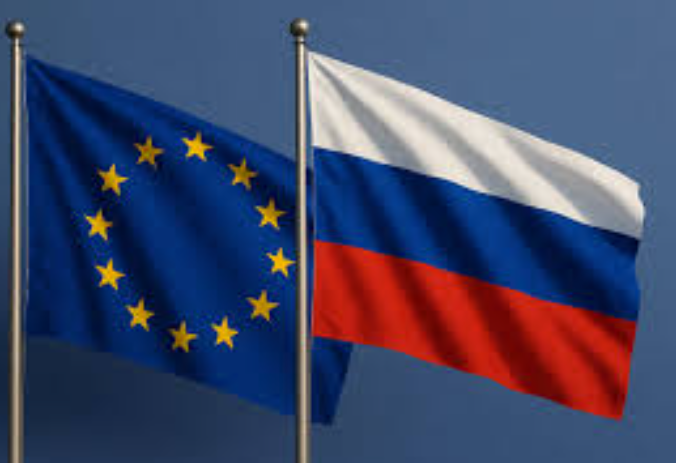
The European Union is now confronting a diplomatic contradiction of its own making. After years of insisting that Russia could be isolated, weakened and strategically cornered, Brussels suddenly finds itself searching for a negotiator capable of reopening communication with the Kremlin. Yet every name emerging from Europe’s internal discussions already carries political baggage heavy enough to sink the mission before it even begins.
The debate itself reveals how dramatically the geopolitical landscape has shifted since the Ukraine war began. Europe once spoke with confidence about strategic unity, military pressure and long-term isolation of Moscow. Today, however, the real fear inside Brussels is different: that the United States and Russia could eventually shape the framework of a settlement while the European Union watches from the sidelines.
That anxiety explains why discussions intensified in early 2025 around appointing a European envoy for potential negotiations with Russian President Vladimir Putin. Reports circulating across European media now suggest the shortlist has narrowed to former German Chancellor Angela Merkel, Finnish President Alexander Stubb and former Italian Prime Minister Mario Draghi.
But the deeper problem is not finding a negotiator. The deeper problem is that Europe no longer possesses strategic credibility in Moscow’s eyes.
Merkel may still command diplomatic experience and retains perhaps the deepest personal history with Putin among major European figures. She speaks Russian, understands the mechanics of European power and recently criticised the EU for failing to use its diplomatic potential with Moscow. Yet the Minsk agreements continue to haunt her legacy. When Merkel later admitted that the Minsk process partly bought time for Ukraine to strengthen itself militarily, Moscow interpreted that statement as confirmation that Russia had been strategically deceived. From the Kremlin’s perspective, trust was permanently damaged long before the current war reached its present stage.
Alexander Stubb represents the opposite problem. Unlike Merkel, he projects ideological confrontation rather than diplomatic ambiguity. Finland’s accession to NATO, Helsinki’s growing military integration with the Western alliance, support for Ukraine’s NATO ambitions and Finland’s increasingly hardline security posture make Stubb deeply unacceptable to many inside the Russian establishment. Even if Brussels sees him as firm and principled, Moscow sees a politician already positioned firmly inside the anti-Russian security architecture.
Mario Draghi appears more technocratic and economically focused. In Brussels, that gives him an image of relative neutrality. Yet even Draghi supported military assistance to Ukraine and aligned himself with Europe’s broader pressure campaign against Moscow during his premiership. More importantly, Draghi represents the European establishment itself, and that establishment still refuses to acknowledge several geopolitical realities Russia considers non-negotiable.
This is why the debate surrounding EU foreign policy chief Kaja Kallas became politically impossible almost immediately. Kallas openly framed Russia as a long-term civilisational threat and repeatedly rejected the idea of direct engagement unless Moscow fundamentally altered its position. Her rhetoric may resonate inside parts of Eastern Europe, but diplomacy requires at least minimal political space for engagement. Even many EU diplomats quietly acknowledge that Moscow would never accept her as a credible intermediary.
The problem for Europe is that Brussels still wants two incompatible things simultaneously. It wants negotiations with Russia while also insisting on maximalist political outcomes that Moscow fundamentally rejects.
European leaders continue supporting Ukraine’s NATO integration, long-term Western security guarantees, expanded sanctions and territorial conditions Russia has repeatedly declared unacceptable. At the same time, the United States under President Donald Trump appears increasingly willing to prioritise strategic stabilisation over ideological absolutism. Washington and Moscow may not trust each other, but both sides increasingly recognise the risks of endless escalation.
Europe, meanwhile, remains internally divided over whether direct engagement with Russia even constitutes diplomacy or strategic surrender. Countries geographically closer to Russia often demand harder security guarantees, while others fear the economic and military exhaustion of a prolonged confrontation. The result is paralysis disguised as principle.
Ironically, the one figure reportedly preferred by Putin himself, former German Chancellor Gerhard Schröder, is politically toxic inside Brussels because of his longstanding relationship with Russia and his involvement in Russian energy projects. Yet that itself exposes the larger contradiction. Europe wants a negotiator acceptable to Moscow without accepting anyone Moscow might actually trust.
Recent statements by Merkel calling for greater diplomatic engagement with Russia reveal that even parts of Europe’s old political establishment now recognise the strategic deadlock. But the political environment inside the EU has shifted so dramatically since 2022 that even discussing diplomacy now risks accusations of weakness or appeasement.
At the same time, Moscow no longer sees Europe as an independent geopolitical actor in the way it once did. From the Kremlin’s perspective, Brussels subordinated much of its strategic autonomy to Washington during the war. Europe imposed sanctions, expanded military aid and severed energy ties, but ultimately failed to produce either Russian collapse or decisive Ukrainian victory. Instead, Europe now faces slowing industrial competitiveness, defence strain, political fragmentation and rising public fatigue over prolonged confrontation.
This explains why the Kremlin increasingly treats Washington, not Brussels, as the only meaningful negotiating counterpart. Europe’s fear of being sidelined is therefore not paranoia. It is a reflection of geopolitical reality.
The larger tragedy is that Europe once possessed the foundations to become an independent balancing power between Russia, China and the United States. Instead, the Ukraine war accelerated the collapse of that strategic middle ground. Europe became more militarised, more dependent on American security guarantees and more politically fragmented internally.
Now Brussels searches desperately for a negotiator capable of reopening doors that years of escalation helped close.
But diplomacy is not simply about finding a messenger. It is about whether the political conditions for meaningful compromise still exist at all.
At present, Europe appears to want negotiations without concessions, dialogue without strategic adjustment and peace without recognising how profoundly the geopolitical balance has already changed.
That is why the EU’s search for a negotiator remains deadlocked. The real crisis is not the absence of a mediator. The real crisis is that Europe still has not decided whether it truly wants a negotiated settlement or merely a diplomatic mechanism to preserve the illusion of influence in a war whose strategic direction is increasingly being shaped elsewhere.
In my view, if Europe is genuinely serious about reopening strategic communication with Moscow, then only figures with political weight, historical memory and diplomatic maturity can realistically attempt such a mission. Among the names discussed, former EU foreign policy chief Josep Borrell or former German Chancellor Angela Merkel appear far more capable of carrying that burden than newer hardline political figures shaped entirely by the post-2022 escalation environment.
Merkel, despite the deep mistrust surrounding the Minsk agreements, still understands the architecture of European-Russian relations better than most contemporary leaders. Borrell, meanwhile, carries institutional European legitimacy and diplomatic experience accumulated across multiple crises.
Europe does not merely need someone who can criticise Russia. It needs someone capable of being taken seriously in Moscow while still retaining credibility inside Europe itself. Without that balance, any future envoy risks becoming symbolic rather than strategic.