

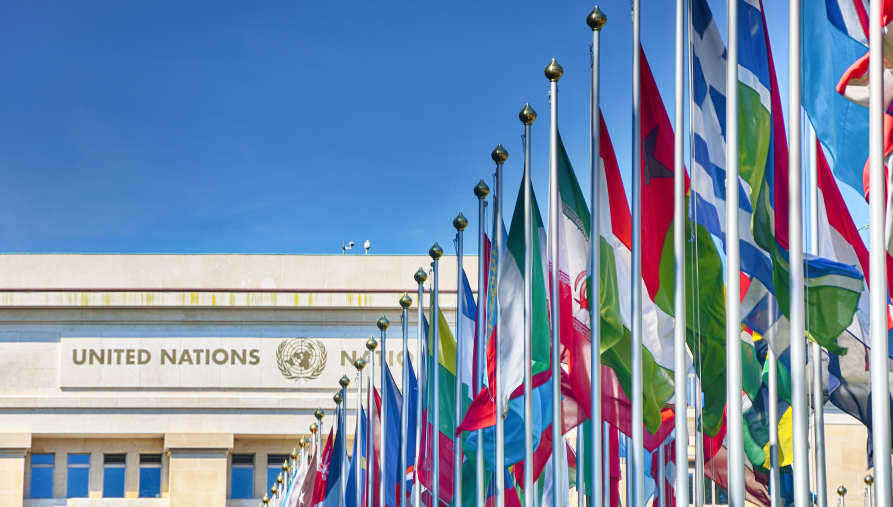
When Fu Cong said that China had no intention of replacing the United States at the United Nations, it sounded like restraint. In reality, it reflects a deliberate choice about how power is exercised in today’s multilateral system.
The United States is not simply stepping back, it is reshaping its engagement. Over the past year, Washington has cut funding to UN agencies, reduced its commitments to peacekeeping, and shifted toward bilateral deals that offer more direct leverage. The dismantling of USAID has removed a key pillar of global development finance, particularly in health and humanitarian sectors. Programmes that once operated quietly across Africa and parts of Asia, from HIV treatment to food security, are now either shrinking or disappearing. The financial consequences are immediate, but the institutional consequences are longer term. The UN was built on predictable contributions from major powers. That predictability is now gone.
China has stepped into this moment, but only partially. It continues to present itself as a defender of multilateralism, regularly invoking the UN Charter and the importance of collective decision making. Yet its actions remain measured. Beijing has not attempted to replace American funding at scale. It has not aggressively sought to lead agencies that are now under-resourced. Even its own contributions, though significant on paper, have often been delayed, adding to the organisation’s liquidity strain.
This is not indecision. It is a strategy shaped by both capability and preference.
China’s model of engagement is fundamentally different from that of the United States. Where Washington historically invested in broad based development and institution building, Beijing focuses on infrastructure, trade routes, and long term economic positioning. Its projects are visible and tangible, railways, ports, energy corridors, but they are also selective. They serve strategic and commercial interests first. In countries like Zambia and Tanzania, Chinese-backed projects such as the rehabilitation of the Tazara railway are designed to facilitate the movement of critical minerals to global markets. This is development tied directly to supply chains, not welfare systems.
That distinction matters. Humanitarian aid stabilises societies in the short term. Infrastructure reshapes economies over decades. One addresses immediate crises, the other builds long term influence. China has chosen the latter, and in doing so, it avoids the political and financial costs of being the world’s emergency responder.
There is also a deeper structural reason behind Beijing’s caution. The UN system, particularly the Security Council, already gives China significant leverage. As a permanent member, it holds veto power alongside the United States, Russia, United Kingdom, and France. This position allows Beijing to shape outcomes without taking on operational responsibility. It can block interventions, influence mandates, and support principles like sovereignty that align with its broader foreign policy. Stepping into a leadership role would change that balance. Leadership brings expectations, accountability, and exposure to crises that are often far from China’s immediate interests.
At the same time, China’s ability to project influence globally is still uneven. It has economic reach, but its diplomatic and security footprint is more limited, especially in complex conflict zones. Managing peacekeeping operations, coordinating humanitarian responses, and leading multilateral negotiations require not just resources but experience and networks that take decades to build. Beijing appears aware of this gap and is avoiding overextension.
What is emerging is a system where influence is being redistributed without a clear transfer of responsibility. The United States is reducing its commitments, but not fully disengaging. China is expanding its presence, but not fully stepping in. Other powers, including the European Union and middle income countries, are attempting to fill parts of the gap, but none have the scale to stabilise the system alone.
This creates a paradox for the UN. It remains central to global governance, yet increasingly constrained. Financial shortfalls are forcing agencies to cut programmes, delay operations, and prioritise crises more narrowly. Peacekeeping missions are being redesigned to be cheaper and less ambitious. Development initiatives are shifting from broad based support to targeted interventions. The system is adapting, but in doing so, it is becoming leaner and, in some cases, less effective.
There is also a political cost. Multilateralism depends not just on funding, but on trust among major powers. As competition between the United States and China intensifies, the UN risks becoming a stage for rivalry rather than cooperation. Beijing’s emphasis on sovereignty and non interference, combined with Washington’s more transactional approach, is narrowing the space for consensus. Even routine decisions are becoming harder to negotiate.
At its core, China is positioning itself as a beneficiary of the system rather than its steward. It supports the framework, uses its advantages, and reinforces its role within it, but stops short of underwriting it. As analysts have noted, Beijing does not need to do much to expand its influence when Washington is pulling back. Credibility, in this environment, accrues almost by default.
The longer this dynamic continues, the more it will redefine what global leadership looks like. The post Cold War model, where one power underwrites much of the system, is fading. In its place is a more fragmented order, where influence is shared, but responsibility is diffuse.
The risk is not that China refuses to lead, or that the United States retreats. It is that neither is willing to do enough at the same time. The UN was designed to function with active support from its most powerful members. Without that support, it does not collapse overnight. It erodes.
And erosion, unlike collapse, is harder to confront.