

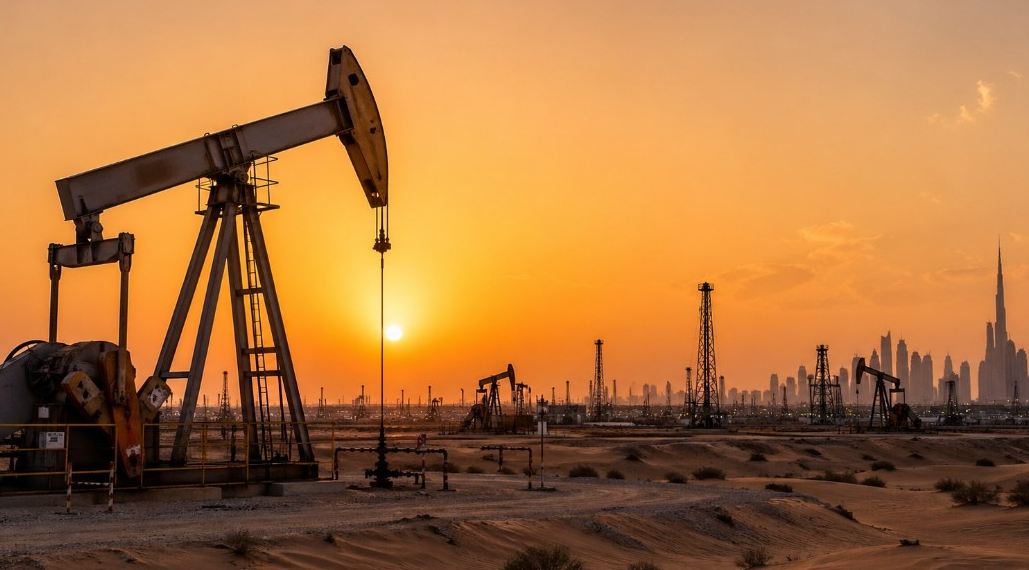
The decision by the Organization of the Petroleum Exporting Countries member United Arab Emirates to step away from the wider OPEC+ framework is being presented as a technical adjustment, a sovereign recalibration of energy policy, a natural step for a country that has outgrown its quota. That explanation is convenient. It is also incomplete.
What is unfolding is not simply an economic correction but a political declaration. Abu Dhabi is no longer willing to operate within a Saudi-designed system where ambition is moderated in the name of collective discipline. It is choosing to test how far power in the Gulf can be redefined when oil is used not as a shared instrument of stability but as a lever of autonomy.
For years, the UAE invested heavily in expanding its production capacity, quietly building the infrastructure, logistics and financial depth required to play in a different league. Yet the very system that once amplified its influence began to constrain it. Production ceilings designed to maintain price stability increasingly looked like political ceilings limiting national ambition. The contradiction became unsustainable. A state that can produce more but is asked not to eventually questions not just the quota but the authority behind it.
This is where the economic argument ends and the real story begins. The move challenges the long-standing assumption that Saudi Arabia sets the rhythm of the oil market and the rest follow. For decades, Riyadh’s ability to manage scarcity and coordinate producers has underpinned not only oil prices but its wider claim to leadership across the Arab and Islamic world. By stepping out, the UAE is effectively saying that this hierarchy is no longer unquestioned.
That message lands in a region where competition between Abu Dhabi and Riyadh has been building well beyond oil. Both are racing to define what the post-oil Gulf will look like. One is trying to transform itself through massive state-led reinvention, the other has already embedded itself into global trade, finance and logistics networks. This is not a temporary disagreement over barrels per day. It is a structural rivalry over who becomes the centre of gravity in a changing Gulf.
Oil simply exposes the fault line more clearly. Saudi Arabia needs higher prices to sustain its transformation agenda, while the UAE can afford to think in terms of volume, market share and long-term positioning. These are not easily reconcilable approaches. When one player defends price and the other tests volume, coordination becomes fragile and trust becomes conditional.
The risks are obvious. If Abu Dhabi moves gradually, releasing restrained supply and avoiding a direct confrontation, it may succeed in proving that independence brings commercial reward without provoking retaliation. But if it pushes aggressively, raising output to levels that visibly undermine collective discipline, it forces Riyadh into a decision it cannot indefinitely avoid. Either accept diminished authority or respond in a way that reasserts it. History suggests that when oil leadership is challenged, responses are rarely passive.
The implications extend far beyond the Gulf. The United States, particularly under Donald Trump, has long criticised OPEC’s ability to manage supply in ways that sustain higher prices. A more independent UAE offering additional barrels into the market provides Washington with an indirect tool. It softens prices without requiring a direct confrontation with Saudi Arabia. It allows American leadership to claim success in influencing global energy dynamics while relying on a willing regional partner.
This is where the geopolitical layer becomes harder to ignore. Since the Abraham Accords, the UAE has positioned itself differently within the regional order. Its relationship with Israel is no longer discreet or tactical. It is structural. In a region defined by the ongoing tension with Iran, energy policy now intersects with security alignment.
If Emirati oil begins to play a role in stabilising markets while pressure on Iran intensifies, then barrels become part of a broader strategic architecture. This is not just about supply and demand. It is about alignment and leverage. The UAE, in this reading, is not just exiting a cartel. It is repositioning itself within a coalition.
But this strategy rests on a delicate assumption that may prove fragile. It requires the regional confrontation with Iran to remain controlled. Not resolved, not escalated, but contained. A cold conflict where pressure exists but infrastructure survives, where tension drives alignment but does not disrupt exports. That is a narrow space to operate in. If the Strait of Hormuz becomes unstable, if insurance costs surge or infrastructure comes under sustained threat, spare capacity becomes irrelevant. Oil that cannot move is power that cannot be used.
There is also the question of perception across the Arab world. Even states wary of Iran may hesitate to accept a regional order that appears increasingly shaped by American and Israeli priorities. Saudi Arabia, in particular, is unlikely to accept a scenario where its leadership is diluted while another Gulf state becomes Washington’s preferred energy partner. This is not just a strategic concern. It is a matter of political prestige and regional standing.
The worst case for the UAE is not difficult to imagine. A scenario where Saudi Arabia responds assertively, Iran escalates unpredictably, global demand softens and American support proves less reliable than expected would leave Abu Dhabi exposed on multiple fronts. In weakening collective discipline, it risks losing the protective cover that system once provided. In seeking autonomy, it risks isolation if its calculations misfire.
What makes this moment significant is not the certainty of its outcome but the scale of the gamble. OPEC was built on the idea that producers, acting together, could shape markets and protect their interests against external pressure. OPEC+ extended that logic into a broader coalition. The UAE’s move challenges that foundation. It suggests that national ambition is once again overtaking collective strategy.
This is a test not just of oil markets but of regional order. Abu Dhabi is betting that autonomy will yield more influence than discipline, that alignment with Washington and its partners will compensate for friction with Riyadh, and that instability can be managed without spiralling into disruption. These are high-stakes assumptions.
If they hold, the Gulf may be entering a new phase where power is more fragmented and flexible, where oil is used less as a shared instrument and more as a national tool. If they fail, the cost will not only be measured in price volatility but in the erosion of a system that, despite its flaws, provided a degree of predictability in an unpredictable region.
Either way, this is not a routine policy shift. It is a signal that the old architecture is under strain, and that one of its key pillars has decided it no longer wants to hold the same weight in the same way.